
Attacks Map
173
173
Total number of Online Attacks in Ukraine
- Highest threat
- Medium threat
- Moderate threat
- Lower threat but harmful
Recent Incidents
All incidents
Yulia Mostova
editor-in-chief, Dzerkalo Tyzhnia
Kyiv
Unknown
Natalia Moseichuk
Journalist, 1+1
Kyiv
Social media users
Olha Haniukova
Journalist, Oboz.ua
Kyiv
Other
Vladyslava Fandikova
journalist, Hrechka
Kropyvnytskyi
Social media users
Tetiana Danylenko
Journalist, Ukrainska Pravda
Kyiv
Social media users
Maryna Danyliuk-Yarmolaieva
Journalist, TV host, Espreso TV
Kyiv
Social media users
Sevgil Musaieva
Editor-in-chief, Ukrainska Pravda
Kyiv
Social media users
Iryna Andreitsiv
editor, Lb.ua
Kyiv
Social media users
Iryna Mankivska
Journalist, Bihus.info
Kyiv
Social media users
Olga Rudenko
Editor-in-Chief, The Kyiv Independent
Kyiv
Social media users
Methodology
Selection Criteria for Online Attacks:
- Location:
The incident occurs in the digital space, including major online platforms (social networks, messengers, forums, comments under publications), as well as through personal communication channels, such as email or phone calls, if such instances aim to intimidate, harass, or incite hostility. - Connection with professional activities:
The attack is directly related to the professional activities of a journalist, presenter, editor, producer, or other media worker or freelancer. For example, an incident occurs after the publication of journalistic investigations dedicated to socially important topics, such as war, corruption, human rights, or potentially sensitive content (feminism, LGBTIQ, etc.). - Coordinated, massive and systematic nature of the attack:
The characteristics of the incident point to the likelihood of it being an organized event, where it is implemented by a network or a group of individuals (not necessarily interconnected) and may last for a certain amount of time (several days, weeks, or more). - Gender-based nature:
The attack contains sexist remarks, hate speech, threats (including rape) or other forms of intimidation aimed at discrediting, intimidating or limiting the woman journalist’s participation in the public space.
Sources and verification
- Information is collected through direct messages from media workers, as well as through analysis of open sources and media reports.
- We document comments with potential online violence, their types, and links to media coverage of the incident, if any.
- The journalist herself is verified through our network Women in Media, or through partner organizations, such as the Commission on Journalistic Ethics, Detector Media, Lviv Media Forum, the National Union of Ukrainian Journalists etc.
- We also provide the option of reporting an incident anonymously to guarantee confidentiality.
Categorization of online attacks
- The categories for documentation are based on the groundwork done by GREVIO, UNESCO, OSCE, and other international organizations.
- We consult partners to ensure compliance with international practices while also taking into account the Ukrainian context.
Additional information about the media worker
- We record the professional status (reporter, editor, freelancer) and the media with which the journalist is affiliated.
- The indicated date of the attack is the first occurrence of threats, sexist remarks, hate speech, or other manifestations of online violence, or the publication date of the material that led to a negative response.
- The location of the attack is tied to the media worker’s permanent location.
- Additionally, we indicate if a journalist is part of a vulnerable group, which may have been a reason for a more intense attack.
Context of the incident
- We document the background to the attack, such as reaction to a post, public outcry, or comments from other users.
- We also record the media coverage of the incident.
Possible consequences of the attack
- We analyze whether the attack led to changes in the journalist’s work (self-censorship, suspension of a project, deterioration of the mental state).
- We also see if the journalist sought help from law enforcement, the newsroom, or civil society organizations.
Data usage
- The data is used to analyze the scale of the problem, identify trends, and develop solutions to address online violence.
- The collected information will contribute to the creation of a safe public space and implementation of support programs for women journalists (psychological, legal, cybersecurity support).
- The data will also form the basis for advocacy for legislative changes and raising public awareness through research, reports, and public campaigns.
How does it work?
- 1 Attack Report
- 2 Data Verification
- 3 Attack Classification
- 4 Analysis
- 5 Assistance and Support
What we mean by online violence against women journalists
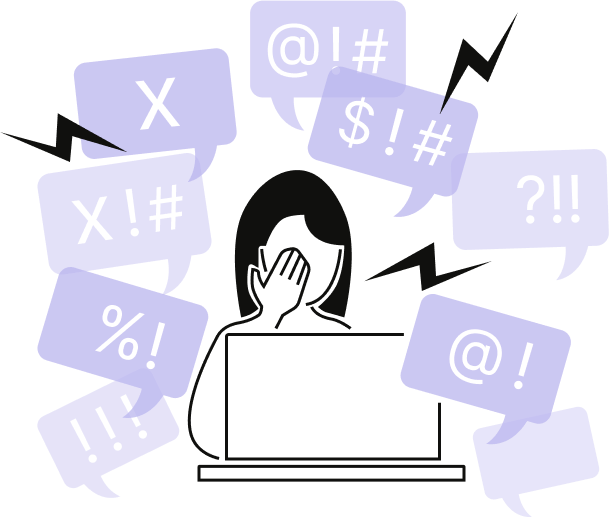
- Takes place in the digital space, primarily on large online platforms.
- Is linked to a journalist’s professional activity—for example, follows the publication of investigations on issues of public interest (war, corruption) or potentially sensitive topics (feminism, LGBTIQ).
- Has a high likelihood of being carried out by a coordinated network or group and persists over time.
- Has a sexist (stereotypes, prejudice, or discrimination against women) and misogynistic character (hatred towards women).
- Often includes threats of physical and/or sexual violence.
- May contain sexualized insults and harassment.
- Often involves doxxing (also spelled “doxing”)—the disclosure of personal information that heightens offline safety risks, such as publishing the journalist’s or her loved ones’ home address or private phone number.
- May include gendered disinformation—a form of abuse that uses false or distorted narratives about gender equality or sexuality to deter women from participating in public life.
- May be exacerbated at the intersection of different forms of discrimination (e.g., religious intolerance, homophobia, xenophobia).
Types of Online Attacks
Online attacks can take various forms, aimed at intimidation, discrediting, and psychological pressure on women in journalism. The following definitions are based on the recommendations of GREVIO, UNESCO, and OSCE.
- AI-attack
- Cyberflashing
- Cyberstalking
- Death/physical violence threats
- Doxing
- Gender-based trolling
- Gendered disinformation
- Hate speech
- Image distortion
- Misogyny
- Online defamation
- Online impersonation
- Revenge porn
- Sexism
- Sexualized harassment
- Threats of rape
- Other
Online attacks using artificial intelligence are a type of digital threat in which AI technologies are employed to create fake content (such as deepfakes, fabricated audio, or images) that imitate a journalist’s appearance, voice, or style without her consent.
All incidents of this type
Entails sending unwarranted sexual images through dating or messaging apps, text messages, or using Airdrop or Bluetooth technologies.
All incidents of this type
Systematic covert tracking of women journalists by an individual or group of individuals, which can occur through comments, private messages, monitoring of their online activity for the purpose of pressure, intimidation, harassment, rape, physical violence, etc.
All incidents of this type
For example, “People like journalist X need to be taught a lesson,” “You better not go out,” “I know where you live,” “You won’t live to see tomorrow.”
All incidents of this type
For example, publishing or threatening to publish the journalist’s home address or phone number on the internet.
All incidents of this type
This may include comments or messages, sharing images, videos, memes, hashtags with the aim of annoying, harassing, provoking and inciting violence against women and girls.
All incidents of this type
False gender-based and sexualized narratives with a certain degree of coordination aiming to discredit and intimidate women journalists and harm their reputation in order to make them stop their activities. This may include claims that the journalist is a lover of a prominent person, works as an “escort” etc.
All incidents of this type
Aggressive, derogatory statements aimed at humiliating or insulting a person or group of people, hostile statements about inferiority. Such as “journawhore.”
All incidents of this type
This type of online attack involves taking an image and using it out of context, often with sexual undertones. Attackers can also falsify images, particularly using AI, by overlaying or “stitching” a person’s face or body into pornographic content to create fake porn.
All incidents of this type
Hatred, contempt, disgust, prejudice against women. It manifests itself in numerous forms, such as social ostracism, sexism, hostility, patriarchy, male privilege, the humiliation of women, depriving women of civil rights, violence against women, sexual objectification.
All incidents of this type
This refers to public statements that negatively affect a journalist's reputation. For example, “I know for certain that journalist X was paid by a foreign government and publishes whatever she is told,” “grant leeches” etc.
All incidents of this type
May entail identity theft, such as creating a fake profile on social media that pretends to be the journalist; hacking an account to publish content intended to damage the journalist's reputation.
All incidents of this type
The distribution of photos and/or videos containing images of a naked body, of a sexual, intimate nature, without the consent of the person depicted in them. It can be used as a method of blackmail.
All incidents of this type
Any action, gesture, image, spoken or written language, practice, or behavior that is based on the idea that a person or group of people are inferior due to their gender. Can be friendly or hostile.
All incidents of this type
Includes such behavioral manifestations as spreading gossip or rumors about a person's alleged sexual behavior, posting sexualized comments under their posts or photos, impersonating them, distributing sexual content, or sexually harassing others in a way that negatively affects their reputation and/or livelihood. This also includes “outing” without the person’s consent with the purpose of intimidation, threats, or humiliation.
All incidents of this type
Or of other types of sexual violence.
All incidents of this type
AI-attack
Online attacks using artificial intelligence are a type of digital threat in which AI technologies are employed to create fake content (such as deepfakes, fabricated audio, or images) that imitate a journalist’s appearance, voice, or style without her consent.
All incidents of this type
Cyberflashing
Entails sending unwarranted sexual images through dating or messaging apps, text messages, or using Airdrop or Bluetooth technologies.
All incidents of this type
Cyberstalking
Systematic covert tracking of women journalists by an individual or group of individuals, which can occur through comments, private messages, monitoring of their online activity for the purpose of pressure, intimidation, harassment, rape, physical violence, etc.
All incidents of this type
Death/physical violence threats
For example, “People like journalist X need to be taught a lesson,” “You better not go out,” “I know where you live,” “You won’t live to see tomorrow.”
All incidents of this type
Doxing
For example, publishing or threatening to publish the journalist’s home address or phone number on the internet.
All incidents of this type
Gender-based trolling
This may include comments or messages, sharing images, videos, memes, hashtags with the aim of annoying, harassing, provoking and inciting violence against women and girls.
All incidents of this type
Gendered disinformation
False gender-based and sexualized narratives with a certain degree of coordination aiming to discredit and intimidate women journalists and harm their reputation in order to make them stop their activities. This may include claims that the journalist is a lover of a prominent person, works as an “escort” etc.
All incidents of this type
Hate speech
Aggressive, derogatory statements aimed at humiliating or insulting a person or group of people, hostile statements about inferiority. Such as “journawhore.”
All incidents of this type
Image distortion
This type of online attack involves taking an image and using it out of context, often with sexual undertones. Attackers can also falsify images, particularly using AI, by overlaying or “stitching” a person’s face or body into pornographic content to create fake porn.
All incidents of this type
Misogyny
Hatred, contempt, disgust, prejudice against women. It manifests itself in numerous forms, such as social ostracism, sexism, hostility, patriarchy, male privilege, the humiliation of women, depriving women of civil rights, violence against women, sexual objectification.
All incidents of this type
Online defamation
This refers to public statements that negatively affect a journalist's reputation. For example, “I know for certain that journalist X was paid by a foreign government and publishes whatever she is told,” “grant leeches” etc.
All incidents of this type
Online impersonation
May entail identity theft, such as creating a fake profile on social media that pretends to be the journalist; hacking an account to publish content intended to damage the journalist's reputation.
All incidents of this type
Revenge porn
The distribution of photos and/or videos containing images of a naked body, of a sexual, intimate nature, without the consent of the person depicted in them. It can be used as a method of blackmail.
All incidents of this type
Sexism
Any action, gesture, image, spoken or written language, practice, or behavior that is based on the idea that a person or group of people are inferior due to their gender. Can be friendly or hostile.
All incidents of this type
Sexualized harassment
Includes such behavioral manifestations as spreading gossip or rumors about a person's alleged sexual behavior, posting sexualized comments under their posts or photos, impersonating them, distributing sexual content, or sexually harassing others in a way that negatively affects their reputation and/or livelihood. This also includes “outing” without the person’s consent with the purpose of intimidation, threats, or humiliation.
All incidents of this type
Threats of rape
Or of other types of sexual violence.
All incidents of this type
Report
Report an online attack
If you are a woman journalist who encountered an online attack or witnessed such an incident, we would appreciate your contribution. Please report this case to help us identify threats and protect the rights of women in the media. Fill out the form, share key details, and join us in creating a safer information environment.
Fill Out the Form