
On September 1, the Verkhovna Rada Committee on Freedom of Speech met to examine the threats made against journalists Kateryna Lykhohliad and Kateryna Kobernyk and the Babel newsroom, as well as against war correspondent Anna Kaliuzhna.
The meeting brought together representatives of the National Police, the State Bureau of Investigation, the Prosecutor General’s Office, the journalistic community, and civil society organizations. Women in Media NGO was represented by its head, Liza Kuzmenko.
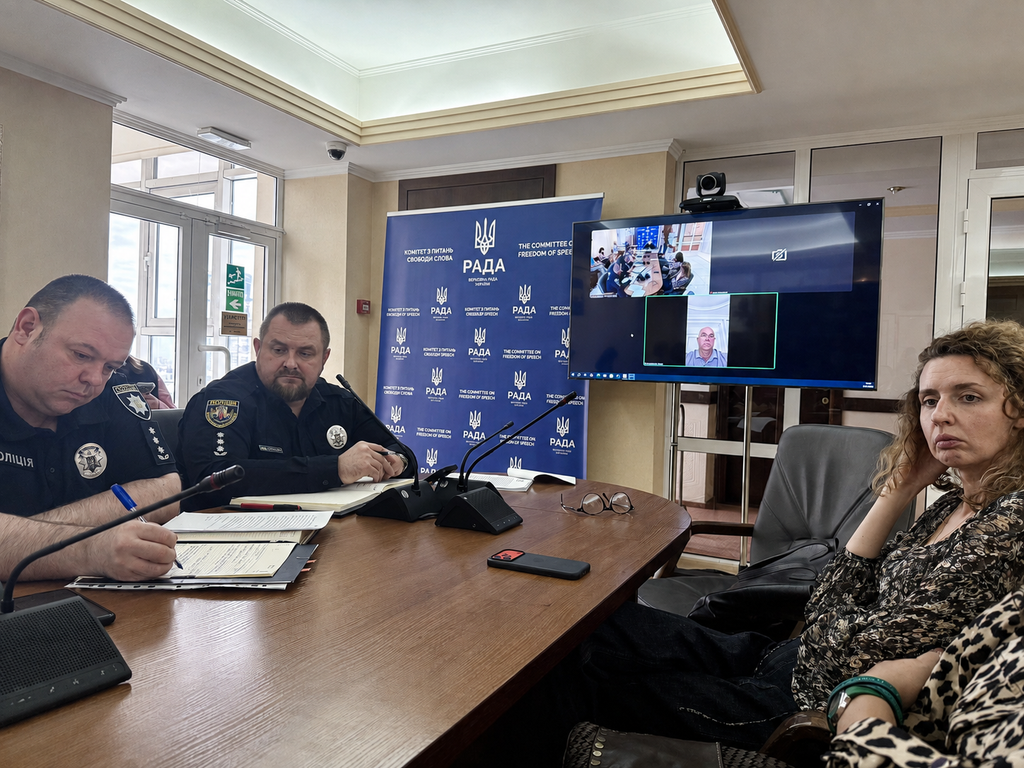
The cases were put on the agenda at the initiative of the Public Council under the Verkhovna Rada Committee on Freedom of Speech.
Threats following investigative reporting
Babel editor-in-chief Kateryna Kobernyk said that after the outlet published its investigation into the 425th Separate Assault Regiment Skelya, the journalists began to face accusations of working for Russian money, along with claims that if the state didn’t stop them, the military would do it themselves.
The newsroom turned to law enforcement. It first filed a complaint with the SBI, but the bureau did not enter it in the Unified Register of Pre-Trial Investigations and instead forwarded it to the National Police. From there, the materials were passed back and forth between the National Police, the prosecutor’s office, and the SBI, leaving the newsroom to find out on its own where the case was and who was supposed to be investigating it.
Because of the potential danger, the journalists relied on private security for several months, which the newsroom paid for out of its own pocket.
Kobernyk also said that a representative of the 425th Regiment had advised the journalists to look after their safety, because various people had supposedly approached the unit offering, among other things, to “deal with the journalists.”
“Later, when Anna Kaliuzhna’s investigation into the 225th Separate Assault Regiment came out, that same person started threatening Anna,” Kobernyk said.
War correspondent Anna Kaliuzhna said that after her reports on alleged violations in assault units, she received about 200 messages. Some of them showed signs of pressure and threats, along with demands that she stop publishing. Later, an unknown man came up to her on the street and said, “Maybe you should shut your mouth.” She went to the police the same day.
According to Kaliuzhna, these are not the first threats against her. In 2024, she received messages threatening to kill and rape her and her family. She immediately filed a police report and gave law enforcement information about the likely senders. Yet in two and a half years, she said, the investigation has produced no results.
“For two and a half years, nothing has happened,” Kaliuzhna said, explaining how this earlier experience had undermined her faith in the law enforcement system’s ability to respond properly to threats.
During the meeting, the journalists were invited to raise the question of state protection. Kaliuzhna declined, citing her distrust of law enforcement, but asked the Committee to support her application for a permit to carry a weapon for personal protection. Babel’s team had not applied for state protection either, since the newsroom had already hired private security guards on its own.
Almost two months without proper investigative steps
Ihor Demianenko, head of the unit investigating crimes against life and health at the Main Directorate of the National Police of Ukraine, said that the materials on the threats against Babel’s journalists reached the police on July 2, 2026, and were entered in the Unified Register of Pre-Trial Investigations, but the prosecutor’s office then assigned investigative jurisdiction to the SBI.
Olena Didenko, head of a division of the SBI’s Main Investigative Department, argued, however, that threats against journalists, even when made by a service member, are not military criminal offenses and should be investigated by the National Police. She said the SBI had received the materials only in late August and had asked the prosecutor’s office to settle the question of proper jurisdiction.
Oleksandr Sorochko, head of the Second Department of the Specialized Defense Prosecutor’s Office at the Prosecutor General’s Office, said that once investigators establish the whereabouts of the person whose statements are being examined in the proceedings, the case may be sent back to a territorial unit of the National Police. This could mean transferring the materials to another region, depending on where the alleged offense was committed.
As a result, for almost two months, law enforcement agencies were unable to decide once and for all who should conduct the pre-trial investigation. The journalists have not been granted victim status, and the necessary procedural steps involving them have not been taken.
“For a month and a half there’s been no investigation, victim status hasn’t been determined, witnesses aren’t being questioned. Now we’re just going to waste time figuring out who passed what to whom and who didn’t,” Committee Chair Yaroslav Yurchyshyn said during the meeting.
He described the situation as “ping-pong” between law enforcement agencies and stressed that, without parliamentary oversight, the question of jurisdiction could remain unresolved for even longer.
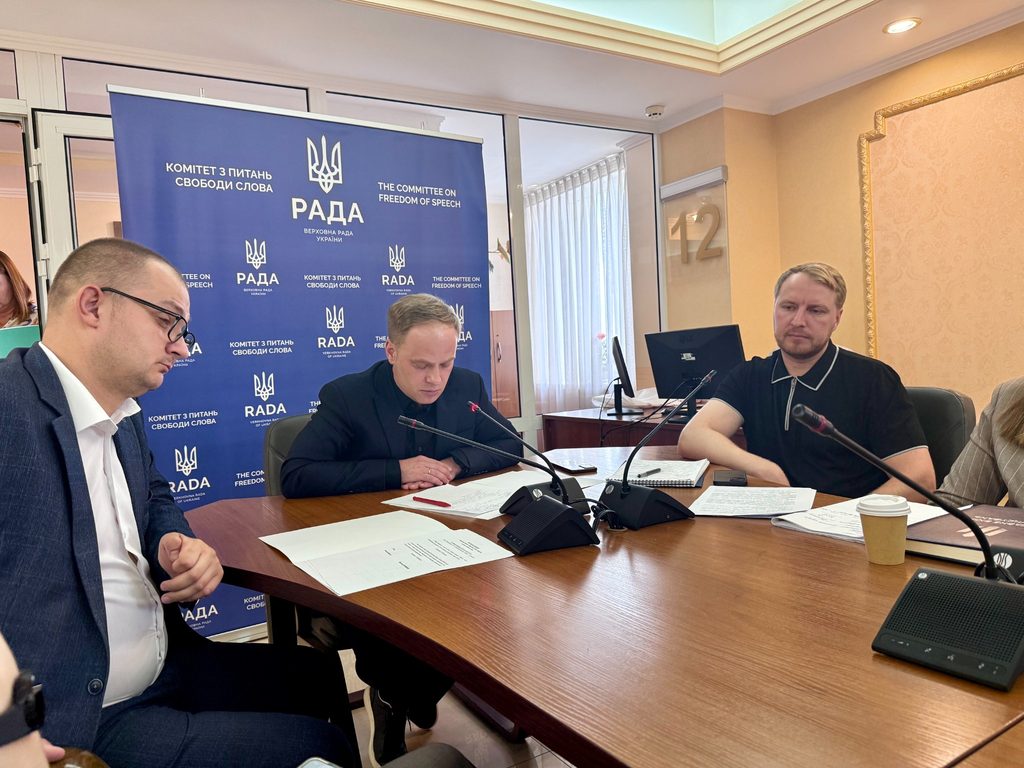
“Two and a half years in Anna Kaliuzhna’s case, and almost two months of being unable to determine jurisdiction in Babel’s case — frankly, this looks like sabotage. It looks as though, until there’s publicity, this case essentially doesn’t move. If publicity is what it takes, we’ll make sure there is publicity,” he said.
Yurchyshyn also highlighted the gendered nature of the attacks: it is women journalists who are being targeted with threats, including threats of sexual violence.
Cases placed under committee oversight
Following the meeting, the Committee decided to:
- place the cases of threats against Anna Kaliuzhna and Babel’s journalists under committee oversight;
- send separate letters on each case to the Prosecutor General and the heads of the SBI and the National Police;
- call on the heads of law enforcement agencies to take personal charge of the investigations;
- request information on the procedural status of the proceedings and the investigative steps taken;
- hold a follow-up meeting in early October to review progress in the investigations.
Kaliuzhna was also invited to submit a separate appeal to the Committee about the investigation into the threats she received in 2024. The Committee is ready to consider that case with the responsible law enforcement agencies in attendance.
After the meeting, Yurchyshyn said that the case of the death and rape threats against Anna Kaliuzhna and her family has gone uninvestigated for two and a half years, while the case of Kateryna Lykhohliad, Kateryna Kobernyk, and Babel has been bounced between law enforcement agencies for almost two months amid disputes over jurisdiction.
“It looks as if journalists, and war correspondents at that, can be threatened with death with impunity. That’s not how it’s going to be,” the Committee chair stressed.
In his words, the war cannot be an excuse for inaction by law enforcement, and investigating violations in military units is not an act against the army.
“Shining a light on problems is a journalist’s key function. It’s what protects us and keeps us from turning into Russia, which destroys Ukrainian media. Just as the army protects us physically, the media protect the democratic values that set us apart from the aggressor state,” Yurchyshyn said.
Women in Media stresses that threats against women journalists, and the failure to respond to them in time, create an atmosphere of impunity and may force women in media to walk away from topics of public importance. Such cases concern not only the personal safety of individual journalists, but also media freedom and the public’s right to information.
Rather than shifting responsibility onto one another, law enforcement agencies must ensure a timely, effective, and impartial investigation into every threat linked to journalists’ professional work.
Earlier, we reported that on June 23, 2026, Babel published Kateryna Lykhohliad’s investigation The “Skelya” assault regiment has combat merits and is well-equipped. And, according to eyewitnesses, they torture and beat people to death there. After the story came out, the journalist faced threats, misogynistic slurs, and an online smear campaign. Read more in our article “We don’t exactly feel safe”: How Babel journalists faced threats after publishing their investigation into the “Skelya” assault regiment.
We have also written about the case of war correspondent Anna Kaliuzhna: War correspondent Anna Kaliuzhna has faced threats for years over her work: What we know about the case and what she says about the police response.