
Warning! This material contains examples of threats, misogynistic and offensive language. These examples are reproduced solely for the purpose of documenting the case and analyzing manifestations of online violence against women journalists.
On 23 June 2026, the Ukrainian media outlet Babel published an investigative report by journalist Kateryna Lykhohliad titled “The Skelya Assault Regiment Has Combat Achievements and Good Equipment. But Witnesses Say People Are Tortured and Beaten to Death There.” Following the publication, the journalist became the target of threats, misogynistic abuse, and an online disinformation and harassment campaign.
A high-profile investigation
Babel‘s investigation generated significant public attention, prompted reactions from state authorities, and sparked widespread discussion across the media and social networks. Following its publication, law enforcement agencies launched official inquiries, and the regiment’s commander was suspended from duty.
In the investigation, Kateryna Lykhohliad collected numerous testimonies describing systematic violence against mobilized recruits during training in the Skelya Assault Regiment. The newsroom interviewed eyewitnesses, relatives of servicemembers, and other sources who reported beatings, torture, cruel treatment, denial of adequate medical care, and other alleged human rights violations.
According to the investigation, 26 recruits died in the regiment’s training centers during the previous six months. Their relatives and fellow soldiers linked these deaths to systemic abuse or the failure to provide timely medical treatment. The report also described cases of physical coercion, the detention of seriously ill soldiers without appropriate medical care, and abuse of servicemembers attempting to leave the unit.
On 24 June 2026, the State Bureau of Investigation (SBI) announced that it had launched an inquiry into the allegations presented in the investigation. On the same day, Ukraine’s Parliamentary Commissioner for Human Rights, Dmytro Lubinets, stated that his office would examine reports of possible torture within the Skelya Assault Regiment. On 25 June, the regiment’s commander, Lieutenant Colonel Yurii Harkavyi, was suspended from his duties.
“We expected such a public response because this is an issue that has long been discussed at various levels—from the President to ordinary soldiers at the front, their relatives, and military commanders. Journalists rarely wrote about it because it is a highly sensitive and risky topic,” Babel Editor-in-Chief Kateryna Kobernyk told Women in Media.
Threats on social media
Soon afterward, Mykola “Kyianyn” Kharkhan, a serviceman of the 425th Separate Assault Regiment “Skelya”, published a video statement on Facebook responding to Babel‘s investigation. In the video, he referred to the newspaper’s female journalist using a misogynistic slur equivalent to “journalist whore,” described Babel as a “pro-Russian office publication,” dismissed the reported death toll as “bullshit,” and claimed that the journalists were allegedly “paid with Russian money” and produced stories “for cash.“
“Well, kittens, here’s the thing—the money may be good today, but everyone involved will have to cough it back up,” Kharkhan said in his video.
Following the video’s publication, Facebook users echoed the same rhetoric in the comments, referring to Babel‘s journalists as “journalist whores”, claiming they “would be held accountable,” and calling for journalists to be “punished for spreading false information.”
On 25 June 2026, Babel issued a public response, stating that it regarded Kharkhan’s statements as threats. In comments to Women in Media, Kateryna Kobernyk and Kateryna Lykhohliad said that official complaints had already been submitted to both the State Bureau of Investigation and the Kyiv National Police.
At the same time, Oleksii Bratushchak, communications officer of the 425th Separate Assault Regiment “Skelya,” stated during an online briefing that threats against journalists were unacceptable, while adding that servicemembers also have the right to freedom of expression.
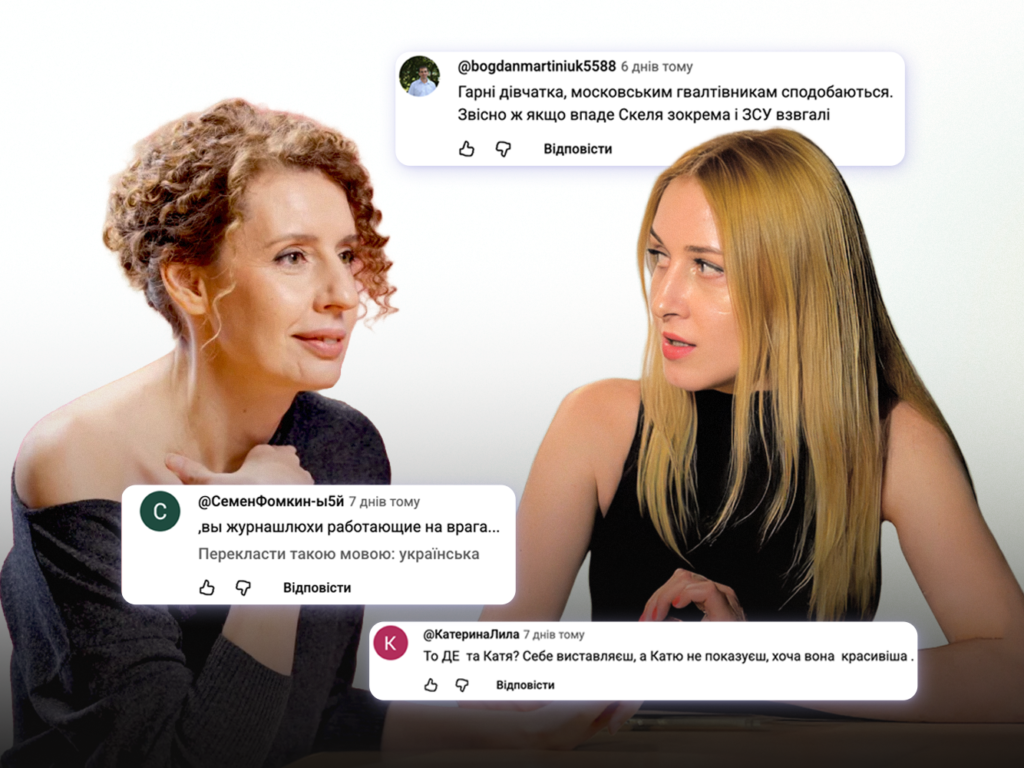
After the publication of the written investigation, Babel also released a YouTube discussion in which Editor-in-Chief Kateryna Kobernyk and author Kateryna Lykhohliad discussed the investigation, its preparation, and their findings. The video attracted numerous comments accusing the journalists of allegedly working for Russia and spreading false information, including (original wording preserved):
- “The only question about Babel is whether they work for Russia for money or for idea.”
- “Every Babel journalist should undergo a polygraph test for links to Russia’s FSB.”
- “Babel writes lies. Not a single case of torture has been confirmed. Stop spreading garbage. You took information from drug addicts. You work for the enemy—let the Security Service deal with you.”
- “This is all lies. You are provocateurs working for Russia. Glory to Ukraine, glory to the Skelya Regiment, shame on Babel’s lying journalists.”
- “Counterintelligence of the Security Service should investigate Babel for paid work for the FSB.”
- “Lykhohliad, there will be an investigation into your ties with the FSB… and your work for them.”
- “Two whores are talking nonsense. Painted-up sluts babbling while there’s a war.”




Some comments also contained explicit threats of physical and sexual violence that appear intended to intimidate the journalists, including:
- “Lykhohliad will end up in prison for slander.”
- “Pretty girls. Moscow’s rapists will like them if Skelya—and the Ukrainian Armed Forces—fall.”
- “The journalist whores who published unverified information and smeared the reputation of the best unit of the Armed Forces because of a couple of junkies who didn’t want to fight should be tied to ATVs themselves.”


“We don’t exactly feel safe”
As Kateryna Kobernyk told Women in Media, both she and Kateryna Lykhohliad had to hire personal security after the investigation was published, which significantly affected their daily lives.
“To put it mildly, we don’t exactly feel safe. Even while preparing the investigation, military personnel who helped us advised us to hire security because of the topic we were covering. After publication, we received additional signals indicating that we should do so. We followed that advice,” Kobernyk said.
At the same time, she noted that the investigation also received support from other servicemembers and relatives of soldiers connected to the Skelya Regiment, many of whom contacted the newsroom to thank the journalists or share their own experiences.
“Many servicemembers, former mobilized soldiers who served in Skelya, and their relatives have written to us. There was even a moment when a soldier approached Kateryna on the street, shook her hand, and said that stories like this are extremely important for people in the military—that these issues are not kept secret and that someone is helping those affected.”
Indicators of TFGBV
This case demonstrates clear indicators of technology-facilitated gender-based violence (TFGBV) directed at both the author of the investigation and the media outlet she represents.
The attacks combine online threats, online defamation, gendered disinformation, misogynistic hate speech, and coordinated reputational attacks. The simultaneous dissemination of similar narratives through the serviceman’s video statement and hundreds of online comments suggests a targeted online campaign aimed at discrediting the journalists and undermining public trust in the investigation.
False accusations that the journalists were “working for Russia,” receiving “Russian money,” or collaborating with Russia’s FSB constitute examples of gendered disinformation and attempts to undermine their professional credibility. The misogynistic insults and sexist slurs targeted not only the investigation itself but the journalists as women participating in public debate. Such attacks may produce a chilling effect, discouraging women journalists from pursuing sensitive public-interest investigations.
Women in Media emphasizes that the public dissemination of threats, misogynistic rhetoric, and unfounded accusations of treason or collaboration with the enemy can seriously damage women journalists’ professional reputations, increase psychological pressure, and create genuine risks to their personal safety.
If you are a woman journalist who has experienced online violence and need support, please contact ngo.womeninmedia@gmail.com.
Women in Media can provide information support as well as facilitate free consultations on cybersecurity, psychological assistance, legal support, and other forms of help upon request.