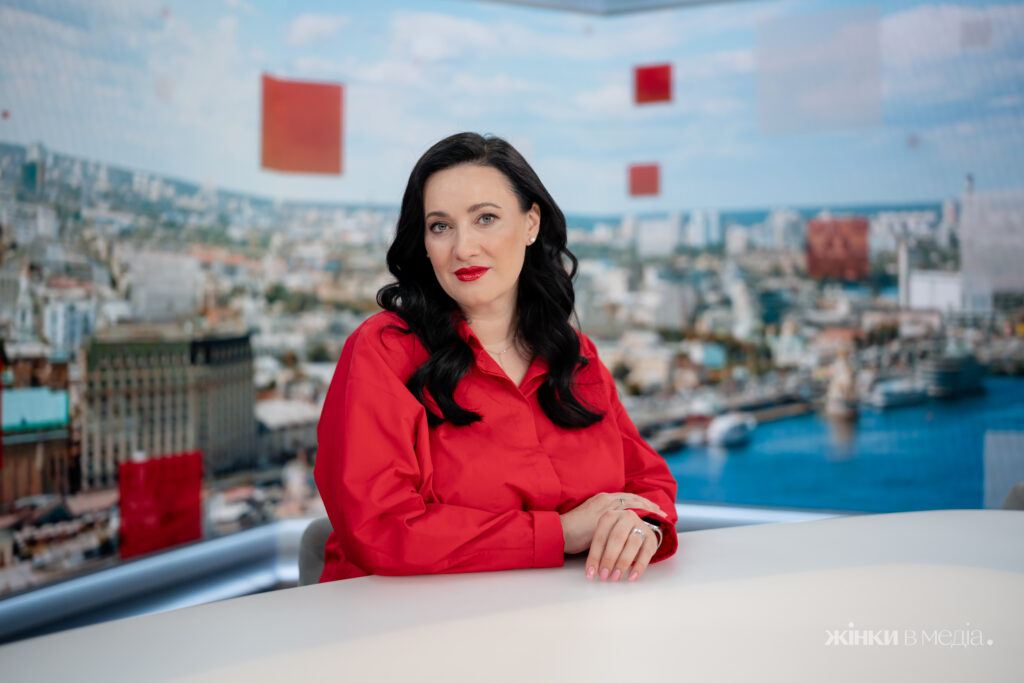
TSN and 1+1 presenter Solomiia Vitvitska talks about how women support one another behind the scenes of the news telethon, about dismantling stereotypes around “female rivalry,” and about the support of her colleagues during her pregnancy.
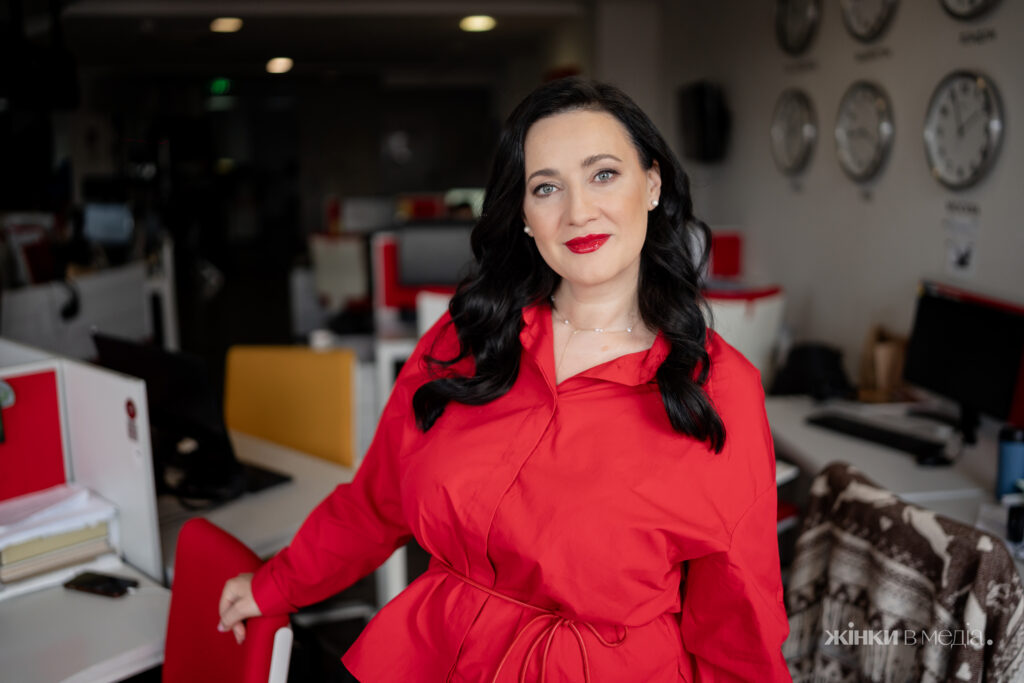
Ukrainian TV journalist and 1+1 presenter Solomiia Vitvitska has worked in television for more than 20 years. She first became widely known as the longtime face of TSN. Special, and today she anchors news segments on the nationwide United News telethon.
On April 26, 2026, Solomiia Vitvitska shared the news on her social media that she and her fiancé, serviceman Oleksii Sytailo, are expecting their first child. She later confirmed it on air during Breakfast with 1+1.
In an interview for Women in Media, Solomiia Vitvitska spoke about what it is like to be a TV presenter on Ukrainian television today, about combining her profession with impending motherhood, and about the online attacks and disinformation spread about her online.
You’ve spent many years working in one of the country’s most prominent news formats. What are the biggest changes you’ve noticed in Ukrainian television over that time?
These days, when I’m asked to give some motivational talk to teenagers, I realize that to them I’m basically a “dinosaur.” Over the years I’ve spent in television and in journalism generally, we’ve moved completely from an analog way of thinking, living, and working to a fully digital existence.
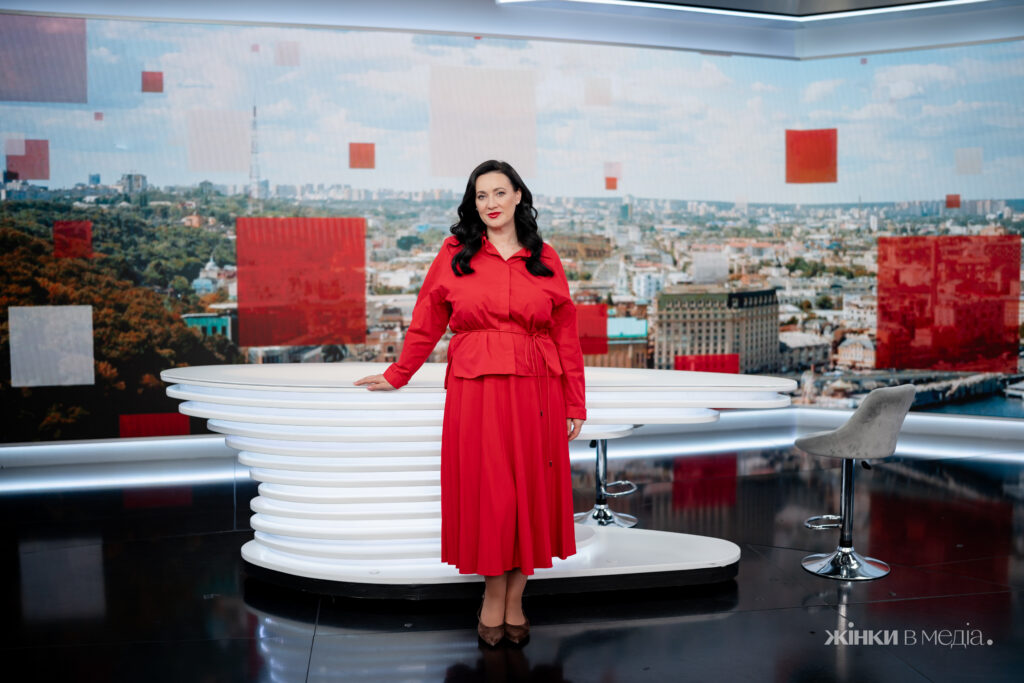
I think most teenagers don’t even understand what I’m talking about when I describe my own experience — how we had to come up with ways to pass information along, or where to find it, back when there was no Google, no internet, no option to just sit down and call someone right away. In moments like that, it feels as if we’re speaking different languages. It’s an entirely different approach to life.
The breakneck pace at which we’re digitizing and moving into the digital world is definitely changing the way we think, too. Today’s children, teenagers, and students who go into journalism will create their stories, find their subjects, and work in a completely different way.
I was recently talking with a friend who has a ten-year-old daughter. He tells her she needs to know letters to be able to read and type. She asks, “Why?” Her father says, well, one day you’ll want to buy something and you won’t be able to google it. She simply picks up the phone, turns on the microphone, and you realize that this generation thinks in a completely different way.
But when it comes to countering the fake news that spreads at incredible speed, in this frantic flood of information it can be impossible to tell where reality ends and an AI-generated image or a story invented by enemy propaganda begins.
I also think you can’t put news from Telegram channels on the same level as news produced by professional journalists. That will be the greatest challenge of all — picking out the real stories from this mass of information.
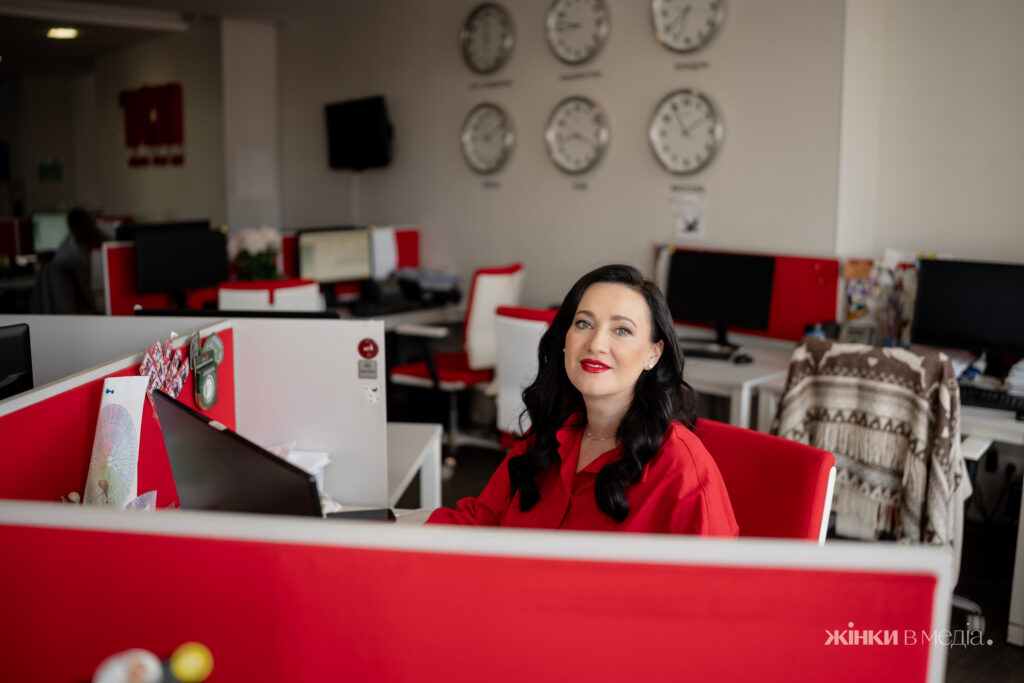
You’ve also been the target of online attacks, including ones using artificial intelligence — for example, the theft of your image and the creation of deepfakes. How did you respond to these cases?
This phenomenon has been around for a very long time. We were already trying to fight this kind of content back when video wasn’t even part of the picture. Back then it was fake articles in which scammers claimed I was advertising some weight-loss pills, while my colleagues were promoting remedies for psoriasis or hair loss. That’s how they spread various “miracle” cures through printed text. As I recall, in the scammers’ version of events it was supposedly Alla Mazur who had interviewed me. Even some of my acquaintances bought those products at the time. Sometimes the goods would already be in the mail when someone would call me: “Weren’t you the one talking about those pills?” I tried to debunk it on social media, and we ran segments on TSN and Breakfast with 1+1. Our lawyers tried to trace the original source, but I think it all came from Russia, so fighting it was practically impossible.
Now they use images created with AI technology. As I understand it, they take the video from our broadcasts and overlay a generated voice on top. The audio track clearly doesn’t match the lip movements. It seems to me that if you look closely, it’s immediately obvious it’s fake. And yet, reading the comments, I see that people believe it anyway. That baffles me.
In the same way, I don’t understand why all sorts of social media pages share fake images along the lines of “I’m 25 and nobody wished me a happy birthday.” I’m amazed that posts like these gather thousands of likes and dozens of comments. I think this is one of our biggest problems right now, during the full-scale war — part of the information confrontation, in particular. Above all, it’s a war for people’s minds. I’ve been thinking about this since 2014, and I still don’t understand how this course of events can be changed.
How often do you encounter online attacks because of your work?
Honestly, I read a great deal of fake news and lies about myself, and sometimes I’m simply shocked. These are fabrications with no evidence behind them whatsoever, yet they get shared around, and before long no one even remembers where they started.
Here’s one telling example: recently, when we posted the news on social media that we’re expecting a baby, quite a few people assumed it was an AI-generated image. It was only when I went on air during Breakfast and announced it myself that the audience realized it was real. That’s yet another sign of how hard it is for people to make sense of the overwhelming flood of information on social media.
Have there been cases where you considered taking legal action over disinformation?
I consulted my partner — he’s a lawyer, a sitting judge, and currently a serviceman. He has enormous legal experience, and he explained to me the specifics of Ukrainian law. First of all, it assumes that public figures must be prepared for heightened attention and for all kinds of information being spread about them.
Second, it’s very difficult here to prove moral or reputational damage in court, because the lies spread this way don’t constitute a criminal offense. Even if you know the specific person — a blogger, rather than just an anonymous Telegram channel — and can prove that it’s untrue, the court process will take a huge amount of time and energy and deliver little result. If anything, it would only give extra publicity to the person spreading the slander. We weighed all the pros and cons, talked it over, and decided that for now it isn’t worth that much effort. I know there are successful cases where colleagues have won in court. I’ll think about it some more, but for now I’ve chosen simply to ignore these things.
How has the position of women in television journalism changed over this time?
The Television News Service on 1+1 has always had a predominantly female face. When it comes to anchors, men on screen were traditionally in the minority, though there are more of them now. As for correspondents, the split is roughly even.
I’ve never felt any bias, problems, or different treatment because of my gender within the 1+1 and TSN team. There was never a moment when I worried that a man might be hired instead of me, or that someone was given preference when all else was equal.
When I was finishing university, I was struck by the fact that women were the majority among my coursemates, too. Out of 75 graduates, there were only 15 men. Our professors told us that some 20 years earlier journalism had been considered a predominantly male profession. But in independent Ukraine it was the opposite — there were far more women in the media, and it was very noticeable. During my studies, I saw that for some reason it was mostly young women who were keen to study journalism.
And what about women in leadership and decision-making positions?
I was hired at TSN by a woman — the editor-in-chief. The news service has been headed for many years now by Serhii Popov, but when it comes to deputies, output editors, and producers, the majority are women, though there are men too. The Director General of the 1+1 media group is Yaroslav Pakholchuk, yet plenty of women head various departments and are among the company’s top managers. Overall we have slightly more men, but the gender balance is nearly even.
Our company is generally very people-oriented; it takes a lot of important social factors into account. Even during the full-scale invasion, the faces on screen changed in part, and new ones were added. Today our correspondents anchor news broadcasts, including for YouTube. Everyone has a chance to grow. And it seems to me that these YouTube broadcasts are hosted mostly by women. One man who was a correspondent and anchor left, so TSN’s digital arm retains its female face. It actually makes even more sense now, since several of our correspondents, directors, and camera operators have been mobilized into the ranks of the Armed Forces of Ukraine.
Personally, in my profession I haven’t run into prejudice or insurmountable obstacles that would have kept me from developing or being promoted. In our field, so much depends on the individual. At certain companies, or in the public sector, things may be different, but I’m speaking specifically about private television.
How strict are the appearance requirements for presenters, and do they differ for men and women?
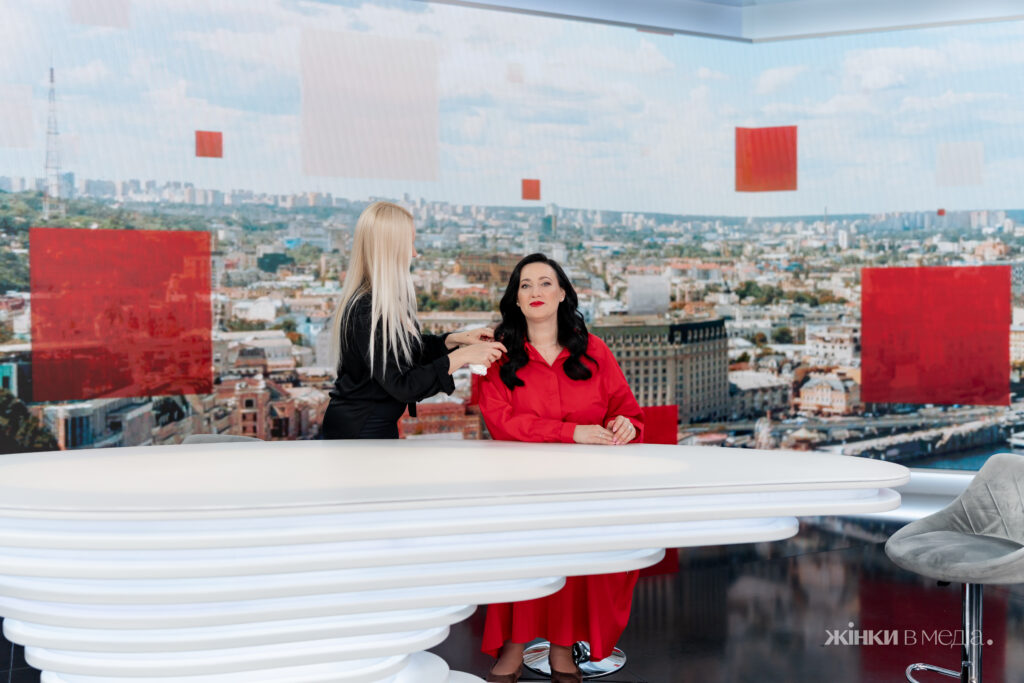
Of course, we have stylists who keep a close eye on our looks. I can’t dye my hair red or get a mohawk on a whim. It makes perfect sense that our appearance is part of the channel’s image that we convey, and we take it very seriously.
The way we look on screen is part of an overall concept. My co-anchor Sviatoslav Hrynchuk, with whom I present the news on alternating weeks, wears earrings, which he always takes out before going on air. So there are certain rules, and I think they’re entirely fair. I don’t see any problem with it, since I host a news program, not an entertainment show where experimenting with your appearance would be appropriate.
That said, any suggestion can always be discussed. If you want to change something, the stylists might propose a different hair length or shade — making it lighter or darker. But for the most part these are recommendations and advice from professionals who select the clothes, makeup, and hairstyle that best suit the concept of the program.
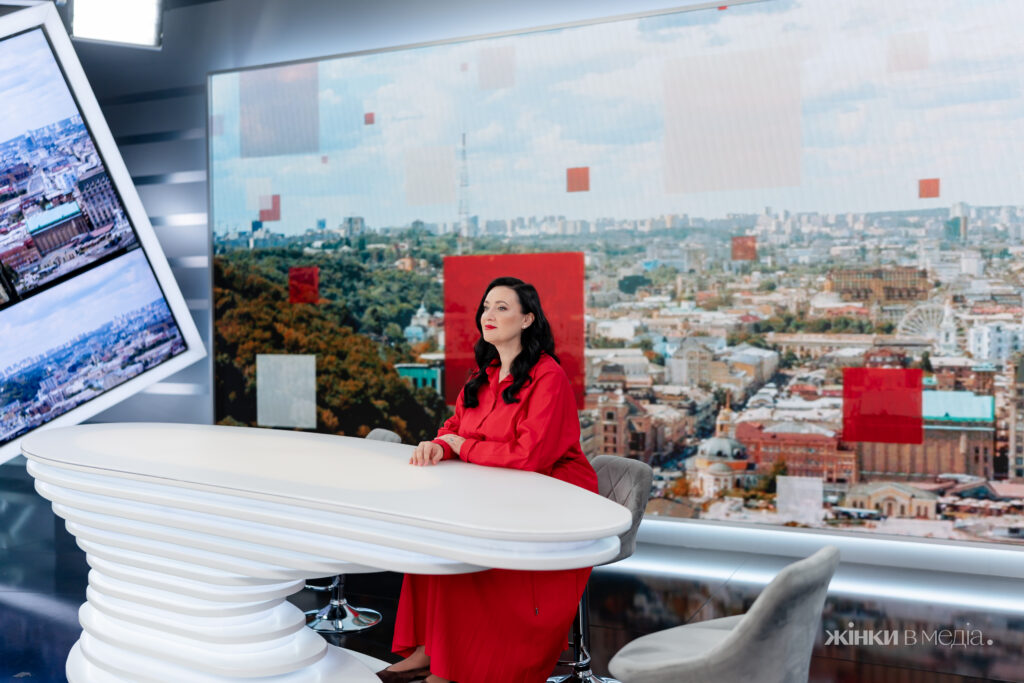
Your Wikipedia page contains this passage: “The presenter also has a distinctive look, appearing on screen in elegant dresses and high heels. Initially, bright red lipstick was also part of the image. But in the program’s second year, under the influence of editor-in-chief Serhii Popov, the stylists changed the lipstick to a more subdued color.” Tell us about that.
Actually, that was more of a joke. Serhii Popov obviously didn’t personally hide my lipstick from me. It’s just that at some point the channel got a new head stylist, who completely reworked my look — my hair, my makeup, and my overall style. At the time this was TSN. Special, a daily celebrity tabloid that called for a vivid look.
When people sometimes send me old episodes from the archive, I’m amazed at how funny I look in them. I actually think I look much younger and better now than I did in those old broadcasts. It was an interesting experience of completely transforming my image.
Do you often come across comments where viewers discuss your appearance?
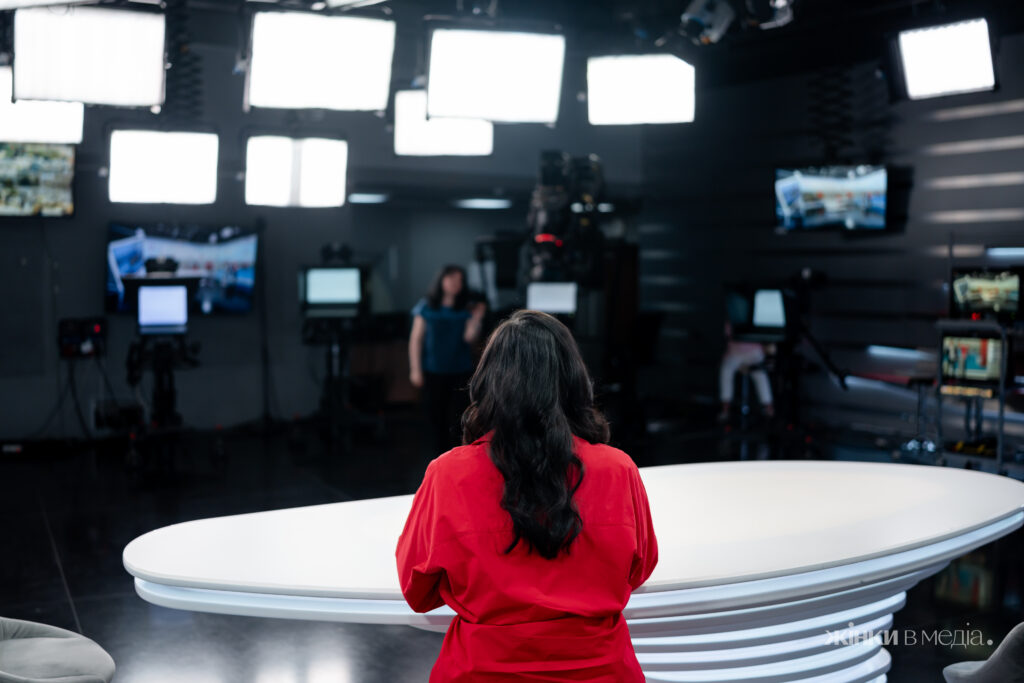
At the start of the full-scale war, people would sometimes write to me: “Why are you so pretty and well-groomed on air?” The way I see it, these were either odd people or bots. I believe a news anchor should remain a news anchor under any circumstances. I can’t go on air disheveled or with smudged mascara. That’s also my personal stance, among other things. When it seemed the world was ending and half the country was stuck in traffic jams trying to leave and escape the war, I was determined to keep up appearances and to inform people well. It was my own quiet protest against the chaos. I understood that for the people turning on their TV or watching us on their phone, we were an island of stability.
I remember First Lady Olena Zelenska saying that when she turned on the telethon at the start of the invasion, she felt a bit of relief — precisely because everyone was working, the broadcast was going on, the news was keeping people informed about what was happening. In that moment, it became a great source of support for many.
It seems that on Ukrainian television it’s considerably harder for older women to appear on screen unless they’re already long-established “faces” of their channels. To what extent does television remain a space where a woman has to meet a certain “on-screen standard”? And does a woman have the right to grow older on screen?
Our channel has presenters of all ages. This year Alla Mazur publicly celebrated her 60th birthday — she was congratulated on Breakfast and on TSN’s live broadcast, which came as a surprise to her. Alla doesn’t hide her age at all. Marichka Padalko turned 50 this year. And that’s really wonderful.
I recall once interviewing for a place to study at the Free University of Berlin, and being asked why all journalists in Ukraine are so young. At the time I didn’t know what to say. I thought to myself: probably because young people are more mobile, don’t have families, and at 20 to 25 can easily wake up in the morning in Ukraine and fall asleep somewhere abroad on assignment.
Now I understand that in the ’90s and 2000s a huge number of new channels, newspapers, and publications appeared, and the market was short on experienced staff. So they hired students en masse, who came to gain practical experience. It made sense in an era of building up the media market, because before that we had literally three channels and three newspapers. The seasoned professionals who had worked earlier went on to head the new outlets as managers, while young people were needed for the hands-on, day-to-day work.
Now everything has changed. Experienced people stay in their posts — some in management, some in reporting. And that’s normal. Abroad, we used to be surprised by older correspondents and anchors, and they, in turn, were surprised by how young we were. Today we’re finally approaching a period when mature faces are appearing on screen — people who are trusted and whom viewers grew up with. It’s wonderful that we’re seeing professionals with deep life experience on air, people who know how to analyze. That’s extremely important.
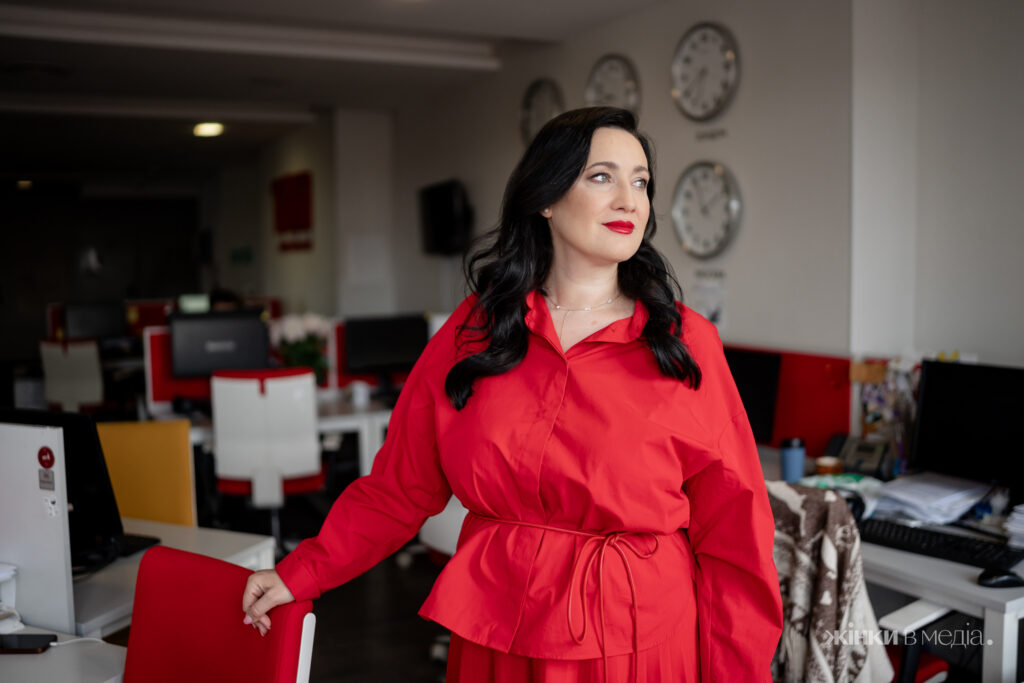
How difficult is it for older women who’ve worked at the same channels for many years to change jobs?
I know that people change jobs successfully. For example, my friend Svitlana Berezivska, a former TSN correspondent, has been working in the charity sector for over a year now — as a PR specialist at a foundation. Journalists mostly move into PR and communications. It’s an extremely sought-after field right now, where specialists are constantly in demand. This sector used to be less developed, but today it’s strategic. Someone who has spent 20 years in television is an incredibly valuable employee. Svitlana was over 45 when she left, and she discovered a completely different but fascinating field. It was hard at first, but she immediately received several offers and adapted successfully.
In general, because of the demographic trends in Ukraine brought on by the war, migration, and mobilization, employers are now increasingly hiring specialists in the 55-plus category. These are experienced people with plenty of energy who can bring great value to any organization. To my mind, this is still an underrated area of HR, and many companies are now radically rethinking their attitude toward older candidates.
Since I’m an ambassador for the SpivDiia platform in the area of career counseling, we actively draw attention to this. We encourage people to let go of their internal biases and self-censorship along the lines of “I’m too old now, so I won’t find a job.” That’s not true. You have to be bolder about changing your profession or learning something new. At 45-plus or 55-plus, that’s completely normal. You can switch fields and land the job of your dreams — the one that, for whatever reasons or circumstances, you didn’t manage to get when you were younger.
You recently shared the news of your pregnancy. In your opinion, how friendly is the Ukrainian television industry today toward women who combine professional fulfillment with motherhood? And how do you see this balance for yourself?
I’m actually thinking about this right now. My colleagues carefully ask how much longer I’m planning to keep coming to work. Of course, it will all depend on how I feel, on my condition going forward, and on the temperament of the baby. But I have wonderful examples before me. My colleague Valentyna Khamaiko didn’t take full maternity leave at all: she gave birth on a Wednesday and was already back on air that Saturday, since she works a weekend schedule.
I don’t think I’ll repeat such an extreme experience, but I also think of Nata Ostrovska, who became a mother during the full-scale war. She, too, worked almost up until she gave birth, and returned to work just a few months later.
We’ll see how things work out for me. A lot of it depends on physiological factors and on whether there will be an option to leave the baby with a nanny, for example, as well as on whether I’ll be breastfeeding. I have friends who weren’t able to breastfeed, and that factor also affects a woman’s mobility after having a child. On top of that, the telethon schedule is physically exhausting: it’s six to eight hours of nonstop live broadcasting, so combining work with motherhood won’t be easy.
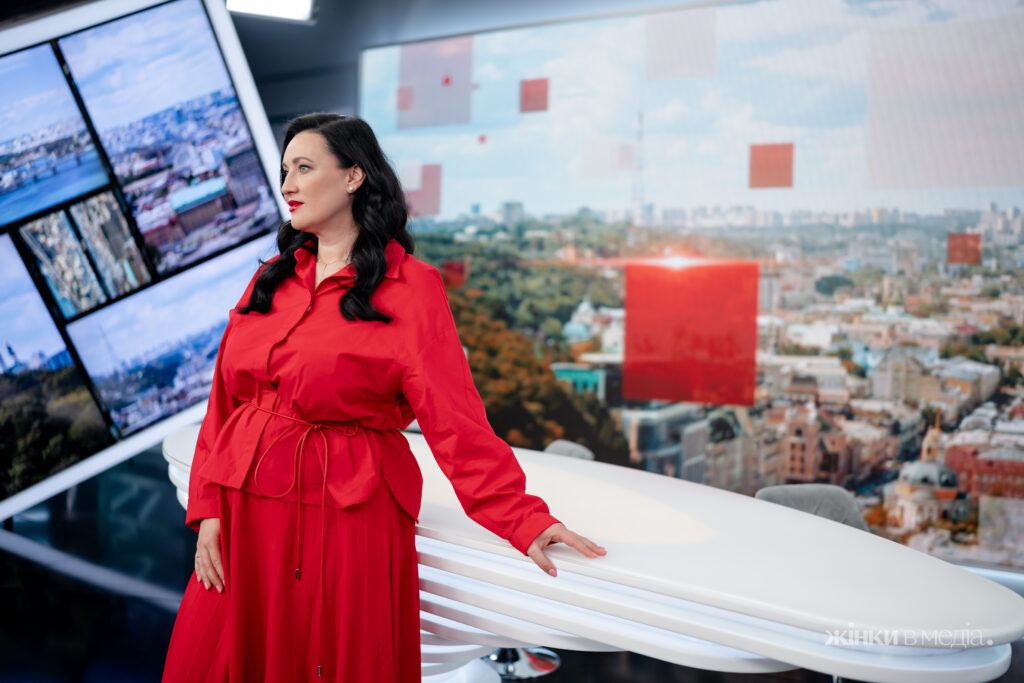
Does the industry provide enough conditions so that women don’t lose professional opportunities because of breaks related to childcare?
Of course, every situation is individual and depends on how the woman feels and how the baby behaves. All of this has to be taken into account. It matters whether you have support, whether there’s someone to leave the little one with. Bringing your child to work once is fine, but doing it on a regular basis isn’t realistic. A whole set of factors comes into play here — things you need to discuss with your partner, your family, or your mother, if that’s an option. My partner and I aren’t from Kyiv, and we have no relatives in the capital, so we’ll have to sort this out on our own and look for other solutions.
Women in the profession are often said to compete with one another. In your view, how much of that is a stereotype, and how much is a consequence of the system itself, where women have historically had less room for influence?
I don’t see fierce competition among us — on the contrary, we’re all friends and support one another. Maybe in some forms it does exist, but healthy competition is more of an added source of inspiration, motivation, and an incentive for self-improvement.
We really do help one another. For example, our presenter Marichka Padalko, with whom I share Saturday broadcasts on the telethon, offered in our group chat to relieve me of that workload because of my pregnancy. Together with Nata Ostrovska and Sviatoslav Hrynchuk, she redistributed those shifts among themselves so that I wouldn’t have to work an extra day. So what I feel is only firm collegial support and encouragement, not rivalry.
I also have female friends at other channels. With some I studied together; with others I crossed paths through work. The United News telethon has brought us much closer lately, since different teams essentially run one shared broadcast. We often see each other at promo shoots and events, and we keep in touch on social media.
For example, one presenter from the We Are Ukraine channel, Olha Hrytsyk, completely changed careers after leaving and became a coach. She’s even given me my first coaching sessions. I find it fascinating to watch her transformation and to support her in her new professional direction.
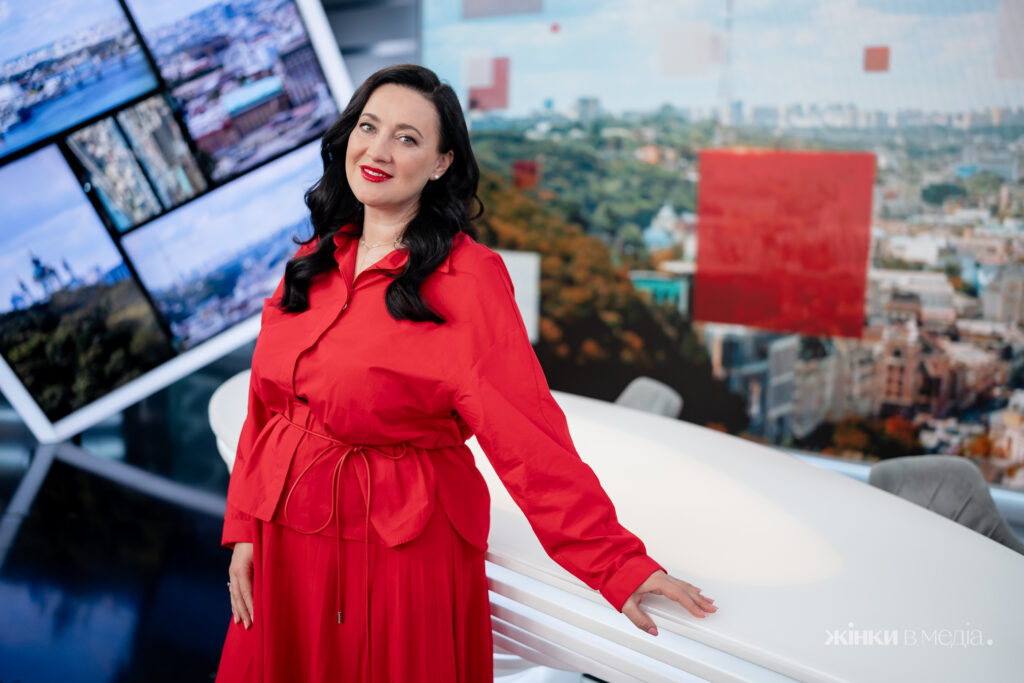
When it comes to the young women just entering television journalism today, what would you want to be different for them than it was in your time?
We began our careers in one set of conditions, and they’re entering the profession in completely different ones. Young women today have far more technical possibilities. I remember looking for an internship: back then in Lviv you had to track down a mobile phone to call another city and make arrangements, because on the state landlines dialing out long-distance — getting an outside line through the “eight” — was blocked. Those were the lean 1990s, when there was no money and no opportunities, but we managed all the same.
Now, thanks to social media — Instagram, Facebook — you can write directly to any top manager or executive. Incidentally, I always greatly valued it when students reached out to me personally. When their mother or acquaintances wrote on their behalf, I understood that this person was unlikely to make a good journalist. After all, the ability to get through to the right person is one of our basic professional traits.
I’m very proud of many of my interns and trainees — back when I worked as a correspondent, I was a real mentor to them. They’ve achieved impressive things: one of my former trainees now heads the PR and promo department at a large media group, while another became a well-known journalist and presenter.
In this profession, what matters is competitiveness, not nepotism or connections. Even if someone gives you a push once, without charisma and professionalism nothing will come of it. No one will go out on a shoot or edit quality material in your place. You have to deliver results yourself, hold the audience’s attention, and know how to communicate with it. In this profession, personal and professional qualities are what count most. And I think many young women today have them.
Author: Oleksandra Horchynska. Editor: Liza Kuzmenko. Photo: Valia Polishchuk, Women in Media.
This material was made possible by International Media Support (IMS) as part of the project “United for Equality in the Media: Promoting Gender Equality Through Cooperation Between Public Organizations, Media, and Authorities” implemented by the NGO “Women in Media.” Any views expressed here belong to the authors and do not necessarily reflect those of the IMS.