How to counteract Russian disinformation in the international media arena, foster cooperation between Ukrainian and foreign journalists, and promote the implementation of gender equality policies in Ukrainian media.

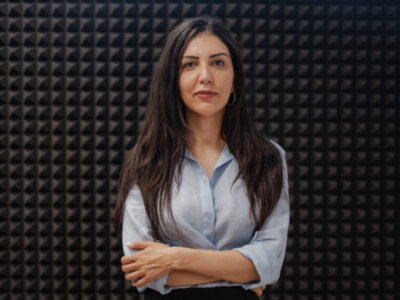
Gohar Khodjayan is the Programme Manager at International Media Support for Ukraine, Moldova, and Georgia, and a former Director of the International Training Programme (ITP) for Eastern Europe, focused on media self-regulation.
For several years, Gohar Khodjayan has been actively engaged with Ukrainian media and the topic of Ukraine, frequently visiting the country for business trips and participating in various journalistic events.
In an interview with Women in Media, Gohar Khodjayan discusses whether Ukrainian media professionals should fear a reduction in foreign funding, the priority areas for donors in the coming years, and the development of self-regulation in Ukraine during the war.
In a 2021 interview with Hromadske Radio, alongside Roman Kifliuk, IMS’ National Adviser for Ukraine, you pointed out that media self-regulation in Ukraine often arises in response to a perceived threat. Since then, a full-scale war has begun — a monumental threat not only to the media but to the entire population. How has the invasion impacted media self-regulation in Ukraine?
When we conducted that interview, self-regulation was not as prominent a topic in Ukraine as it is now. I believe most of the audience truly understood what self-regulation is and why it is essential only after February 24, 2022 — following the invasion. It was during this time that many journalists united for the first time, working together to address various challenges. Ethical standards and efforts to combat disinformation were significantly reinforced. The importance of handling sensitive information also came to the forefront — I recall that we even collaborated with the Journalistic Ethics Commission to create a guide on covering the war. Before the invasion, the attitude toward such topics was quite different.
You frequently visit Ukraine on business, particularly through the ITP programme implemented by IMS, which focuses on promoting media self-regulation, including through studying the experiences of Denmark and Sweden. What other programs and projects is IMS currently running in Ukraine, and what are the key areas of focus?
The large ITP programme will not continue, that’s certain. However, we plan to create a follow-up initiative, building on the resources we have in Ukraine, including the 50 participants of the programme — experts, journalists, and others. In other words, those who have completed the ITP programme can continue to contribute at an expert level. The goal is to sustain this in Ukraine and facilitate an ongoing exchange of knowledge and expertise between journalists and stakeholders in both Ukraine and Denmark.

Currently, our focus is on the content produced by the media, particularly ethical content, as well as on the resilience and sustainability of the media. We also place significant emphasis on psychological support, especially for journalists — not only those working on the frontlines but also for those who have been working tirelessly, often 24/7, for nearly three years and are now exhausted. This includes investigative journalists, for example.
Another strategic direction in our work is Ukraine’s European integration. Our priority topics include media literacy, combating disinformation, and raising public awareness of disinformation — both in Ukraine and in the other countries with which we work. This also involves the development of media legislation and establishing dialogues with tech companies and social media on how to effectively implement self-regulation.
You are a Programme Manager for International Media Support in countries such as Ukraine, Moldova, and Georgia. These three countries are united in their fight against a common enemy — Russia — in defense of independence and democracy. In the media sphere, this is especially evident through powerful disinformation campaigns. What other common challenges do you see in the media field across these countries?
Yes, disinformation is likely the biggest problem. This is an information war that extends beyond Ukraine, affecting Moldova, Georgia, Armenia, and other Eastern Partnership countries. An important aspect is verifying information and ensuring it is presented accurately, tailored to the specific audience in each of these countries. This is particularly crucial in countries like Moldova, where a significant portion of the population is Russian-speaking, and Russian is the native language for many. The Russian-speaking population is also more vulnerable to Russian propaganda.
We are also facing challenges such as digital security, cyberattacks from Russia, financial instability, and economic pressure on the media — both in Ukraine, Moldova, and Georgia. This includes not only economic but also political pressure. For example, the Georgian government has attempted to control the media, interfering with their work and limiting freedom of speech. This also ties into the issue of self-censorship among journalists, which we have observed recently in both Georgia and Ukraine.
You mentioned self-censorship in Ukrainian media. In many ways, it is indeed necessary to censor content due to the wartime conditions. Journalists must carefully weigh whether to publish certain information, considering factors such as security requirements.

This is a difficult question. I understand that there is information that could harm Ukraine, and it is better for journalists not to cover it. However, in general, it is important to show, among other things, what is happening within the army itself.
At the same time, I believe that journalists, particularly investigative reporters, should not be told what to write or not write, or whether to disclose corruption. The audience, including in the West, is well aware that corruption in Ukraine has not disappeared since the beginning of the war. Therefore, it is important to show that efforts are being made to address it and that steps are being taken to resolve the issue. This is especially important given the significant amount of money currently being allocated to support Ukraine — not only for the military but also, for example, for reconstruction.
I live in Denmark, which is one of the countries that provides the most help to Ukraine, including for reconstruction. For example, Mykolaiv is a strategic city, and as Danish citizens and taxpayers, we want to know that our money, which goes toward supporting the restoration of Mykolaiv, is being used effectively. I believe Danish society is very interested in these kinds of stories.
After the onset of the full-scale war, Ukraine’s media sector received substantial international financial assistance, including grants for urgent needs, large development grants, support for editorial teams, equipment purchases, content creation grants, psychological recovery programs, and more. However, recently, there has been considerable discussion within the Ukrainian media community about a decrease in foreign donor interest and a potential reduction in financial support. Is this something to expect, and what factors could influence such decisions?
For my part, I don’t see a significant threat regarding funding for Ukraine, at least when it comes to the Scandinavian countries. There is a lot of interest, support, and commitment to Ukraine, and I believe this support will continue for the next 3-4 years, without a doubt.

The European Union is also very committed to supporting Ukraine as a candidate country for EU membership. Therefore, I believe EU funding will continue to flow to Ukraine. However, there are certain challenges at the international level, such as the situation in the Middle East, which could lead to a redistribution of financial resources. Additionally, the victory of Donald Trump in the US presidential election has raised concerns about a possible reduction in funding for civil society organizations.
Overall, the support for Ukraine has not ended, and this is important to recognize. I would also add that in 2022-2023, support was more short-term, focused on urgent assistance for the media. Now, however, I see that donors are more open to considering long-term support.
How have the priority topics and funding directions from foreign donors changed during the two-and-a-half years of full-scale war in Ukraine? And where do topics related to inclusion and gender equality in the media stand on this priority list?
For European countries supporting Ukraine, a significant part of their focus is on gender issues. As I mentioned earlier, this is also tied to European integration — not just in the media context. Regarding content, the focus is particularly on ethical approaches, as well as on fostering sustainable media. This includes areas such as policy development, strategy, and providing expert support to large organizations to ensure their independence. An example of this is the National Television and Radio Broadcasting Council. It also involves implementing amendments to relevant legislation.
When it comes to supporting gender equality and inclusion, is the focus more on creating content about these topics, or does it also involve implementing such approaches within editorial offices?
I believe every editorial board should have a gender policy. It’s not just about women and men; it’s about balance, understanding others, and including LGBT+ interests, as well as a broader understanding of human rights. Also, gender policies should address issues like combating sexual harassment in the workplace.
The ongoing war forces Ukrainian media to confront new challenges, including the direct impact of mobilization on the gender composition of editorial offices and the lack of female experts in certain fields to replace the mobilized male specialists. This issue arose due to long-standing stereotypes that have restricted women’s access to certain industries. What steps can be taken to address this situation?
The first step is not to look at professions as “female” or “male”.
I was just discussing with a Danish colleague the fact that during Soviet times, there were no “men” or “women” — only comrades. Women did the same jobs as men, even those that are now considered “atypical” for them. When I was a little girl, I wanted to be a lawyer. But I was told, “This is not a female profession, what will you do?”
Therefore, I believe working on this issue is crucial. Internships and training in editorial offices could be helpful, for example, where male specialists share their experience with women who, for various reasons, may lack that experience. Also, as I mentioned earlier, editorial offices need gender policies to address these issues.


Are there examples of media NGOs or associations in Denmark or other Scandinavian countries that unite women journalists? How do they function, and what are their key features?
We have Kvinfo in Denmark. While it is not a typical, purely journalistic organization, it focuses on helping women find employment by offering free mentoring services. When I moved to Denmark at the age of 23, I personally signed up for this organization to receive assistance. It supports women who want to navigate life in a new country, offering them the opportunity to connect with other women from various professions. It also helps women who plan to pursue further studies — I, for example, had many questions when I was considering studying at that time.
In Sweden, there is an organization called Kvinna till Kvinna, which literally translates to “Woman for Woman.” They offer various training programs for women and collaborate with organizations from other countries. In Denmark, there is the Nordic Women in Media Network, which provides an opportunity for sharing experiences and resources. Additionally, the Danish Women’s Society Media Group focuses on issues of women’s society. These are just a few examples, but there are many more such organizations in existence.
Is it difficult for the international community to maintain attention on the topic of Ukraine? Or are colleagues from foreign media still as interested in what is happening here — not superficially, but with a willingness to understand it deeply — today, as they were in 2022, when the full-scale war began?
It is no secret that the West now covers the topic of Ukraine less. On one hand, this is understandable: society is tired of the constant negative information. Of course, events in Ukraine are still being monitored, though they may not be covered every day as they were at the beginning of the invasion. However, in my opinion, the approach to coverage is now deeper — for example, the topic of how the election of Donald Trump as president of the United States will affect Ukraine is currently being discussed.
Some analytical media also conduct research, for example, on the issues facing occupied Ukrainian territories or on cities like Kharkiv, which are under constant shelling. Less attention is now paid to Donbas. The focus has shifted to events on the front line, the movement of the front, shelling in the Sumy region, and drone activity.

At the same time, we must consider the recent events in the Middle East, which are also in the focus of foreign media, particularly those in Palestine, the Gaza Strip, Iran, and Lebanon.
I believe there is a real need for more in-depth coverage of events in Ukraine. One potential solution is for Ukrainian journalists to collaborate with foreign media, providing first-hand information that is crucial. In the past, several media outlets had up to a dozen correspondents covering Ukraine, but now it’s often just one or two. This reduction may be due to limited funding and the need for coverage of events in other countries as well.
For such potential cooperation, it is important to understand what would be of interest to different countries — what appeals to France, for example, versus Scandinavian countries, and so on. This understanding is crucial for influencing society through the media, to present events in a way that resonates with French, Belgian, Dutch, or Spanish audiences.
This year, I participated in the Europe-Ukraine Desk program by n-ost. As part of this program, we visited the editorial offices of major publications in six European countries, including Spain, France, and Italy. Most of these editorial offices have several correspondents who cover Ukraine and regularly visit us on business trips. Often, these correspondents previously worked in Moscow bureaus but shifted their focus to Ukraine after the start of the full-scale war. Given this, it is unlikely that these editorial offices will commission materials from Ukrainian authors, as they have their own correspondents covering the topic.
That’s true. Therefore, I believe more in having dialogue and an opportunity to exchange ideas. For example, joint investigations with Danish investigators into where the money Denmark allocates to help Ukraine goes, or similar collaborations with German journalists. This could also involve creating content together, such as podcasts, movies, and more.
I also believe that the topic of how so-called Russian independent media, such as Dozhd or Meduza, actually operate should be further developed. Recently, a fresh study on this topic was published in Ukraine, titled Deconstruction of Truth, which is available in both Ukrainian and English. Such research is extremely important.

Out of professional curiosity, I still subscribe to the Telegram channels of the Russian Meduza and the Belarusian Zerkalo publication. I’ve made an interesting observation: Meduza, which is supposedly liberal, often publishes news about Ukraine earlier than Ukrainian channels and regularly cites the pro-Russian resource Strana.ua as its primary source. This choice of sources speaks volumes.
Yes, and that is why I will send the above-mentioned study to everyone involved in working with disinformation to help them better understand the situation. I am sometimes asked why we can’t cooperate with Russian media, such as those now based in Latvia. The answer is this: On the one hand, they acknowledge the war and admit that Putin is to blame. On the other hand, let’s look at how they write. Their language remains imperialist, and the concept of “great Russia” is still present.
There are many nationalities living within Russia that actually want to be independent from it. Are the Tatars truly part of Russia? Is the North Caucasus really Russia? Do Chechens consider themselves “Russian”? According to their passports, perhaps, yes. But in general, they have their own culture and language.
I think that after the collapse of the USSR, many people began to search for their own national identity. If you look at the European Union, it is also an association, not a “common nation.” No one is a “common nation”; everyone has their own culture and identity. And that’s something we should respect each other for.
Interview conducted by: Oleksandra Horchynska, Women in Media
This material was made possible by the New Democracy Fund (NDF) and International Media Support (IMS) as part of the project “Breaking Down Barriers: Bringing together public organizations, media, and state bodies to achieve gender equality in the media space of Ukraine,” implemented by the NGO “Women in Media.” Any views expressed here belong to the authors and do not necessarily reflect those of NDF or IMS.