
The editor of ZN.UA’s Domestic Policy Department talks about legal pressure, professional solidarity, and why the case against her concerns everyone who writes about high-level corruption.
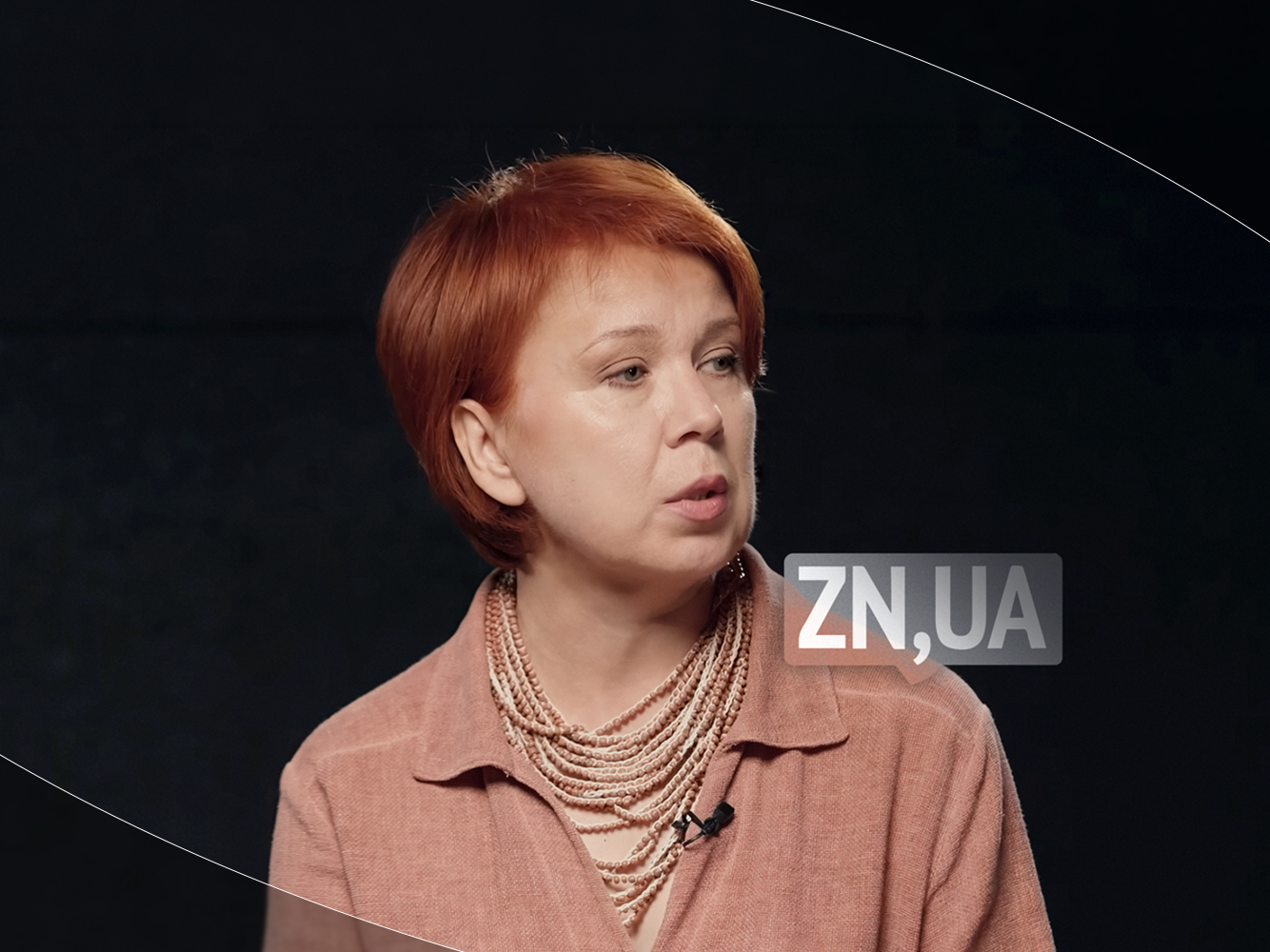
The first hearing at the Pechersk District Court of Kyiv was due to take place on August 10, in a lawsuit brought by Dmytro Borzykh — a former deputy chief military prosecutor and a subject of a NABU investigation into unauthorized access to the Unified Register of Pre-trial Investigations — against the outlet Dzerkalo Tyzhnia (ZN.UA) and journalist Inna Vedernikova.
The plaintiff demands that a number of statements from the article “The Hacker Lawyers Case: How NABU Uncovered the Parasites” be declared false and retracted, and he disputes the media’s right to name him as an official suspect. He is also claiming UAH 500,000 in legal costs, UAH 300,000 of it for legal assistance. The hearing was postponed to September 3, 2026.
Human rights defenders and lawyers classify this lawsuit as one bearing clear signs of a SLAPP (Strategic Lawsuit Against Public Participation) — a strategic suit against public participation whose aim is not to protect business reputation, but to intimidate, censor, and financially exhaust the media. Several factors point to legal pressure through a SLAPP suit in this case, explains media lawyer and attorney Oksana Maksymeniuk. The first sign is the excessive and unjustified amount of legal costs claimed.
“The amount claimed for legal assistance is UAH 300,000. That figure can be considered excessive, since the average cost in this category of cases ranges from UAH 20,000 to UAH 50,000, depending on the complexity and the preparation time involved,” Maksymeniuk explains. “The second sign is that the suit was filed over a statement on a matter of public interest. The article concerned a suspicion issued by NABU against certain individuals for systematically gaining unauthorized access to restricted materials and databases — including on the part of the plaintiff. Although current legislation restricts the publication of the name of a person suspected of a criminal offense until the verdict enters into legal force, that same provision permits publication of the name in cases where the information is of public significance.”
Because the criminal proceedings concern access to restricted-access information whose disclosure could cause significant harm to the interests of the state, journalists had every right to report these facts to the public, the media lawyer stresses.
Earlier, Inna Vedernikova was subjected to a gender-based online attack in anonymous Telegram channels aimed at discrediting her personally and members of her family. At the time, the journalist suggested that the campaign might be driven by government figures or by people affected by Dzerkalo Tyzhnia’s investigations — in particular into the lawyers involved in the case concerning interference with the Unified State Register of Court Decisions.
According to Oksana Maksymeniuk, in today’s Ukrainian reality it is women journalists who most often find themselves the targeted victims of such complex attacks:
“As a rule, the goal of such lawsuits is pressure — intimidation and financial exhaustion — rather than actually winning in court. It doesn’t matter whether it’s women or men. What matters is the very fact of being dragged into legal proceedings. The result of such a case isn’t victory for the plaintiff, but a draining, years-long ordeal. Since most articles and journalistic investigations in Ukraine today are produced by women journalists, it’s only natural that such suits and the accompanying information attacks are more often directed at the women who author these publications.”
The mechanisms currently available to defend against SLAPP attacks include motions alleging abuse of procedural rights. However, Maksymeniuk notes that, in her experience, this doesn’t work. She doesn’t know of a single case in which a court has dismissed a claim without consideration on the grounds of the plaintiff’s abuse of procedural rights. To strengthen this protection, Ukraine unquestionably needs new legislation. But without established court practice to back it up, it may remain merely a provision on paper that doesn’t function, the lawyer adds.
In July 2026, the National Council of Ukraine on Television and Radio Broadcasting presented the results of public consultations on the draft law on the Protection of Persons Engaged in Public Participation from Manifestly Unfounded Claims or Abuse of Legal Proceedings — that is, on SLAPP suits. During the event, the chair of the Verkhovna Rada Committee on Freedom of Speech, Yaroslav Yurchyshyn, announced that once the draft has been revised in light of the public consultations, it is due to be submitted to parliament.
Inna Vedernikova spoke to Women in Media about why Dmytro Borzykh’s lawsuit sets a threatening precedent for the entire journalistic community, and how to resist attempts to introduce a “chilling effect” in the media industry.
How did you learn about Dmytro Borzykh’s lawsuit against you and ZN.UA, and what was your first reaction to the situation?
We received two enormous volumes: one addressed to the ZN.UA newsroom, the other to me personally as the author of the publications. I can’t say we weren’t expecting any reaction from that side at all. We’d seen how certain online resources were monitoring ZN.UA and our publications very closely and responding to them. So we understood that some kind of follow-up was entirely possible.
But the lawsuit itself is, of course, striking in its thoroughness and scrupulousness. It comes with expert analyses in which our texts are literally taken apart word by word: what a particular phrasing means, how a reader might perceive it, what is fact and what is evaluation, what context one phrase or another creates. You can see how much time, effort, and money went into dissecting these journalistic texts. That’s the level of attention involved.
The material in question is our investigation “The Hacker Lawyers Case: How NABU Uncovered the Parasites.” According to the investigation, a group of lawyers from the Guarantee of Your Rights firm — one of whose members, Mr. Borzykh, is close to the current prosecutor general — guaranteed their clients exclusive information services. With a skilled hacker and a purpose-built program, they gained unauthorized access to the materials of criminal proceedings in the Unified Register of Pre-trial Investigations. This concerns, in particular, around 30 NABU cases involving high-level corruption.
In this way, the anti-corruption bodies’ investigations could be neutralized, because the people under investigation knew in advance the dates and times of searches and other investigative actions. In these proceedings, Dmytro Borzykh has the status of a suspect — and NABU confirmed this to us officially. And once my lawyers and I began examining the lawsuit on its merits, it became clear that this is a story not only about Borzykh, ZN.UA, or me. A precedent is emerging here that affects the entire profession.
In your view, what is the essence of Borzykh’s grievances against you as a journalist? Which specific parts of the material is he challenging?
He’s challenging a number of statements from our main investigation and from subsequent publications about the case, asking that they be declared false and retracted. Separately, he is demanding that our naming him as a suspect be ruled unlawful. Plus the UAH 500,000 in legal costs he’s claiming, of which UAH 300,000 is for legal assistance — even though Dmytro Borzykh is himself a practicing attorney.
So there are two levels here. The first is specific complaints about the text, right down to individual words and phrasings. The second, far more important one, concerns the media’s right to name a person who officially holds the status of a suspect in a case of obvious public interest. Here we run up against Article 296(4) of the Civil Code and the case law of the Supreme Court, which allows a very strict reading of the ban on disclosing a suspect’s name before a verdict.
And then a very simple question follows. If a person officially holds the status of a suspect, why can’t a journalist — who calls that person exactly that, a suspect, not a guilty party — tell the public who is being talked about? The presumption of innocence must, of course, be protected. But in Europe, that doesn’t mean the name of a public figure involved in a high-level corruption case has to be hidden from society until a court verdict. There, they look for a balance between human rights and freedom of speech. And in such cases, the public interest takes priority.
So there’s no contradiction here. You can refrain from declaring a person guilty before a verdict and, at the same time, not hide from society exactly whom law enforcement suspects. And it’s precisely for this right that we’re going to fight in court.
Tell us how the hearings went: what happened in court, what arguments the parties made, and how do you assess the way the process is unfolding?
The first hearing was scheduled for August 10, but no substantive consideration actually took place. Two experienced lawyers are working with us. The outlet is represented by Yevhen Vorobiov, and my interests by Roman Vasylniak, with whom ZN.UA once won a case against former Kyiv mayor Leonid Chernovetskyi. Both lawyers specialize in legal assistance for journalists and media and have considerable experience in this category of case. This time, for reasons unknown, Roman wasn’t added to the case in the Electronic Court system, and the statement of defense he had sent by mail in advance — which, according to the court registry, was handed to the judge back on July 14 — simply couldn’t be found by the judge.
The revolving door of judges on the case is a story in itself. Borzykh withdrew his first claim immediately after it was automatically assigned. After he refiled, two judges recused themselves in turn — one of them because of a personal acquaintance with Borzykh. In the end, the case landed with Judge Oleksii Sokolov. According to our information, the head of the Pechersk court, Ruslan Kozlov, is a close family friend of Borzykh’s — the two are godparents to each other’s children. The combination of these circumstances became the basis for our motion to recuse Sokolov. That motion has already been denied.
In addition, ZN.UA is asking that NABU be brought into the case, because part of the information Borzykh wants retracted through the civil proceedings relates to the Bureau’s criminal case. Can a civil court assess circumstances that are the subject of criminal proceedings? No. And NABU confirmed this to us officially as well — which the judge disregarded, continuing to hear the case.
The next hearing is scheduled for September 3, at 12:50.
Do you personally experience this lawsuit as a form of pressure over your journalistic work? If so, how does it manifest?
Of course. But I wouldn’t reduce this to pressure on me or on ZN.UA specifically. If it were a single lawsuit by a single Borzykh against a single outlet, it would be an unpleasant but local affair.
The problem is that it doesn’t arise in a vacuum. We’re seeing attempts to use the courts to halt journalistic materials before they’re even published — as in the case of Slidstvo.Info and the Anti-Corruption Action Center, whom Pechersk District Court judge Serhii Vovk barred from disseminating the findings of an investigation into 143 properties belonging to Oleksandr Sukhachov, brother of SBI Director Oleksii Sukhachov, before the material had even come out. Serhii Vovk works in the office next door to Judge Oleksii Sokolov, who is hearing Borzykh’s suit against ZN.UA.
We see a legal provision that makes it possible to demand that media not name suspects; legislative initiatives that could limit law enforcement’s ability to tell the public what high-profile cases are about. The Lozovyi amendments haven’t been fully repealed. There are information attacks on journalists and civic activists; there is pressure from the security services and the administrative apparatus.
All of this is happening against the backdrop of a much broader problem — the concentration of power, the loss of agency by parliament and the government, and the growing role of the security bloc under the president’s control. And independent media, civic activists, and the anti-corruption bodies remain the ones who can show society what the authorities are unlikely to reveal about themselves: corruption, abuses, incompetence, and the real mechanics of decision-making within a system of power that has begun to work against the interests of the state.
So for me, the question is also about what rules of the game we end up creating for journalism as a whole. Because if law enforcement can say less and less about a high-profile investigation, if a journalist risks a lawsuit for naming the person it concerns, and if a court can halt a publication before a reader ever sees it — then the space for public oversight simply narrows. And that is already far more serious than our particular court battle with Dmytro Borzykh.
Has your work changed since the legal proceedings began? Have you become more cautious about topics, subjects, or wording in your material?
My logic here is very simple: if you start retreating under pressure, you very quickly find there’s nowhere left to retreat to. Give them a finger and they’ll take the whole arm. So we’ll simply carry on doing our work.
I felt professional solidarity very keenly. Colleagues from many outlets stood with us: Ukrainska Pravda, NV, Censor.NET, LIGA.net, Espreso, Bihus.Info, and others — my apologies if I’ve left anyone out. We were supported by the Institute of Mass Information, the Human Rights Platform, ZMINA, the Anti-Corruption Action Center, DEJURE, and other organizations. And for me, that’s perhaps one of the most important outcomes of this whole story so far.
The newsroom keeps me steady — our editor-in-chief Yulia Mostova, my colleagues, and the sense that this isn’t your own private war. So I have no fear that I now need to write more “quietly” somehow. Because in situations like this, it’s crucial to understand that you’re not left one-on-one with a person who has the money, the connections, and the ability to spend years going through the courts.
What resources are you having to spend because of these proceedings? How real is the risk of significant financial costs for you?
Naturally, it’s considerable resources: the newsroom’s time, my time, lawyers, tens and hundreds of pages of documents, preparing our position, the hearings, the UAH 500,000 in legal costs claimed by the plaintiff. We had to look for financial support, and, as I’ve said, the Human Rights Platform supported us both legally and financially, and ZMINA is ready to help at the next stages. So it matters that we haven’t been left alone with all this.
At the same time, you have to understand that this isn’t a problem only for large national media. Regional, city, and district outlets can face such lawsuits too, and they have far fewer resources for a prolonged legal defense. For them, the consequences of such an attack can seriously affect the very functioning of the newsroom, its financial stability, and its ability to keep working on complex, socially important topics. And that’s another side of the same broader problem. Legal pressure is capable not only of draining a particular journalist or newsroom, but of gradually narrowing the space for independent journalism as a whole.
Beyond the lawsuit itself, have there been other forms of pressure — attempts at discrediting, intimidation, or contact with you or those close to you — that you connect with this story?
Yes. Last year there was a large-scale information attack in Telegram channels against me, my family, and my husband. And some of those publications appeared and spread on resources close to the plaintiff. I’d rather not go into more detail for now. I think this story has a continuation ahead of it. And some things are better discussed when you’re ready to put on the table not just your own understanding of what’s happening, but the evidence for it.
Your lawyers describe the lawsuit as bearing the hallmarks of a SLAPP. What does that assessment mean to you, and do you feel the proceedings could have a “chilling effect” — making journalists more cautious about writing on influential people?
The “chilling effect” isn’t necessarily about silencing those who already work on anti-corruption topics. It’s far more dangerous if the next journalist simply decides not to enter this field at all. Name someone — get a lawsuit; run an investigation — get taken to court; your material may be blocked before publication; somewhere an information attack lands; somewhere the security services get involved. And the next time a difficult story is sitting on that journalist’s desk, they may simply ask themselves: do I really need this?
An editor may decide not to get involved. A source may decide not to talk. And that is the real chilling effect. There’s no need to shut down newsrooms. It’s enough to make a journalist’s work expensive, drawn-out, nerve-racking, and dangerous, and some people will start censoring themselves.
The scale of the problem is visible literally today. The media are covering HACC hearings in a high-profile NABU and SAPO case, among whose suspects are the former deputy head of the Office of the President, Iryna Mudra, former MP Maksym Mykytas, and others. Journalists name them, report the substance of the suspicions, and quote the investigation’s materials and the parties’ positions. Now imagine that tomorrow Mudra, Mykytas, or any other suspect files a lawsuit against any of these outlets because it named them before a guilty verdict. That is exactly the kind of claim over which Borzykh is now suing ZN.UA.
Do you see the scale of the problem? This is no longer the story of one outlet. It’s a question of whether Ukrainian media can fully tell society about high-level corruption and name the people whom law enforcement officially suspects of it — without declaring them guilty before a court verdict.
In fact, Borzykh has already lost this case, because his goal was to frighten journalists who mention his name. Incidentally, he denies being a public figure — even though he is an attorney and was for a long time a deputy to Chief Military Prosecutor Anatolii Matios. Since this lawsuit, every leading outlet has been writing about him. So he has achieved the exact opposite effect.
But we need institutional mechanisms to protect against SLAPPs. IMI has already called the suit against us one that bears the signs of a SLAPP. The chair of parliament’s Committee on Freedom of Speech, Yaroslav Yurchyshyn, is talking about work on the relevant legislative mechanisms. We’re not naive enough, of course, to think this parliament will adopt them. But this legislation needs to be prepared right now.
And here the media community really does need to act together — not just to fend off each successive lawsuit, but to secure rules that prevent courts from being used to punish journalists for their work.
What stage is the case at now, what do you expect from the coming hearings, and what would a fair outcome of this process look like for you?
The next hearing is scheduled for September 3, at 12:50. We’ll defend our position and insist, in particular, on bringing NABU into the case, because part of what Borzykh is asking to have retracted relates directly to the Bureau’s criminal proceedings.
In this particular case, a fair outcome for us is obvious — that the claim be dismissed. But if we simply win this case and go our separate ways, our team won’t consider the problem solved.
For ZN.UA, a good result of this whole story would be if it became the occasion for a professional conversation — no longer about Borzykh and Vedernikova, but about the rules under which Ukrainian media will operate going forward. So that a journalist is able to report socially significant information properly, without violating the presumption of innocence. So that the courts don’t become a tool for exhausting a newsroom. And so that media don’t have to heroically fend off, again and again, a problem that can and should be solved at the level of the law.
Because in the end, this case is about a journalist’s right to name socially significant facts and the people they concern. And about society’s right to know what is happening in the state.