
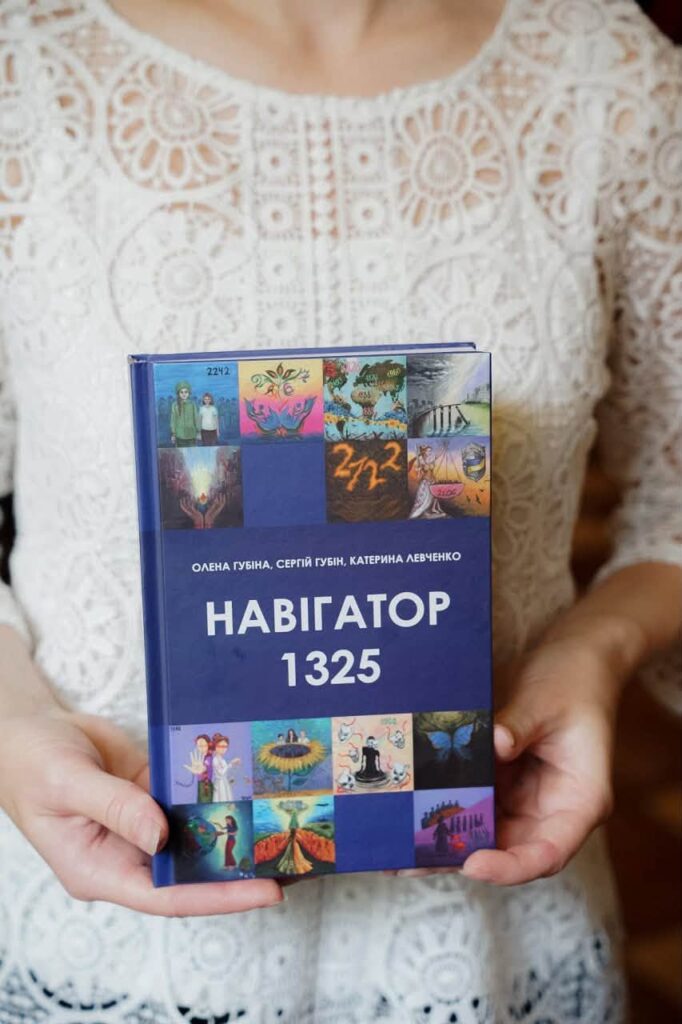
Navigator 1325, a book dedicated to Ukraine’s experience in implementing United Nations Security Council Resolution 1325 on Women, Peace, and Security, features a dedicated section on women in the media. The authors explore the work of Ukrainian women journalists during the war, gender-based online violence, gendered disinformation, women’s participation in editorial teams, and the role of the media in shaping the recovery agenda. A significant part of the section draws on the research, projects, and practices of NGO Women in Media.
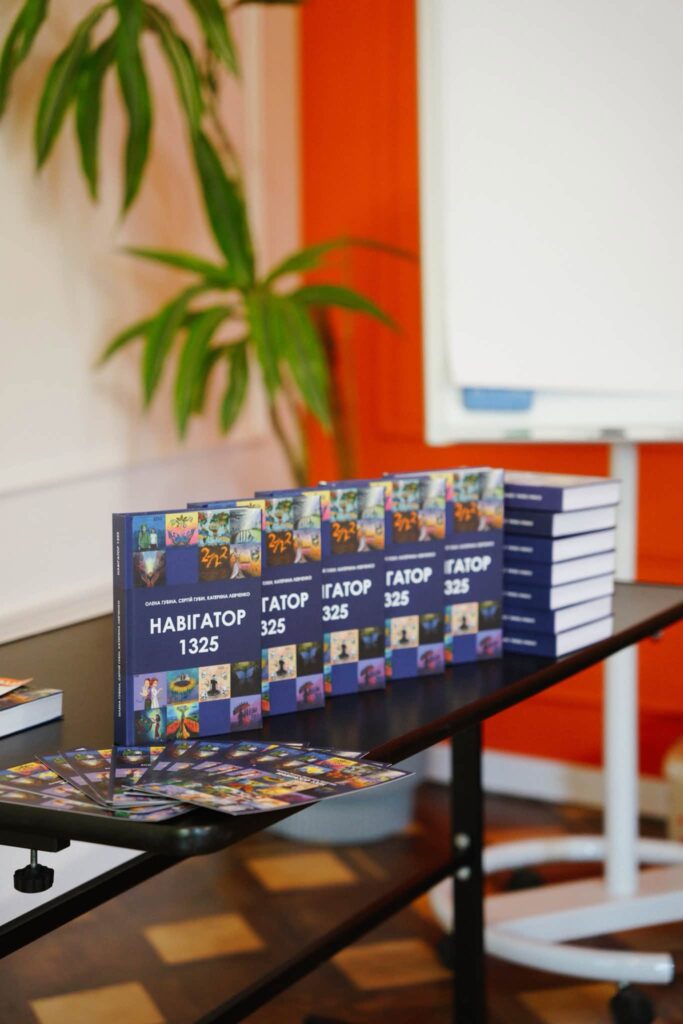
Navigator 1325 was prepared by journalists Olena Hubina and Serhii Hubin, together with Kateryna Levchenko, Government Commissioner for Gender Policy. The publication consists of 25 sections, marking the 25 years since the adoption of UN Security Council Resolution 1325 in 2000. The authors explain that they sought to bring together Ukrainian practices in implementing the Women, Peace, and Security agenda, preserve institutional memory, and make this experience accessible to a wider audience, including internationally. The English edition describes the book as an exchange of experience and an advocacy tool for all aspects of the WPS agenda.
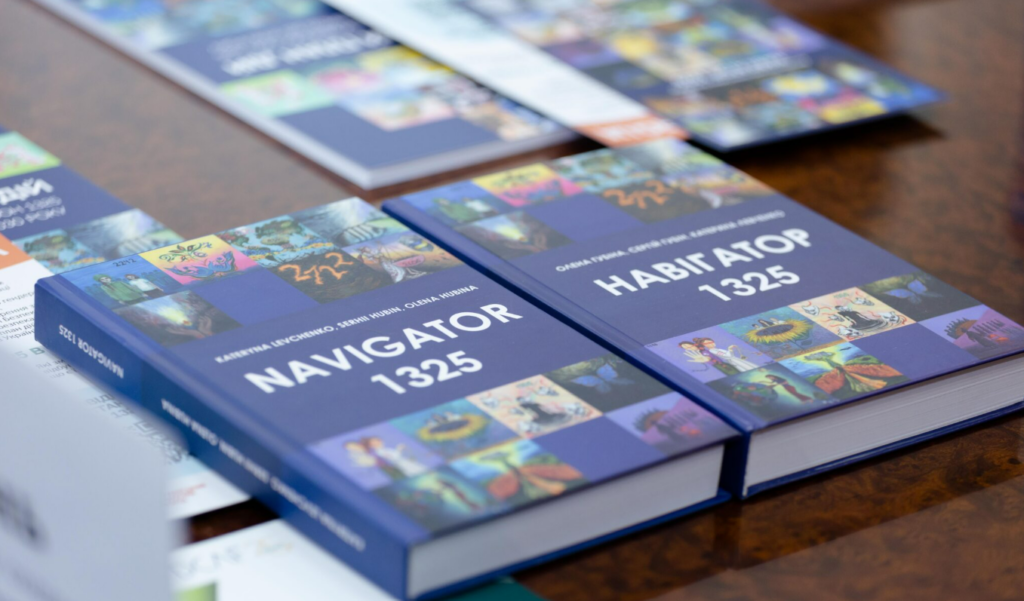
Within the book, the media are placed alongside such issues as the women’s movement, women’s participation in diplomacy and peace processes, the security and defense sector, and recovery. Section 24 is titled “Women in the Media.”
The authors open the section with findings from the Gender Profile of Ukrainian Media, a study conducted by NGO Women in Media together with the National Council of Television and Radio Broadcasting of Ukraine and the Government Commissioner for Gender Policy. According to the study, women make up the majority of employees in Ukrainian media.
For the authors, however, the issue goes beyond the number of women working in the media. They link women’s presence in journalism to the Women, Peace, and Security agenda itself: the media influence whom society sees as participants in security, political, and recovery processes.
“In this context, the media is not just a provider of information, but also shapes the social hierarchy of values and norms. It is through the media that society sees (or does not see) women as participants in recovery, security, and political processes.”
Women Journalists Documenting the War
A separate part of the section focuses on how Ukrainian women journalists work during the full-scale war: travelling to the front lines and de-occupied territories, working in frontline communities, and documenting the consequences of Russian attacks and humanitarian crises. The book stresses that women media professionals work in war zones, report on civilian evacuations, and document loss, survival, and resistance.
The book commemorates women journalists and media professionals who have been killed, including Oleksandra Kuvshynova, Iryna Tsybukh, and Tetiana Kulyk, as well as journalists who have been injured while doing their work.
The authors separately tell the story of Viktoria Roshchyna, who worked in occupied territories, was held in Russian captivity, and died. Her experience illustrates the extreme risks journalists face in wartime. As the English edition notes, it is also an example of how women in the media take on some of the most dangerous assignments.
To illustrate the experience of women war correspondents, the authors also draw on a series of interviews conducted by Women in Media with Diana Butsko, Alona Yatsyna, and Iryna Sampan.
- Diana Butsko describes her decision to return from the United States after the start of the full-scale invasion because she wanted to cover the war from Ukraine. At the same time, she encountered gender bias in her work, including being referred to as a “little girl” or being asked why she was at military positions instead of having children.
- Alona Yatsyna, co-founder of Kordon.Media, describes similar experiences. She recalls cases in which a representative of the civil-military cooperation service prevented women journalists from doing their work, arguing that they were “girls” and should be at home.
- In the book, Iryna Sampan speaks about another dimension of the threat: systematic online attacks and Russian propaganda. Search results appearing alongside her professional work included publications calling her an “escort,” a “Nazi,” and “Zaluzhnyi’s mistress.”
When Professional Visibility Becomes a Risk
One of the central issues explored in the section is gender-based online violence against Ukrainian women journalists. The authors refer to the Women in Media study Her Voice Is a Target for Them: Gender-Based Online Violence Against Ukrainian Journalists, conducted with the support of UNESCO.
According to the data cited in the book, 81% of Ukrainian women media professionals surveyed had experienced online violence. Only 19% had contacted law enforcement, while 14% reported that digital threats had escalated into physical violence.
The book also describes the online attack map maintained by Women in Media. As of July 30, 2025, it had documented 68 cases. The response process involves several stages: monitoring online attacks, verification, classification, analysis and documentation in a database, and the provision of assistance.
The authors also address gendered disinformation. They cite the study Underestimated Threat: Gendered Disinformation about Ukrainian Women Journalists, prepared with contributions from Liza Kuzmenko and Larysa Kompantseva. The study examines the links between disinformation targeting Ukrainian women journalists, gender bias, and Russian propaganda.
The book concludes that Russia uses gendered disinformation in Ukraine to silence women journalists and foster negative perceptions of gender equality and women’s role in democratic societies.
From a Facebook Group to a Community
A separate part of the book focuses on the history and work of NGO Women in Media.
The authors recall that the initiative was launched in April 2019 by Liza Kuzmenko and Viktoriia Yermolaeva, who both worked at Hromadske Radio at the time. Women in Media was officially registered as an organization in September 2019. What began as a small Facebook group later developed into a community bringing together women journalists, editors, producers, and other media professionals from across Ukraine and different types of media.
In Navigator 1325, the organization’s work is described across several areas: research on women’s role and participation in the media, protection of women journalists from online violence, support for women’s leadership, development of editorial policies, organizational, psychological and financial support for women media professionals, and advocacy for gender equality. The book notes that Women in Media’s research also contributes to promoting gender-sensitive policies and involving women in the media in Ukraine’s recovery programs.
Support groups for women journalists are also highlighted. Viktoriia Yermolaeva describes them as a safe space where women media professionals can speak about loss, difficult experiences, and the emotional burden of war, while receiving professional support from a psychotherapist.
Another area of work is direct engagement with newsrooms. Together with the Commission on Journalistic Ethics, Women in Media developed a model Policy on Gender Equality in Media Content. Its recommendations include balanced representation of women and men, the “do no harm” principle, avoiding re-traumatization, and ethical coverage of conflict-related sexual violence. According to the book, the policy has been integrated by a number of Ukrainian media outlets, including Ukrainska Pravda, Left Bank, Espreso, Hromadske Radio, Kyiv24, and Channel 5.
Not Only Who Works in the Media, but Whom the Media Make Visible
One of the important contradictions highlighted in the section is that having a large number of women working in the profession does not automatically translate into equal representation of women in media content.
According to data from the Institute of Mass Information cited in the book, in 2025 women appeared as experts in only 21% of materials and as key figures in 16.5%. In 2021, before the full-scale invasion, the respective figures were higher — 30% and 22%. Women were most frequently featured in entertainment coverage, while war accounted for only 6%.
This brings the section back to the broader question at the heart of Resolution 1325: who has the opportunity not only to experience the consequences of war, but also to be visible as someone who makes decisions, influences policy, and shapes the country’s future.
“If women are not visible in the media, they are absent from the vision of recovery. If they are only present as victims, society does not imagine them as creators of solutions,” says Liza Kuzmenko, Head of Women in Media, in the book.
Media as Participants in Recovery
The section concludes with a topic that extends beyond the media sector itself: journalism’s role in Ukraine’s recovery.
The book presents Women in Media’s position that during recovery, the media should do more than simply report on decisions made by the government or donors. They can strengthen public trust, monitor processes, represent the interests of communities, and determine whether women, women and men veterans, internally displaced persons, people with disabilities, and other groups are visible in the public sphere.
“Women do not just survive the war, they create change. And the media is a tool that either reinforces these changes or makes them invisible,” says Liza Kuzmenko, Head of Women in Media.
The authors also discuss the Women in Media analytical paper Engaging the Media in a Gender-Responsive and Inclusive Approach in Ukraine’s Recovery Programs. It emphasizes that during the full-scale war, Ukrainian media play a critical role not only as a source of information but also as active participants in documentation, monitoring, protecting the interests of communities, and building trust in state and international institutions.
The inclusion of a dedicated section on women in the media in Navigator 1325 broadens the conventional understanding of the Women, Peace, and Security agenda. It shows that women’s participation is not only about who serves in the military, takes part in negotiations, or makes decisions within government institutions.
It is also about those who document the war, shape society’s collective memory of it, and make daily decisions about whose voices and experiences enter the public sphere.
Navigator 1325 was published within the framework of the Women. Peace. Security: Acting Together project, implemented by the Ukrainian Women’s Fund with financial support from the UK Government. The English-language edition states that the funding was provided through the UK Foreign, Commonwealth & Development Office.