
The roundtable “From Experiments to Standards: The Ethical Use of AI in Ukrainian Newsrooms” was held at Ukrinform on September 11, 2026. Organized by the Women in Media NGO and the international organization Reporters Without Borders (RSF), the event brought together journalists and executives from national, regional and local Ukrainian media, along with representatives of the National Council of Television and Radio Broadcasting, the Ministry of Digital Transformation of Ukraine, the Digital Security Lab and other specialists working in the field.
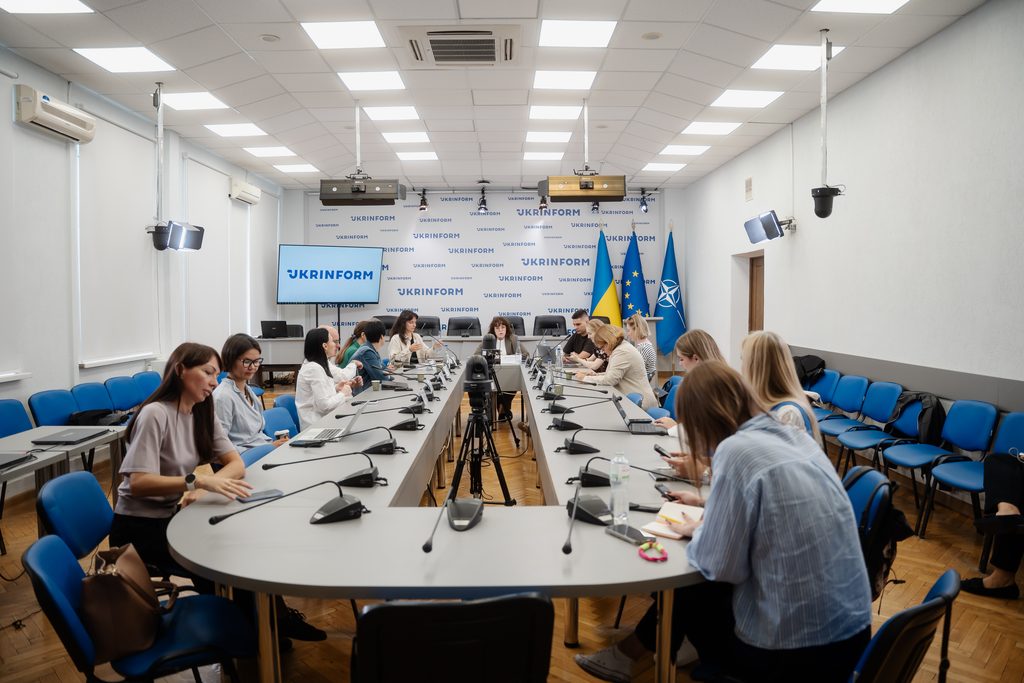
Participants discussed how newsrooms can use artificial intelligence without doing harm, the ethical questions raised by AI-generated content in the media, and how to respond when such content spreads across social platforms.
AI as a threat to women journalists
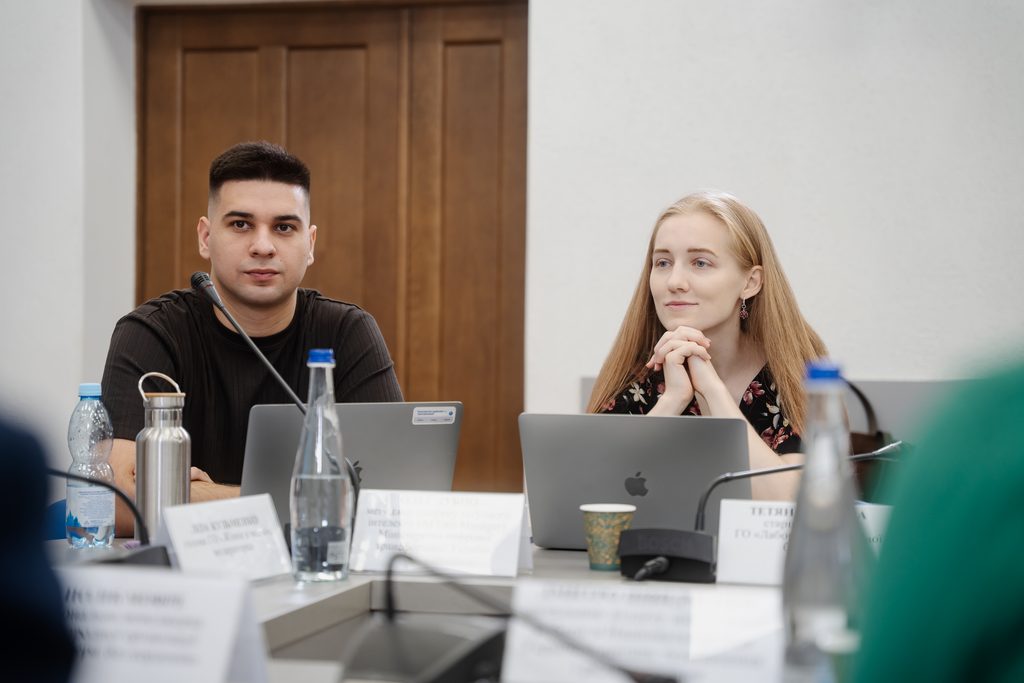
Opening the event, moderator Liza Kuzmenko, Head of the Women in Media, described the direct threats artificial intelligence can pose to women working in the media. AI tools, she said, are now widely used to produce fake material designed to discredit Ukrainian women journalists:
“We are documenting an enormous number of deepfake videos generated by AI. They spread mainly on large online platforms such as TikTok. They are built on the likenesses of real women journalists, most of them working for major television channels. Videos like these clearly have a chilling effect on women journalists — they discredit their work.”
She added that Women in Media has already handed over a list of links to AI-generated videos to the Center for Countering Disinformation under Ukraine’s National Security and Defense Council. The Center has a direct channel to TikTok, and the videos were ultimately blocked.
Kuzmenko also pointed to the case of Olena Mudra, a journalist from Zakarpattia, who was targeted by a deepfake that used the likeness of her son. The episode forced her to spend enormous amounts of time with police and lawyers and poring over case files, and cost her two investigations she was never able to finish.
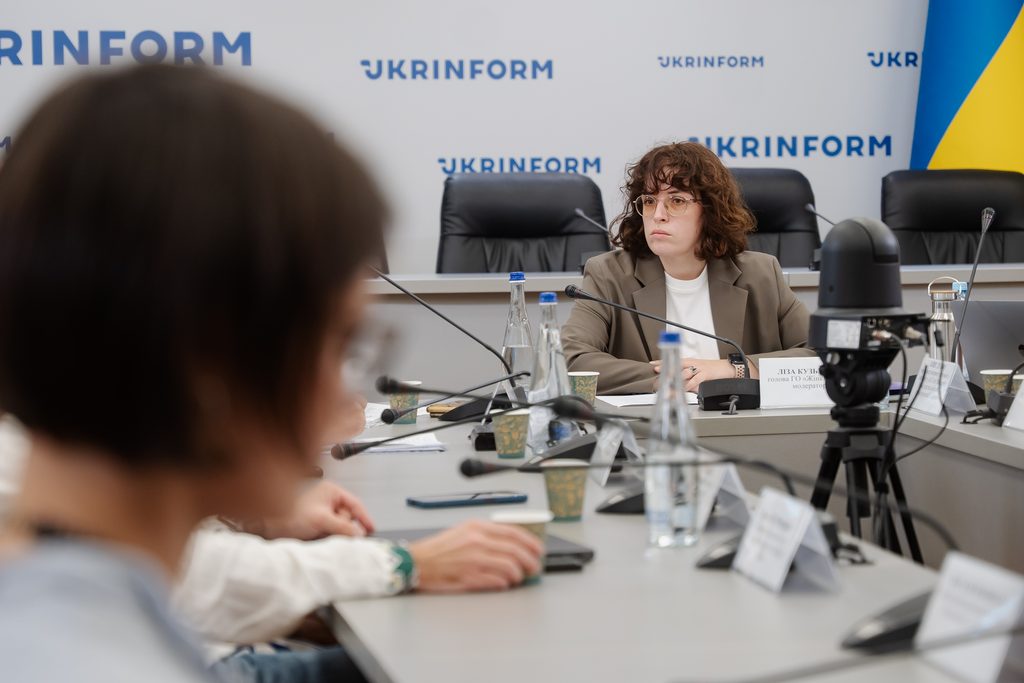
Pauline Maufrais, RSF’s regional manager for Ukraine, likewise drew attention to the ways AI can be turned against reporters. “Right now we are talking about how journalists use artificial intelligence,” she said. “But we also need to talk about how artificial intelligence can be used against journalists.”
The answer, Maufrais argued, is not to ban AI outright but to teach journalists to use it properly, anchored first and foremost in professional standards.
Together with Women in Media, RSF has developed a template AI policy for newsrooms and a practical guide to putting it into effect. Outlets that have already adopted their own AI policies through the project include Rubryka, The Ukrainian Week, Starlight Media, Frontliner, Gwara Media and Radio Nakypilo in Kharkiv, as well as the newspaper Vist in Chernihiv region.
Maufrais also raised the problem of gender stereotypes embedded in AI systems, citing the findings of a global monitoring exercise: of 100 deepfakes studied across a range of countries, more than 70% used journalists’ voices or likenesses without their consent.
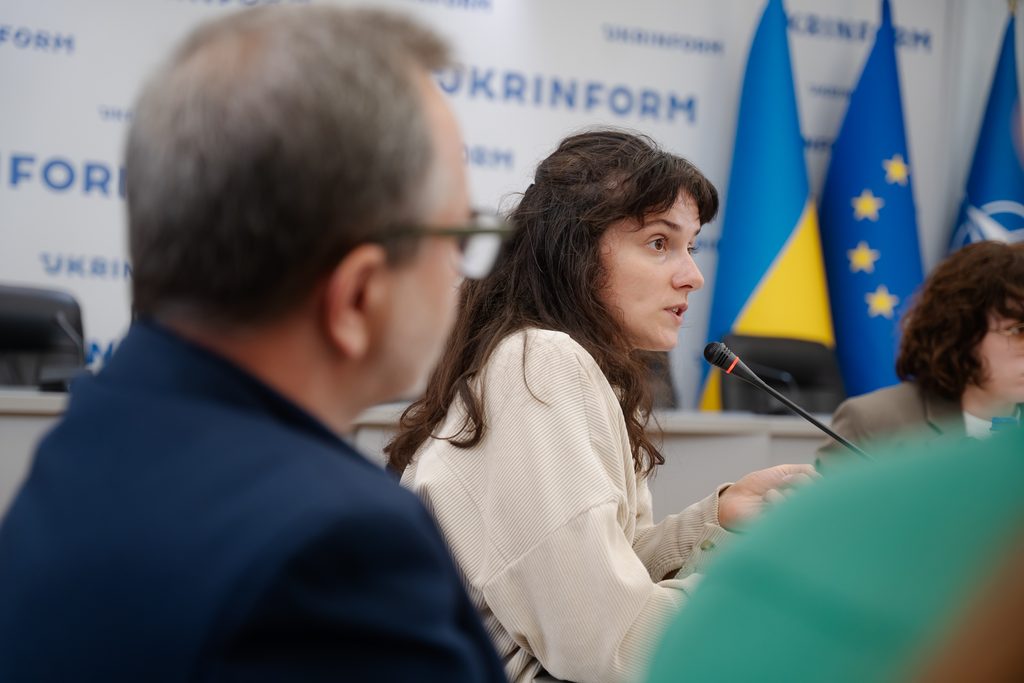
Digital gender-based violence, which has intensified with the spread of AI, was also the subject of remarks by Angelina Kariakina, adviser to the chair of the board of Suspilne. She recounted her conversations with Nobel laureate Maria Ressa, co-founder and editor-in-chief of the Philippine outlet Rappler — an organization that stands out for having built its own secure digital platform and a large language model it fully controls.
Kariakina stressed that generative AI should not be used to illustrate news and current affairs coverage with artificially created images:
“The governing principle has to be that a human is at the start of the process and a human is at the end. Whatever technologies we use, we have to keep them under the control of living intelligence, of human beings. And it is worth remembering that artificial intelligence is bound by the very same principles and journalistic standards that newsrooms are. We have rules, and our principles for working with AI must not contradict them.”
New legislation and government reform
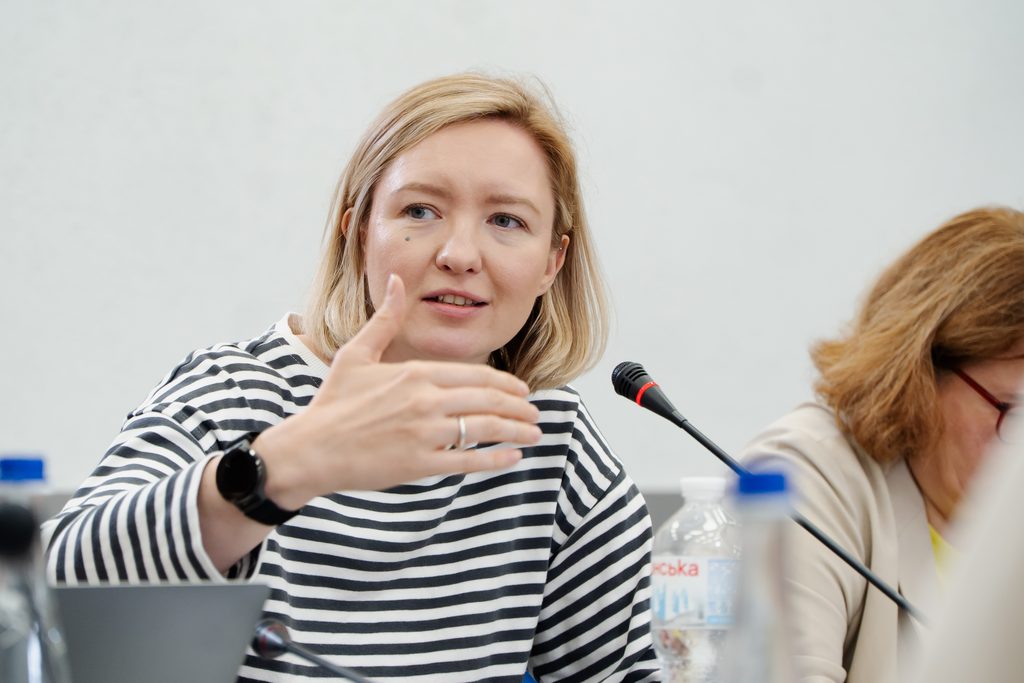
Oleh Dubno, AI Unit Manager at the Ministry of Digital Transformation of Ukraine, devoted his remarks to the drafting of a Ukrainian law on artificial intelligence, modeled on European legislation — the EU Regulation on Artificial Intelligence (the AI Act). The text is already being prepared, he said, by a working group attached to a Verkhovna Rada committee that now numbers more than 150 members.
Dubno also drew attention to EU requirements on labeling AI-generated content and urged Ukrainian media to start applying such practices now, rather than waiting for the law to be adopted at home.
“Adopting legislation on artificial intelligence that is synchronized with EU law is one of the benchmarks the European Commission officially communicates to us,” he said. He recalled that the Ministry launched a roadmap for AI regulation back in 2023 and drew up its first sector-specific recommendations for the media.

Tetiana Avdieieva, Senior Legal Counsel at the Digital Security Lab, returned to the same draft law, which the Ministry of Digital Transformation is preparing together with the working group at the Verkhovna Rada Committee on Digital Transformation. The future law, she said, will take its lead above all from European legislation — the EU AI Act.
At the same time, Avdieieva noted, questions touching on the spread of AI-generated content in Ukraine are already covered piecemeal by provisions scattered across existing laws. She offered several examples:
“Article 33 of the Law on Copyright sets out exactly how non-original objects generated by computer systems are to be used. So in essence we already have basic regulation in the area of intellectual property protection. There are also certain baseline restrictions — the ban on hate speech, the protection of children’s rights. If an AI-generated text has not been edited, for example, it may contain slurs and biases, things national law already prohibits. Images may be of a kind restricted to audiences aged 16 or 18 and over. So this may well amount to a violation of Article 42 of the Law on Media.”
Olena Andriienko, who heads the ethics and legal workstream of Siaivo, the project developing Ukraine’s large language model, spoke about the ethical and legal side of applying AI. She described the difficulties of training the model, particularly the search for balance in handling sensitive vocabulary and subjects such as mobilization, evacuation and internally displaced persons:
“A language model has to be balanced, but at the same time it must not permit hate speech, expressions of hatred and the like. It has to work in a way that is not only legally correct and consistent with common human principles but also fits the situation we are living through here and now.”
Relying on a national model, she stressed, is a matter of state security — which is exactly why every possible nuance has to be taken into account.
How newsrooms are putting AI policies into practice
The Ukrainian Week is one of the outlets that introduced an editorial AI policy this year, using the template developed by Women in Media and RSF as its basis, said editor-in-chief Margaryta Dykaliuk. In her newsroom, AI takes on routine work: transcribing audio, generating subtitles and similar tasks. Images created with AI to illustrate news in sections such as Science are always labeled; subtitles and transcripts are not.
“Artificial intelligence is only a tool that makes certain tasks easier. It cannot replace a journalist or an editor,” Dykaliuk said.
Ivan Kucherenko, director of the internet projects department at StarLight News, also shared his company’s experience. The core principle guiding its work with AI, he said, is “Human First, Human Last”: work on content has to begin and end with a real person.
“It is a person who sets the task, and a person who accepts the result and checks it. And in the end, it is a person who bears responsibility for the content created with artificial intelligence,” he emphasized.
Maryna Synhaivska, deputy editor-in-chief of LB.ua, described training her team to work with the Claude model. Her colleagues use AI to check spelling and style and to hunt down bureaucratic phrasing, she said, though in her opinion it writes weak headlines and hallucinates.
“When someone says they don’t use AI, it’s like saying, in the age of print, that we don’t use the internet,” Synhaivska said, underlining just how ubiquitous AI tools have become.
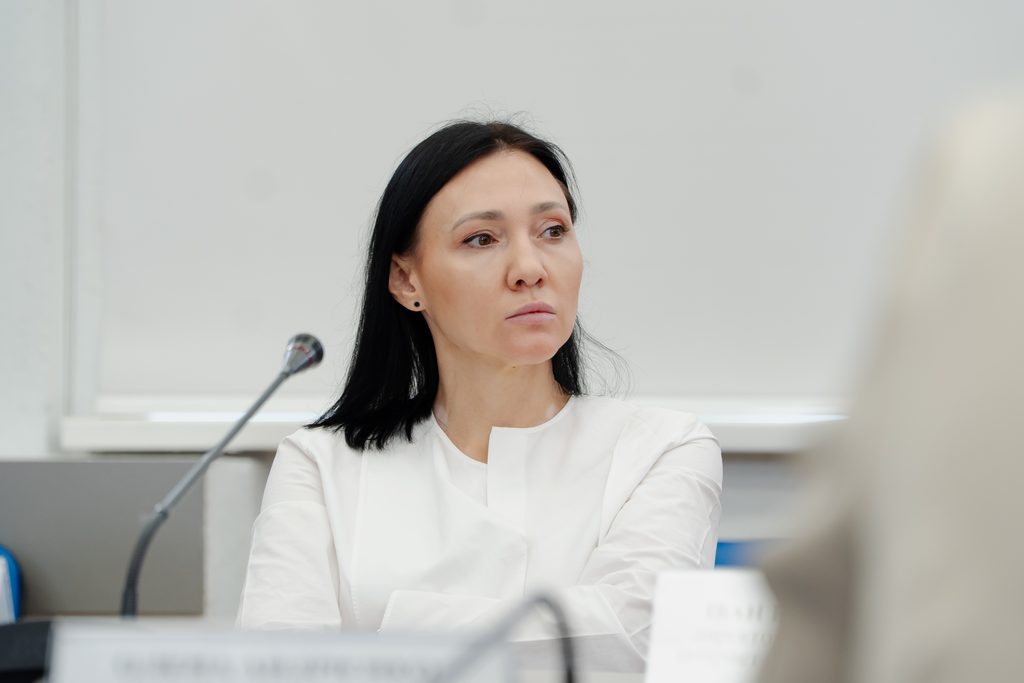
Natalie Nekypila, an editor at Radio Nakypilo in Kharkiv, stressed the importance of bringing regional media into the conversation about AI standards: “It’s good that regional media are part of this story too, because the way we tell what is happening where we are is then picked up by the national media. And it is very important that we all speak the same language.”
At the station, she said, AI is used sparingly — a corporate version of Gemini, for example, to strip bureaucratic language out of news copy. Photographs are sometimes given artistic treatment, as with images of fallen soldiers for one special project. But as a matter of principle, the station does not generate illustrations of real events.
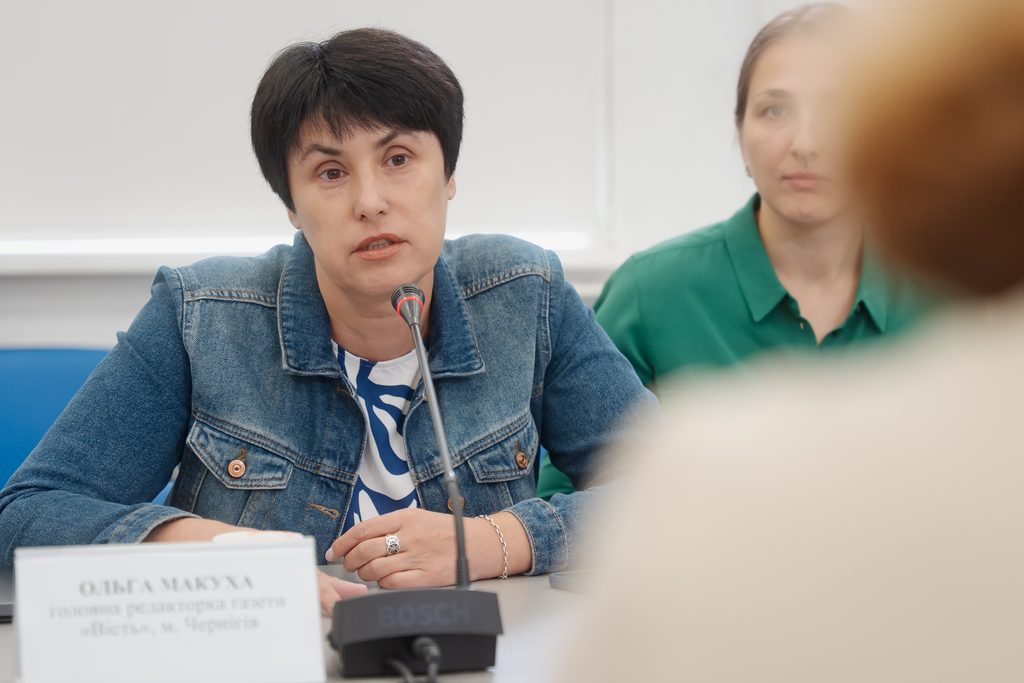
Olha Makukha, editor-in-chief of the newspaper Vist in Chernihiv, said it would never even occur to her to use artificially generated illustrations in place of photographs in news coverage of real events in the country.
“We are a small local outlet, and we still issue a print newspaper. It’s the only weekly in Chernihiv oriented toward the city and Ukraine’s communities. And we do old-school journalism: you drive to the scene, take the photos, shoot the video, talk to people,” Makukha said of her work.
Closing the discussion, Dmytro Shvydchenko, head of the analytical division at the National Council of Television and Radio Broadcasting, offered his thoughts on the ethical use of artificial intelligence and on countering information threats.
“When we talk about artificial intelligence and its ethical dimension, it’s important to start from the fact that AI is a general phenomenon. It is used in the economy and in the humanities, in medicine and beyond, not only in the media. So it’s important to define the boundaries — where artificial intelligence is acceptable in media work, including in the newsroom, and where it is not,” the expert said.
One challenge Ukraine should be ready for, he said, is the AI-related threat to the electoral process. He pointed to Romania, where 25,000 accounts on TikTok and Facebook were found during elections to be running manipulation campaigns using deepfakes and manipulated images and video in favor of one candidate or another.
“Right now we are focused on developing a joint protocol for the elections to come — one under which a coordinating commission would be created, based at the National Council, the Central Election Commission or another state body, to handle the information side of the elections and deal directly with the platforms. Google has given its preliminary consent. If Google does go ahead with such cooperation, it will be the first example of this kind of engagement,” Shvydchenko concluded.
The Women in Media website hosts practical documents for Ukrainian media — a Model Policy on AI Use in Newsrooms and a Template Guide on AI Use in Newsrooms. The documents will help media outlets adopt artificial intelligence tools responsibly, safely, and in line with journalistic standards.