
On July 28–29, participants in the Women Leaders in Media program gathered in Kyiv for a strategic session, marking the launch of the program’s second phase. Over the course of two days, editors-in-chief and media executives from across Ukraine discussed how to drive organizational change within their newsrooms, respond to the challenges posed by Russia’s full-scale war, and strengthen a professional community of women leaders in the media.
The first phase of the program was implemented in 2025 by the NGO Women in Media in partnership with the European Centre for Press and Media Freedom (ECPMF), with the support of the German Federal Foreign Office. Ten women leading Ukrainian newsrooms took part in the initiative and jointly developed the policy paper Girls Just Wanna Have Voice. The document offers recommendations for advancing gender equality, strengthening women’s leadership, and fostering a more inclusive professional environment in Ukraine’s media sector.
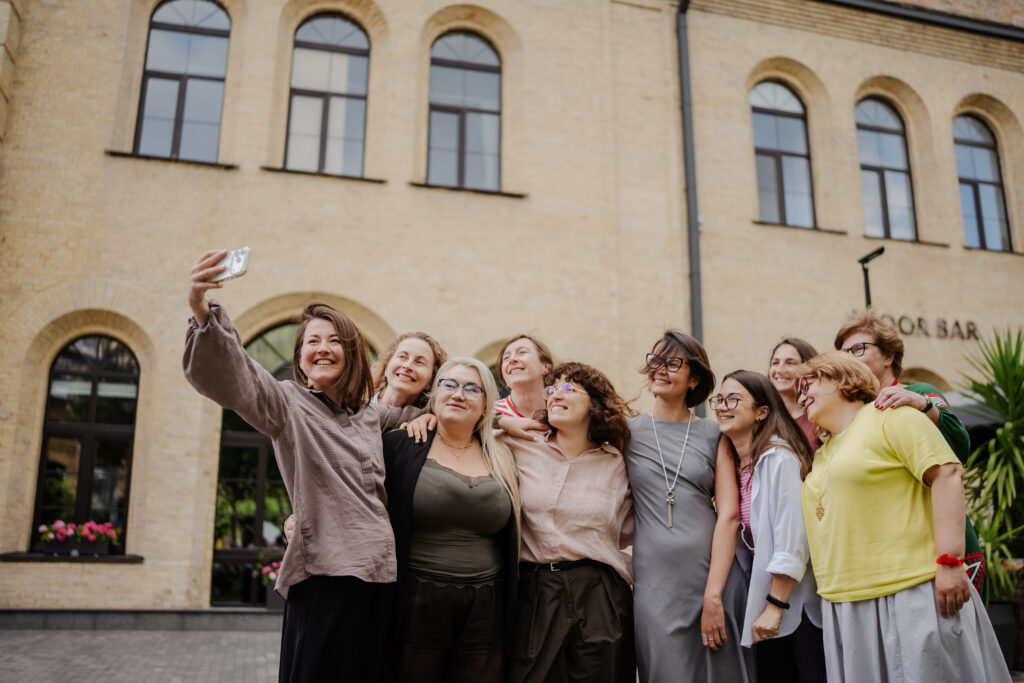
The second phase of the program is being implemented in partnership with International Media Support (IMS). Its goal is to strengthen the professional network established during the first phase, support the implementation of the policy recommendations in participating newsrooms, deepen collaboration among women media leaders, and expand international cooperation. A study visit to Stockholm, scheduled for October 2026, will be one of the program’s key components.
“I am pleased to see flexible programs and partnerships like this, and I especially value the opportunity to support this initiative. There are still too few organizations in Ukraine that work systematically to strengthen women’s leadership in the media, which is why it is so important that Women in Media continues this work. Not every participant may have aspired to become a leader. Yet today’s circumstances often require women to step into that role. It is a form of leadership shaped by responsibility and the challenges of our time,” said Roman Kifliuk, IMS National Advisor in Ukraine, during the opening of the strategic session.
From Recommendations to Change in Newsrooms
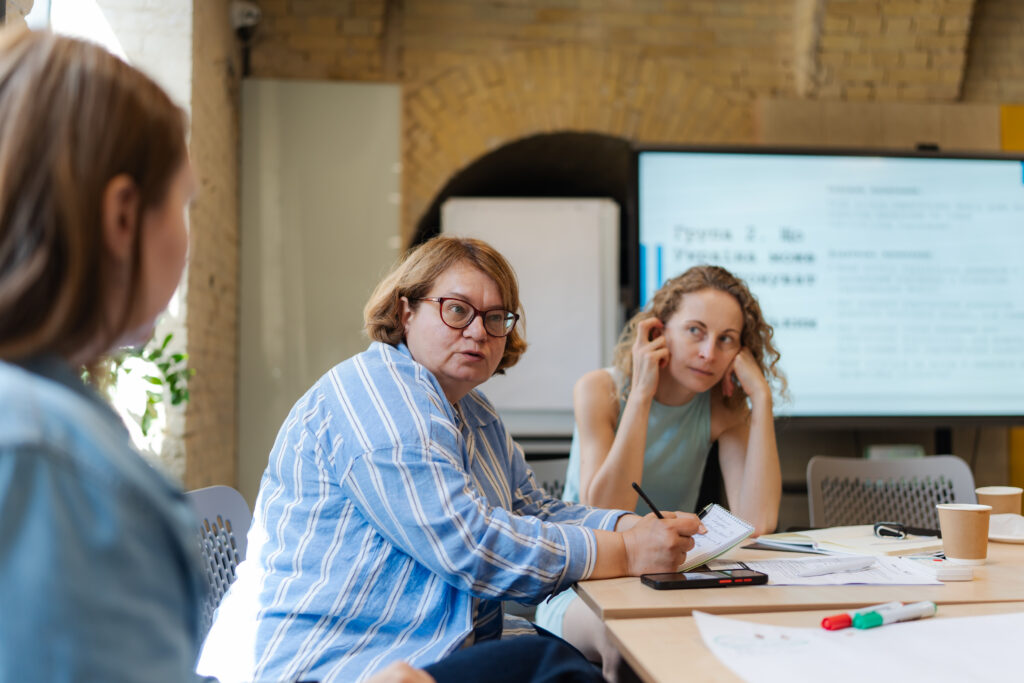
A central focus of the strategic session was a discussion on how participating newsrooms are implementing the recommendations outlined in the policy paper Girls Just Wanna Have Voice. Participants shared their experiences, reflected on the challenges media organizations continue to face amid Russia’s full-scale war, and presented the changes they have already introduced within their teams.
Aliona Yatsyna, CEO of Kordon.Media, said that the newsroom’s greatest challenges remain the physical safety of journalists, their mental well-being, and the risk of professional burnout. “One of the solutions has been the introduction of individual professional development plans in our newsroom. Everyone who joins our team has a clear understanding of how they can grow and develop professionally.”
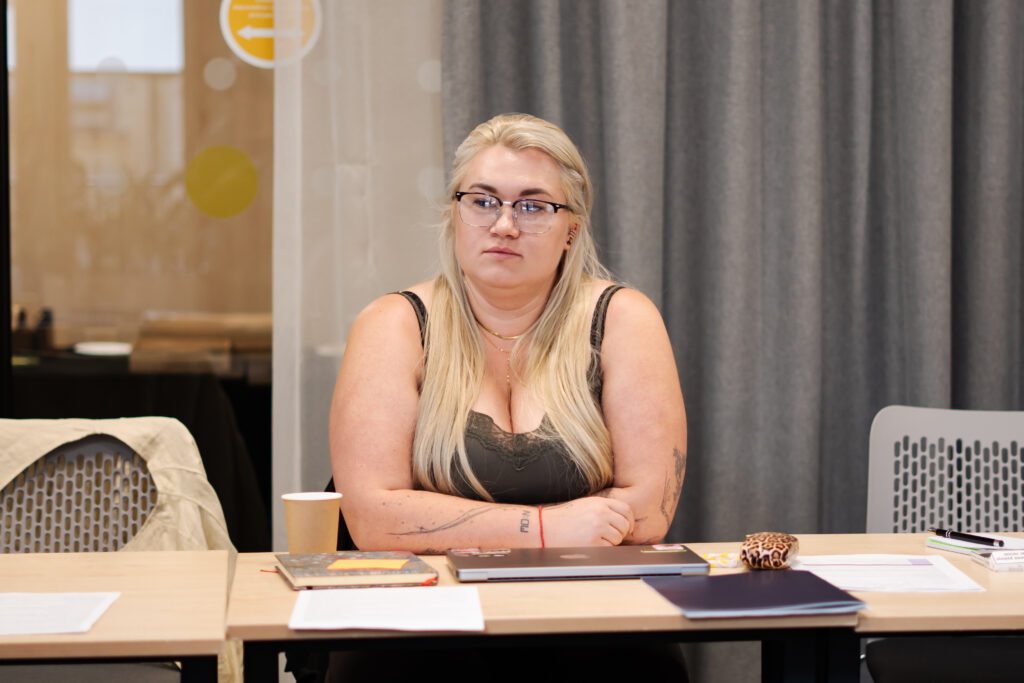
Maryna Synhaivska, Deputy Editor-in-Chief of LB.ua, highlighted that Ukrainian newsrooms continue to face significant challenges in securing insurance coverage for journalists. Because of the ongoing war and the constant threat of attacks, insurance providers are generally unwilling to insure media professionals’ lives and health once they learn about the nature of their work.
She also emphasized that supporting newsroom staff is an equally pressing challenge, as women make up a large share of the editorial team. “A significant part of our newsroom consists of women whose husbands are serving in the Armed Forces of Ukraine. This means they are carrying a constant emotional burden, and that, too, requires our attention.”
For Espreso, one of the greatest challenges has been the financial crisis and the need to downsize its team.
“Working on the policy paper helped me realize once again how important it is to support people in time, recognize the early signs of crisis, and listen to the needs of the team. Taking part in the program also showed me just how valuable women’s support and a strong professional community can be. That is why I am now committed to fostering the same culture of mutual support within our own newsroom,” said Anastasiia Ravva, General Producer of Espreso.
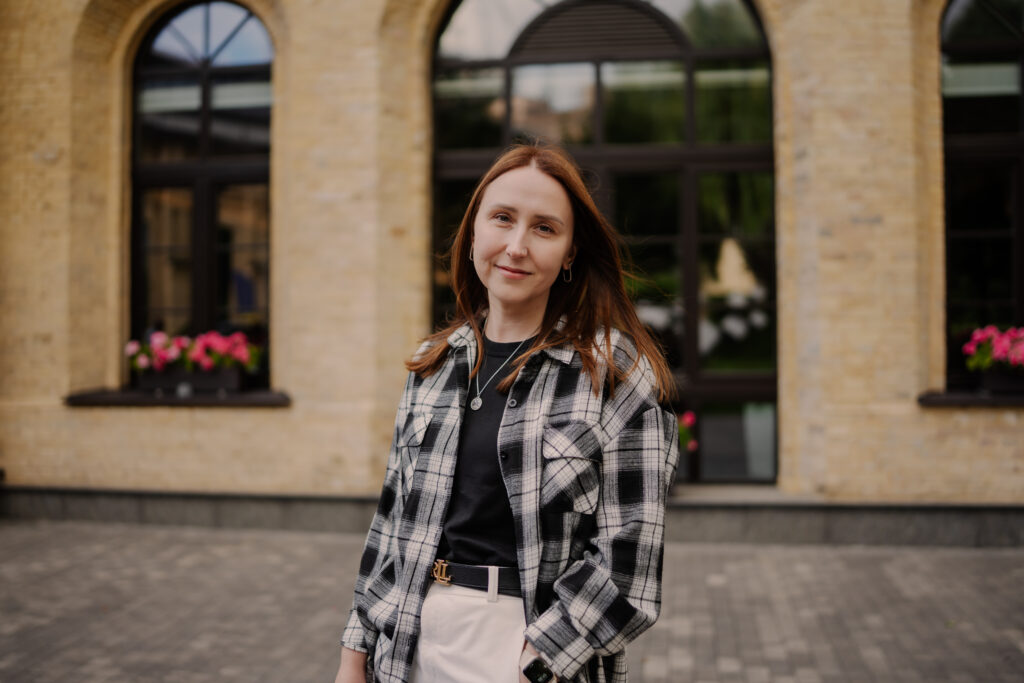
Marharyta Buhaichuk, Editor-in-Chief of The Ukrainian Week, said that following the first phase of the program, the newsroom strengthened its coverage of inclusion and societal resilience, expanded its network of contributors, and launched a feminist opinion column.
“In addition, we adopted a Gender Equality Policy, were included in a collection of best gender practices in Ukrainian media, and are now developing a policy for the ethical use of artificial intelligence in our newsroom,” she added.

Leadership, Press Freedom, and European Integration
A separate segment of the strategic session was dedicated to discussions on the key challenges facing Ukrainian media—from European integration and ongoing media law reform to press freedom, gender equality, and leadership in times of war. The discussions featured Vita Volodovska, Chair of the NGO Digital Security Lab Ukraine; Kateryna Levchenko, the Government Commissioner for Gender Equality Policy; Yaroslav Yurchyshyn, Chair of the Verkhovna Rada Committee on Freedom of Speech; and Olena Apchel, a lieutenant in a separate artillery brigade of the National Guard of Ukraine.
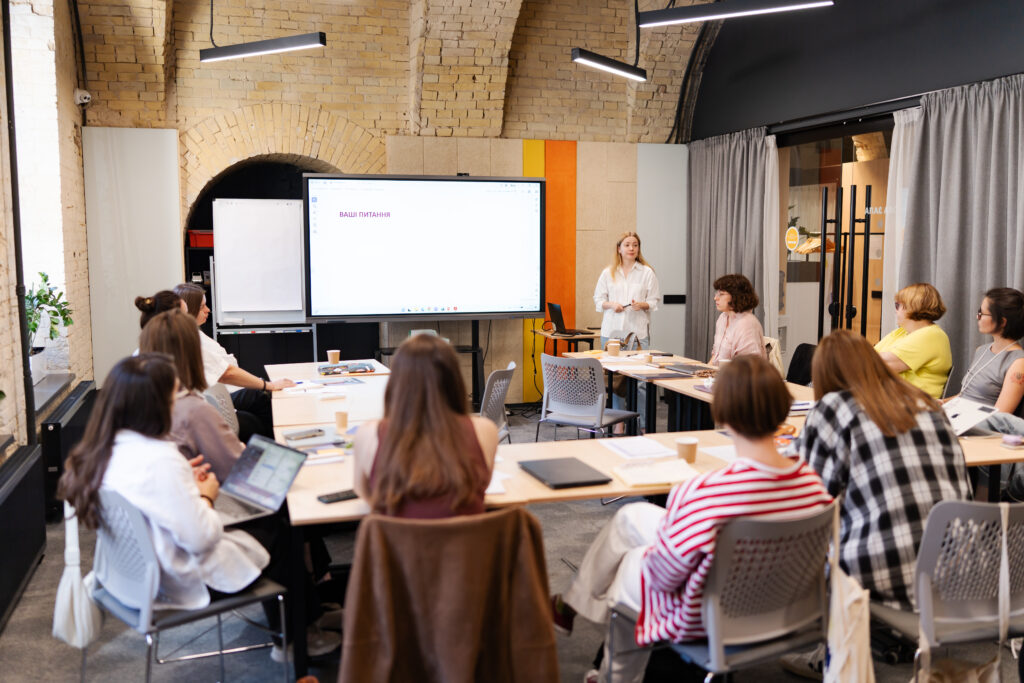
Yaroslav Yurchyshyn stressed that successful examples of women’s leadership should become more visible in the public sphere, as greater visibility helps challenge persistent stereotypes. According to him, Ukraine’s experience with gender quotas has demonstrated that women’s presence in leadership positions can reshape public perceptions and break down long-standing biases.
“I am convinced that women will play a crucial role in Ukraine’s reconstruction. Our task today is to create the conditions in which their leadership is visible, supported, and provided with every opportunity to grow,” Yurchyshyn emphasized.
The Government Commissioner for Gender Equality Policy, Kateryna Levchenko, added that social progress requires sustained commitment and support.
“I have been working on this issue for 35 years, and I have seen how much public attitudes have changed. We are undoubtedly moving forward. But it would be a serious mistake to assume that these changes are irreversible. More and more people need to understand that gender equality, inclusion, and equal opportunities are not temporary trends or optional add-ons—they are the standard on which a democratic society should be built,” Levchenko said.
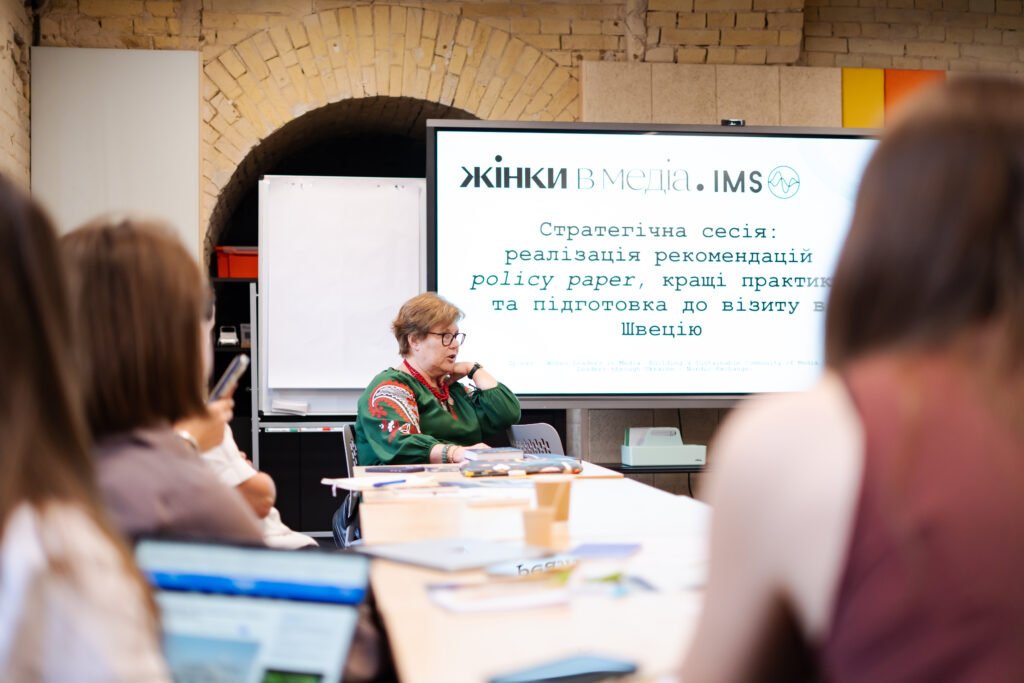
As a result of the strategic session, the participants identified the key priorities for developing their community of women media leaders over the coming years, defined topics for professional exchange with their Swedish counterparts, and laid the groundwork for continued collaboration among their newsrooms.