
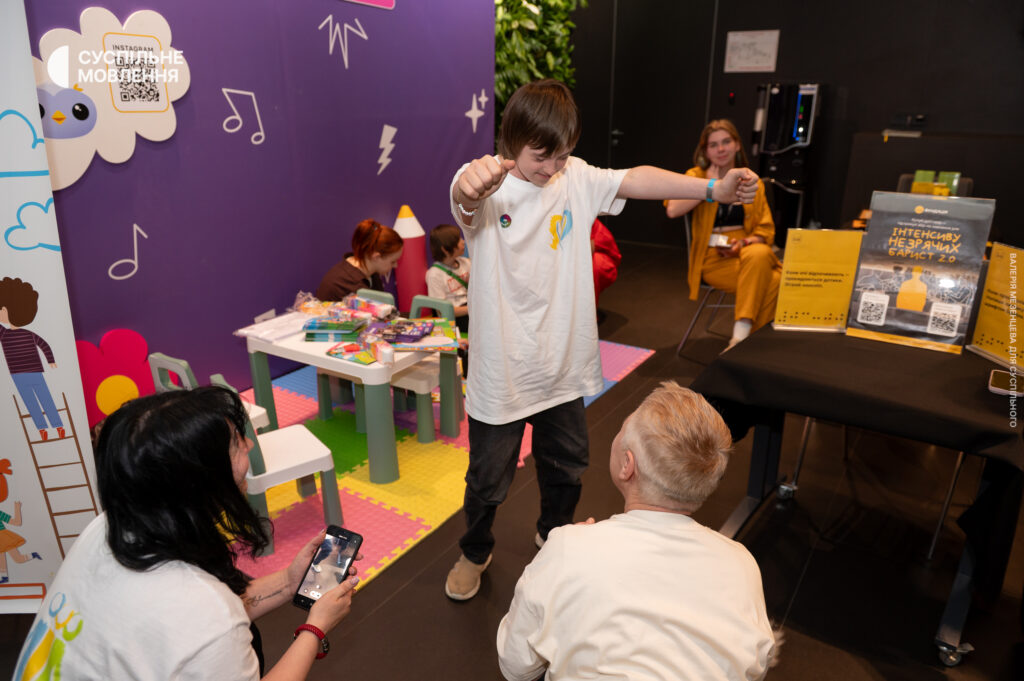
On June 16, Suspilne held an industry event in Kyiv, “Diversity, Inclusion, Equality — Standards in the Media.” The event took place across two spaces: a stage, where experts gave TED Talk–style presentations, and an activity zone, where civil society organizations ran interactive sessions and shared information about their work.
Among the organizations taking part were: Suspilne, Women in Media NGO, the TYTANOVI NGO, the Vydymi NGO with Olena Pshenychna, the Bachyty Sertsem NGO with Olesia Yaskevych, Good Bread from Good People, the Down Syndrome Charitable Foundation, the Active Rehabilitation Group NGO, Unbroken, the Third After Midnight, museum-in-the-dark, the 03.00 Foundation, Guide Dogs of Ukraine and the Helping Dogs Network, UTOG (the Ukrainian Society of the Deaf), the Crimean Tatar Resource Center, and the Youth Council of National Communities of Ukraine NGO.
Gender equality is about everyday decisions
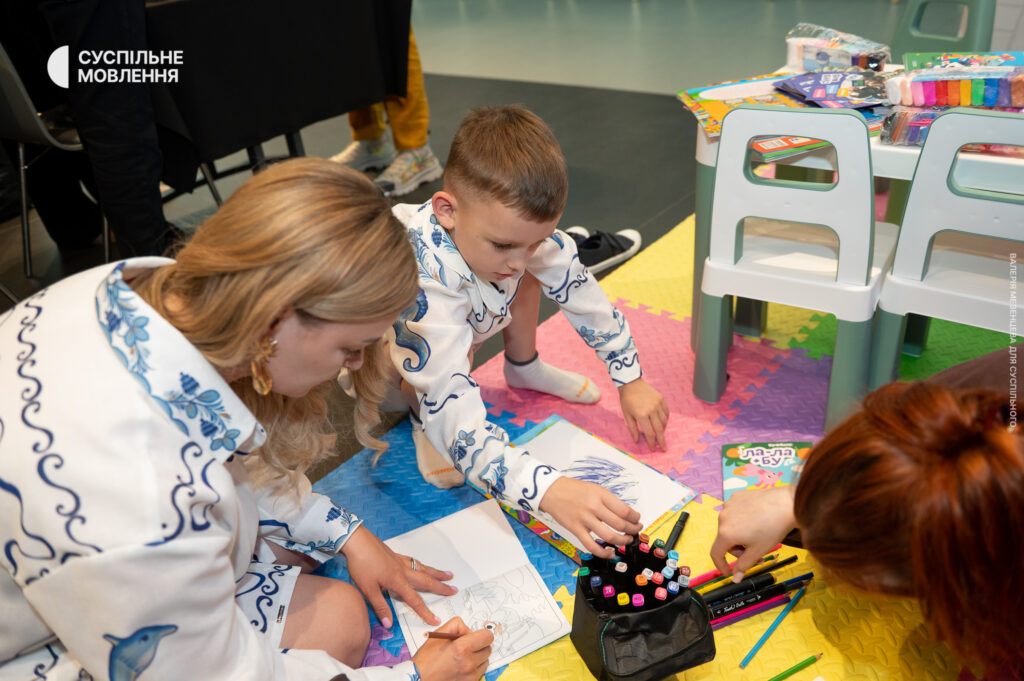
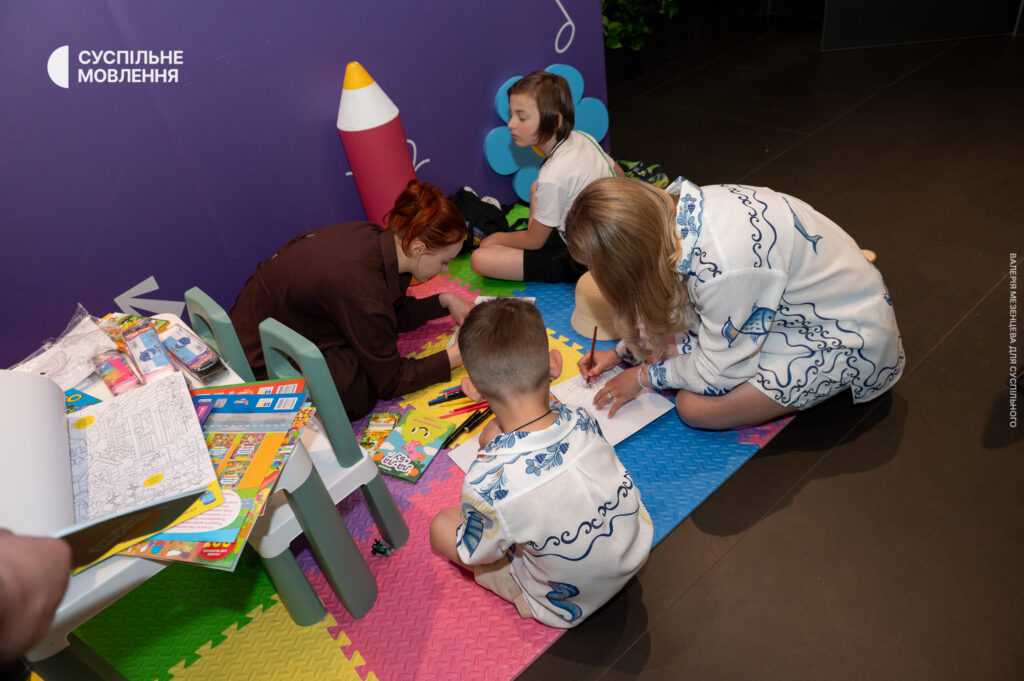
Women in Media organized a children’s corner staffed with a nanny. Parents who came to the event with children had the chance to leave them there and listen to the speakers in peace.
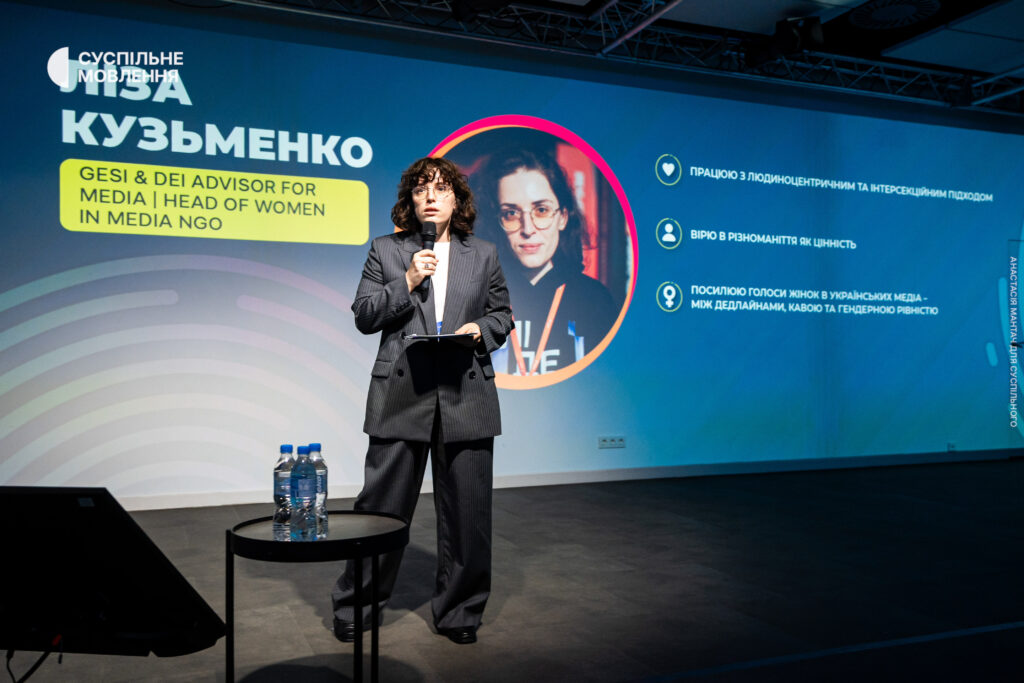
“This may seem like a small thing, but it’s really about creating opportunities for staff to take part in the event. It’s often women who take on care work — including because they’re solo mothers, or, for example, because their husbands or partners are in the military,” said Liza Kuzmenko, head of Women in Media.
She recalled the study The State of Female Journalists and Other Female Media Workers in Ukraine conducted by the organization. It found that more than half of the women surveyed spend a significant part of their time on care work — as much as five to eight hours a day.
“Gender equality isn’t about perfect policies; it’s about the everyday decisions we make in our newsrooms, in our studios, in meetings, and within our teams. It’s not some separate project, not a fashionable trend, not a donor requirement — although it’s a donor requirement too, of course. It’s a question of the quality of an institution, a question of how well we’re able to see people, hear their needs, and create conditions for everyone to work at full strength,” she emphasized.
Liza Kuzmenko also spoke about gender equality being a process. There can’t be some destination we reach one day and declare that we’ve done it.
“Equality is more like freedom. If you don’t tend to it every day, it starts to disappear. And for us, for Ukrainians, that’s very easy to understand, because we fight for our freedom every day. Gender equality is a process. And it’s ongoing,” Kuzmenko stressed.
Lieutenant Olena Apchel, Head of the Artillery Intelligence Command Post of the Artillery Intelligence Division, said that society isn’t ready for the idea that a woman can be not only a symbol of life, but also a subject of political will. The military is a concentrated version of society. What we see in the army is almost always an amplified version of what exists in society at large.
“The experience of women who fight changes society not because it’s some special female experience, but because it breaks down many familiar ideas about how the world is arranged. The difference in how women are treated exists at every stage. And it’s not just a difference — it’s a deep-seated stigmatization, a giant elephant of misogyny that we try not to see because it still takes up the whole room. They’ll tell you, ‘We don’t see gender,’ but then they’ll be sure to remind you that you’re a woman and ask who your children are with. They’ll say, ‘Everyone here is equal,’ and hand you a uniform tailored for a body that supposedly doesn’t exist. They’ll say, ‘You’re respected as a soldier,’ and then call you ‘girl’ at a meeting where you’re most likely the only one with combat experience,” Apchel said.
She also stressed the importance of using feminine-form job titles. And that it’s long past time to answer “Glory to Ukraine” with “Glory to the heroes and heroines!”
“We need inclusion from the moment we’re born”
Media manager and Suspilne Managing Board member Maria Frey spoke about inclusion. We often think it’s needed by someone else: people with disabilities, minorities, some separate groups. But it’s a global issue.
“You can change a city’s scenery, you can become successful, influential, and strong, but a single moment in life is enough — and the whole world can become inaccessible to you,” Maria said.
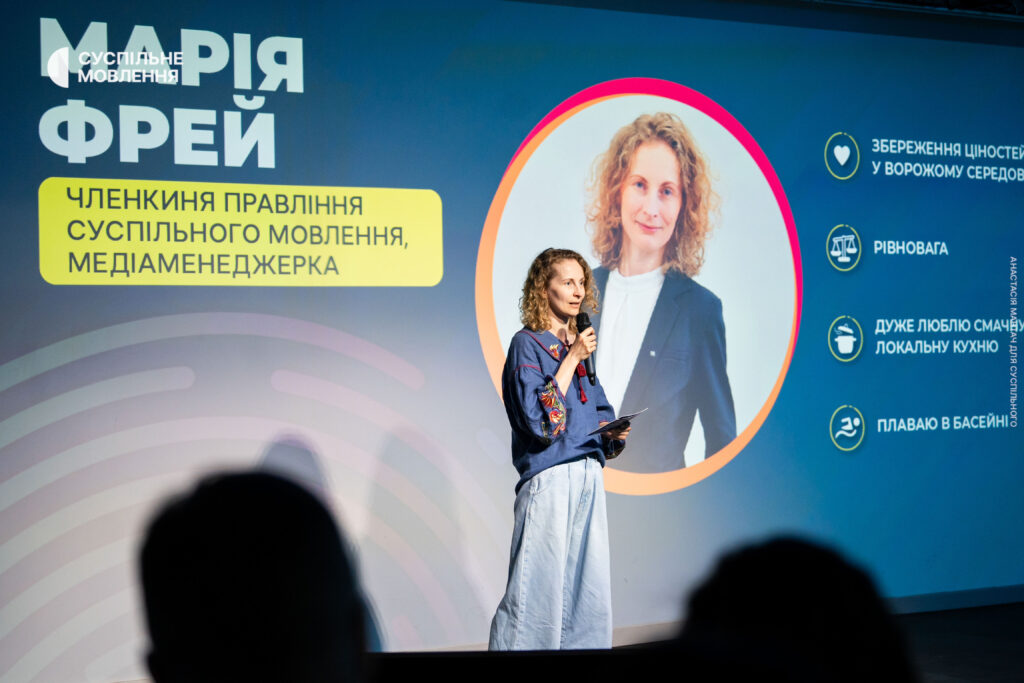
The media manager underscored that every one of us, from the moment we’re born, needs support and inclusion at some point. We lose mobility. Our buildings collapse. We grow older. Our relatives get injured. We find ourselves in a new environment without understanding the language.
“And we need to change how we relate to diversity, equality, and inclusion. Because these aren’t just the right words. They’re not a little bow on top of a successful reform. This isn’t a special program for particular people. We need diversity, equality, and inclusion from the moment we’re born. And for me, the key question is whether we’ll be able to stop reproducing old practices and start building a society where you don’t have to overcome unnecessary barriers, where you can live, work, love, and grow. For me, the question of diversity, equality, and inclusion has long since stopped being about a problem — it’s about the development of a person, an organization, and a country,” Frey emphasized.
Respect for diversity will stitch together society’s internal rifts
Yevhen Hlibovytskyi, a member of Suspilne’s Supervisory Board, said that the rejection of otherness in Ukrainian society is a legacy of the totalitarian past. For three generations, the Soviet regime systematically destroyed trust in any institutions or state instruments. The system taught people that openness, or interaction with a stranger, carried deadly danger. To survive, Ukrainian society closed itself off into narrow circles of safety — within the family, relatives, and closest friends.
“That’s how our culture of short trust took shape. It has colossal mobilizing power; it’s precisely thanks to it that we instantly come together during the Maidans, or in the first days of the full-scale invasion, demonstrating wonders of horizontal self-organization. But short trust only works in firefighting mode,” Hlibovytskyi said.
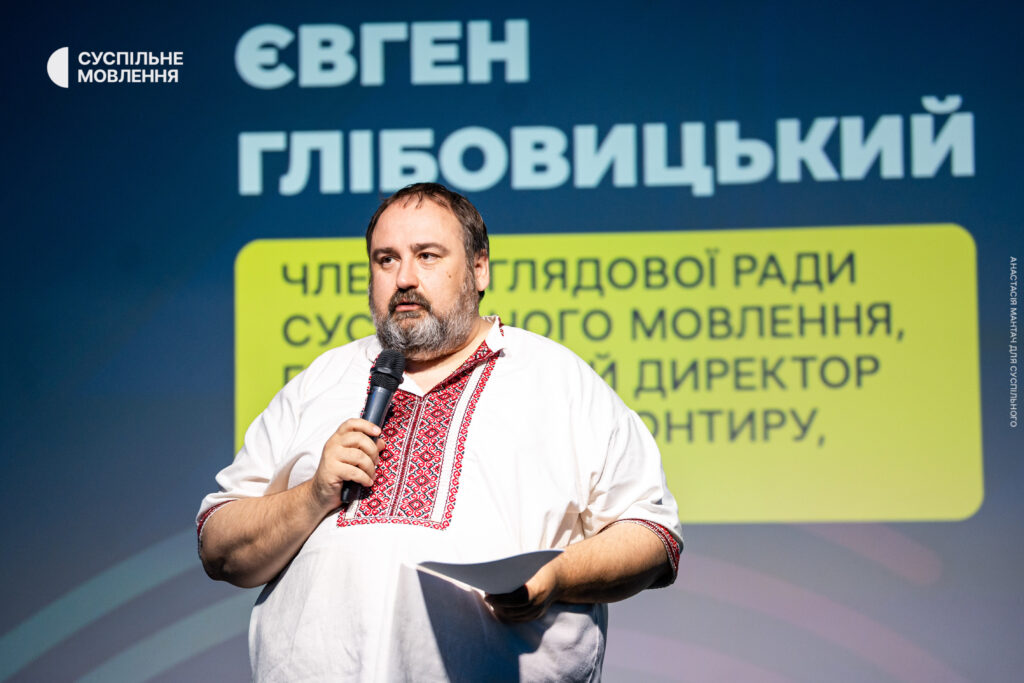
Ukrainians, however, have to learn to build long trust. According to Yevhen, only respect for the diversity of experiences, openness of institutions, and equality is the one instrument capable of stitching together our internal rifts before they turn into chasms.
“Building long trust is our chance to make a civilizational and modernizing leap. A chance to move from a society of traumatized, closed-off individuals to a large, complex, antifragile nation of agents who know how to play the long game, speak with the West as equals, and create their own future,” the expert said.
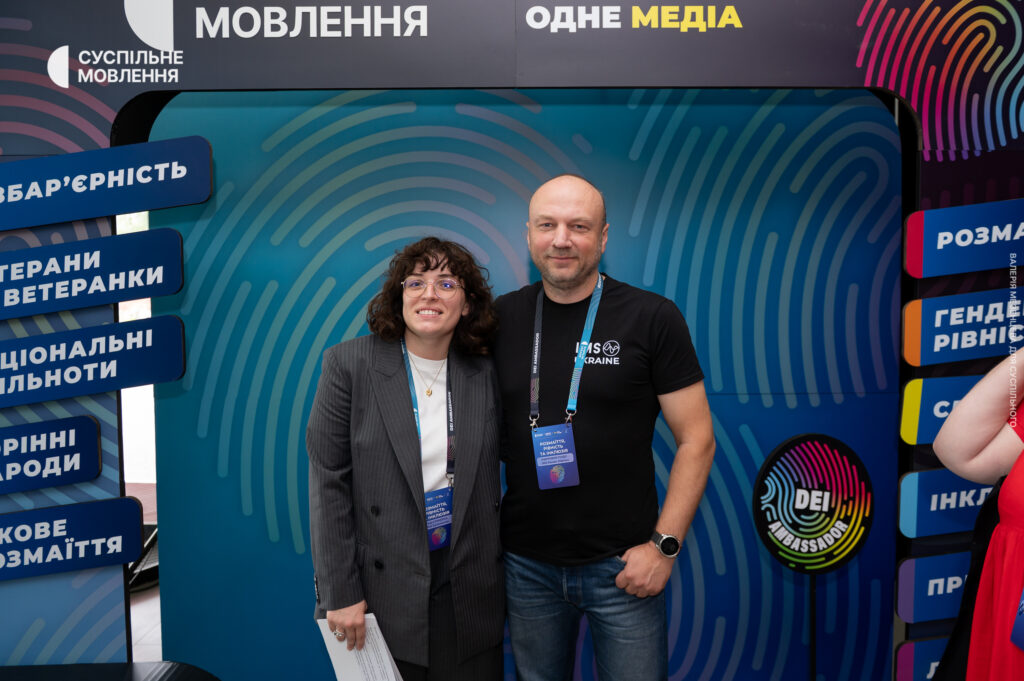
And media play a key role in developing and advancing the values described above. Roman Kifliuk, National Advisor at IMS in Ukraine, emphasized that media today must be what society should be tomorrow.
“And for that future to come about, the media have to be an engine of progress — toward a better society, toward a better future. And the future can’t be better without equality, diversity, and inclusion,” Kifliuk emphasized.
By: Olena Kushchenko, Women in Media. Photo: Valeria Mezentseva, Anastasia Mantach, Suspilne.