
An investigation may end with publication, but the pressure on the journalist who produced it often only begins there. Threats, sexualized abuse, attacks on journalist’s family, lawsuits and harassment that reaches beyond social media — that can be the price of professional courage. To talk openly about that experience and to look together for ways of protecting themselves, the Women in Media NGO and the European Centre for Press and Media Freedom (ECPMF) brought women journalists together in a circle of trust during the conference of investigative journalists. This report looks at the threats, their real-world consequences and the strength of professional solidarity.
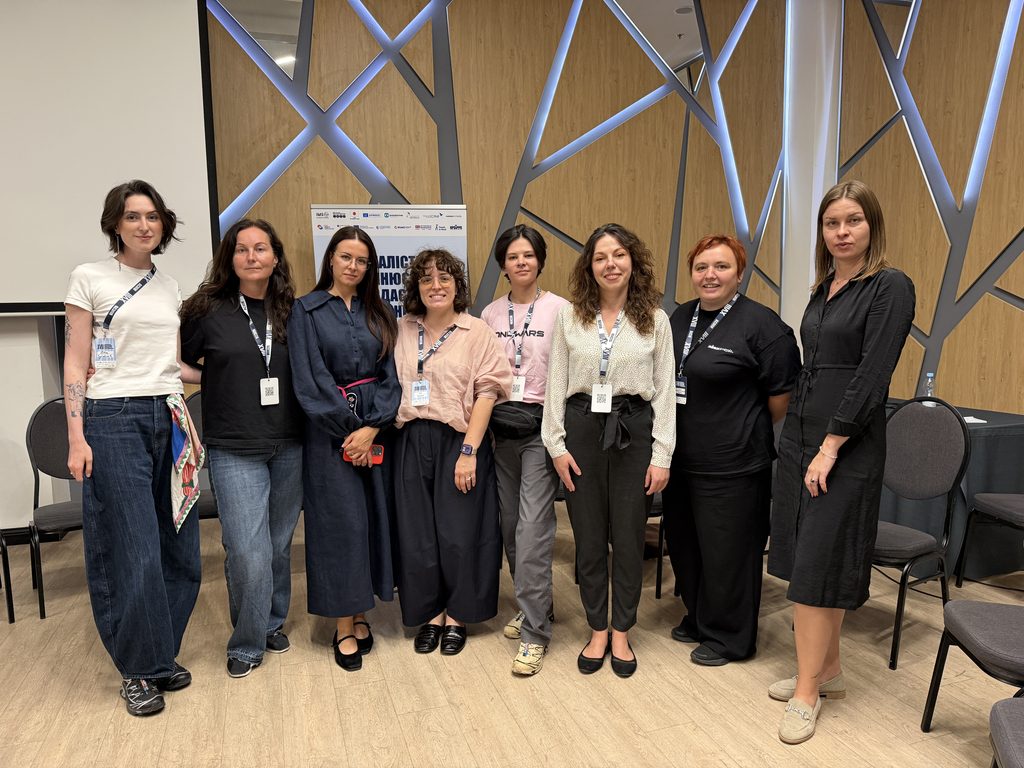
From September 10 to 12, Kyiv hosted the annual conference of investigative journalists organized by the Regional Press Development Institute (RPDI). As it does every year, the event brought together media professionals from across Ukraine’s regions and from abroad.
On the first day of the conference, the Women in Media and ECPMF discussed challenges women investigative journalists face — online threats in particular, along with gender-based attacks and the pressure that accompanies their professional work.
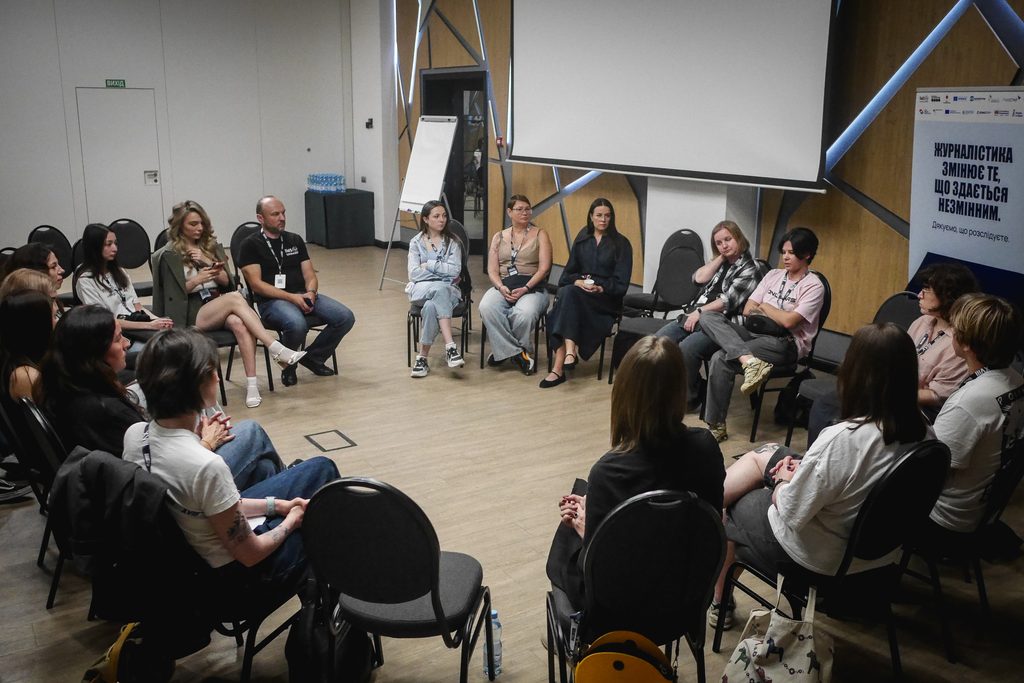
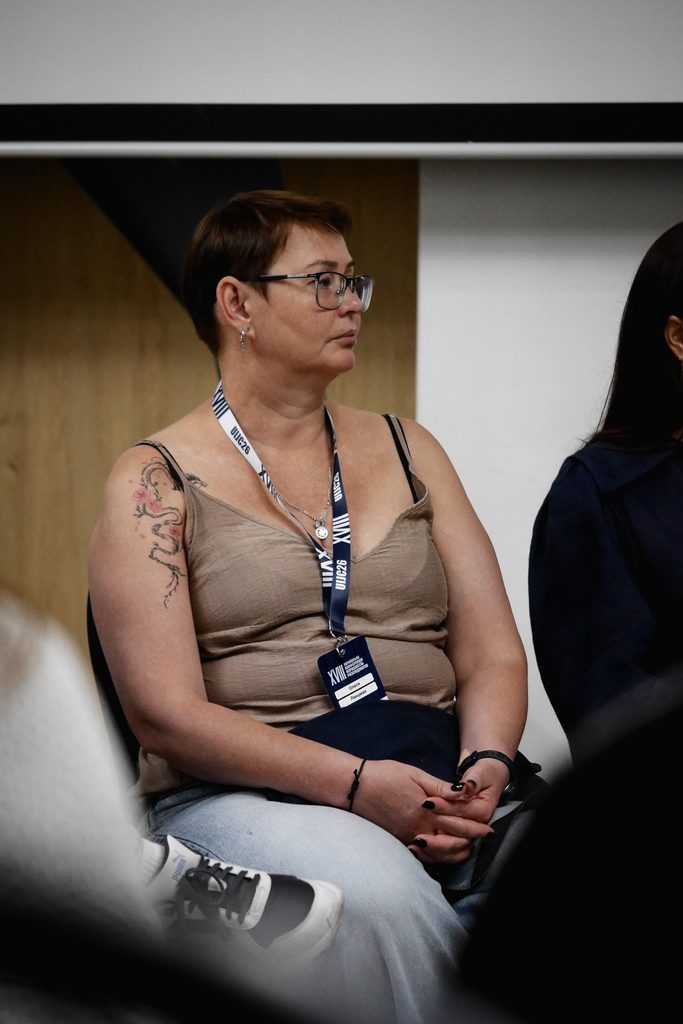
The organizers decided against the usual format, where speakers talk from a stage and the audience just listens. In a separate hall, the chairs were arranged in a circle so that everyone present would be on the same level, able to share their own experience openly and take a full part in the conversation. What emerged was a kind of circle of trust — a space for an honest conversation about threats, fears, solidarity and possible solutions.
The discussion was moderated by Liza Kuzmenko, Head of Women in Media, and Olha Syrotiuk, coordinator at ECPMF.
Threats
Investigative journalism often comes with risk and danger. But as Liza Kuzmenko pointed out, attacks on journalists frequently differ in nature depending on whether the target is a man or a woman. Men are most often accused of “evading mobilization,” while attacks on women usually carry a sexualized subtext and come with gender-based abuse. Women journalists are accused of working as escorts or called pro-Russian spies and “media whores.” They receive sexualized threats, and their attackers often drag their children and parents into the conflict to increase the pressure and force them to give up their professional work.
The experience of the journalists themselves bears this out. In the case of investigative journalist Olena Mudra, now editor-in-chief of Suspilne Uzhhorod, who investigated the construction of wind turbines in the Carpathians, the attackers generated a video featuring her son and then targeted that clip at the journalist’s father. This was an attempt to increase the pressure on Olena and make her stop her work.
Bihus.Info journalist Svitlana Stetsenko said that after an investigation involving Member of Parliament Oleksii Honcharenko, the director of one of the centers named after him came to her mother’s workplace. She tried to persuade the mother to influence her daughter so that she would stop producing investigations of that kind.
Consequences
Online attacks on women journalists have entirely real consequences. They cause moral suffering, take up a great deal of time, are exhausting, and can move out of the online space and into real life.
Suspilne investigative journalist Kateryna Saienko faced a wave of hate after her investigation into a fraudulent scheme for illegally taking men across the border. Attacks like these are especially painful given that Kateryna served in the military herself.
Svitlana Stetsenko said that the threats have forced her to look over her shoulder in the street, to stay constantly alert and never allow herself to relax. Preparing for the discussion and rereading the comments containing threats, she suddenly realized that her brain had been trying to forget those unpleasant memories and push them out.
Liubov Velychko, who has been doing investigative work since 2014, has faced threats, a recruitment approach, court proceedings and even an attempt on her life. She survived by sheer luck.
“If a journalist turns out to be too brave and keeps on investigating, the online threats continue, and then they move offline,” she says.
Olena Mudra is currently facing two SLAPP suits; a third was withdrawn. The journalist has to spend a great deal of time on court proceedings. All of it is exhausting, affects her physical and psychological health, and gets in the way of her professional work.
“Two of my investigations fell through. I still have a pile of material I gathered. And it is a great pity,” Olena says.
How to stand up to the attacks
Despite all the threats, women investigative journalists carry on with their work. What helps them withstand the pressure is publicity, the support of colleagues and professional solidarity.
An important part of that response is documenting the threats. Women in Media documents the stories of women journalists who have been targeted, explains the various types of online attack, and marks the recorded cases on a dedicated map of online attacks.
“We must not play down online attacks. We have to call them what they are. When you know what is happening to you, it is easier to work out how to respond,” says Liza Kuzmenko.
ECPMF coordinator Olha Syrotiuk stressed the importance of safe spaces in which women can speak openly about the challenges they face, discover the problems they have in common and share experience. That is precisely why programs for women journalists are run and meetings of this kind are organized. It is easier to stand up to threats together.
“The community supported me. I came to believe in myself. We work honestly, in good faith, for our reputation. Visibility makes smear campaigns more expensive,” says Olena Mudra.
Liubov Velychko likewise emphasizes the need to speak publicly about threats. Every attack, she believes, should be documented, with names, dates and details recorded.
“You have to be very careful, and you absolutely must make the story public. If something happens to me, law enforcement will at least have some threads to follow. The police respond to publicity,” she says.
If a woman journalist comes under attack, her newsroom must not leave her to deal with the problem alone. It has to respond promptly, see to her safety, and provide the legal, psychological and organizational support she needs. The Women in Media has developed a guide, Steps for Newsroom to Take in the First 24 Hours Following an Online Attack against a Woman Journalist, which helps newsrooms navigate and work out the first steps to take.
Liza Kuzmenko stressed that the protection of women journalists, including protection from online attacks, must be written into editorial policies and security protocols. Those guarantees should extend not only to staff employees but also to freelancers, interns and other media professionals who cooperate with the newsroom.
The session was organized by the Women in Media NGO and the European Centre for Press and Media Freedom (ECPMF) with the support of the #CivilSocietyCooperation program of the German Federal Foreign Office.
Text: Olena Kushchenko, Women in Media