
Ten Ukrainian media outlets have been selected to take part in the project that Women in Media is running together with Reporters Without Borders (RSF) — even though the program was initially designed to work with five newsrooms. In total, 42 applications were submitted by newsrooms from various regions of Ukraine, which points to considerable interest in the topic.
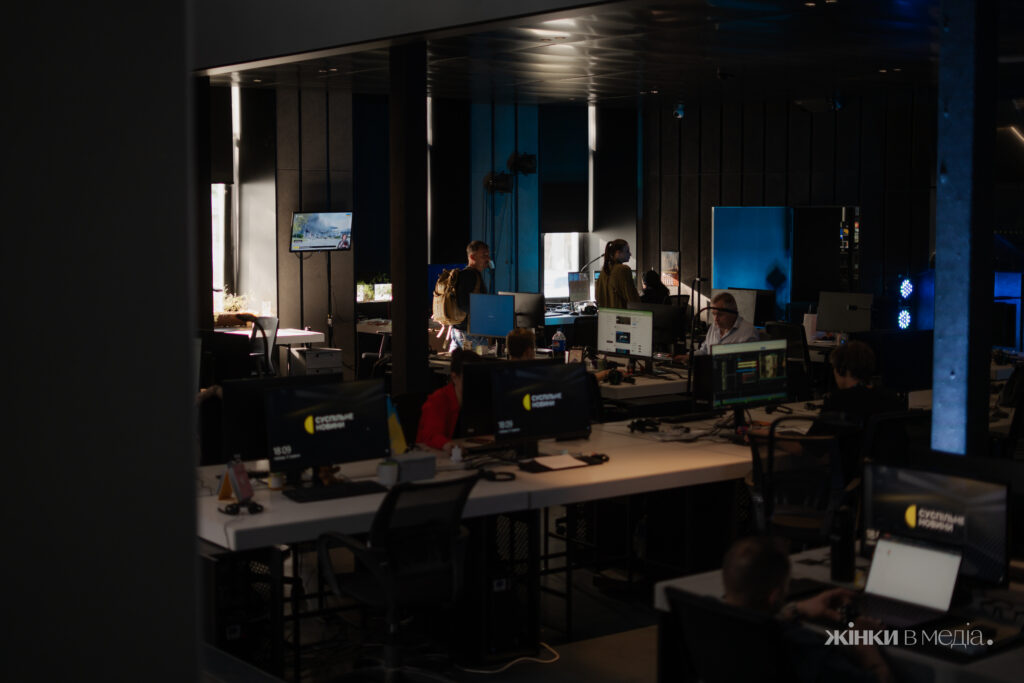
The program’s participants are: Ukrainska Pravda, Frontliner, StarLight Media, Radio Nakypilo, Gwara Media, Rubryka, RIA Pivden, the newspaper Vist, Suspilne Broadcasting, and The Ukrainian Week.
During the first online working meeting on May 21, 2026, the newsroom representatives discussed the challenges in using artificial intelligence in editorial work. The discussion covered transparency, ethical risks, digital security, and the need for clear rules on the use and labeling of AI for tasks such as transcription, translation, and content creation.
“Newsrooms usually use AI tools at a basic, everyday level — for transcription, translation, proofreading texts, or fixing errors. But what is often missing is a systematic approach to which processes are worth automating and which are not,” said Tetiana Avdieieva, senior lawyer at the Digital Security Lab, a member of the Expert Committee on the Development of Artificial Intelligence in Ukraine under the Ministry of Digital Transformation of Ukraine, and a consultant for Women in Media.
In her words, newsrooms should start by analyzing their own processes and workflow needs to understand where AI can be useful and how exactly to apply it responsibly.
During the meeting, Women in Media and Reporters Without Borders also presented a template AI Use Policy for newsrooms and a practical AI Implementation Guide. The media outlets that joined the program will be able to adapt these materials to their own editorial needs.
“AI won’t replace the journalist, but its tools can be helpful for media work. And here it’s important, on the one hand, to use them properly, and on the other, to be open with your audience so as not to lose readers’ trust. We had thought more than once about the need to introduce an AI use policy in The Ukrainian Week’s newsroom. But the main obstacle was the lack of a foundational document that would help us set out the work principles clearly and without room for double interpretation. We’re glad to be part of the project that Women in Media is running together with Reporters Without Borders. I’m sure we’ll be able to create a document that actually works and proves genuinely useful in the newsroom’s day-to-day operations,” shared Marharyta Dykaliuk, editor-in-chief of The Ukrainian Week, who is responsible for editorial policy and content planning.
Another participant in the project, Natalia Nekypila, managing editor of the Kharkiv-based radio station Radio Nakypilo, says that the newsroom currently does not have a separate AI policy, as such tools are mainly used for technical and supportive tasks, such as transcribing audio into text or editing texts.
“We do not create content using AI, nor do we use it for voiceovers or design, so at this stage we do not label materials. However, we understand that clear internal guidelines for the team and communication with the audience will be necessary,” she notes.
According to Natalia Nekypila, the newsroom plans to rely on the Model Policy on the Use of AI in Newsrooms and the practical implementation Guidelines that participants received during the webinar held as part of the project. “I believe that Radio Nakypilo will develop its own document during the project implementation in order to minimize ethical risks and establish clear rules for working with such tools,” she adds.
The participants also discussed the practical aspects of putting AI policies into practice: how to combine innovation with ethical standards, why it’s important to train staff on this, and how to safeguard sensitive information when using such tools.
“Today’s technology is developing very fast, and artificial intelligence is gradually becoming part of many work processes. That’s exactly why it’s important to think now not only about the opportunities, but also about what the rules for its ethical use will be,” said Liza Kuzmenko, Head of Women in Media and a member of the Commission on Journalism Ethics.
The webinar participants also discussed the current regulatory landscape in Ukraine and the EU, in particular the approaches set out in the AI Act. The participants agreed that even though dedicated legislation is still taking shape, organizations should already be developing internal policies that will help minimize ethical risks and avoid discriminatory or biased outcomes.
The next stage of the project will take the form of individual consultations, where newsrooms will be able to refine and adapt their AI use policies to their needs.
This activity is carried out with the financial support of the European Union, within the framework of RSF’s action in Ukraine, as part of the project ‘Not Artificial Threats: Tackling AI-Facilitated Violence Against Women Journalists in Ukraine’, implemented by the NGO Women in Media. The contents of this document are the sole responsibility of the NGO Women in Media and can under no circumstances be regarded as reflecting the position of either RSF or the European Union.