
Daria Bozhko - attack 17.03.2026
Місто фіксації онлайн-атаки
KharkivДата онлайн-атаки
17.03.2026Зафіксовані види онлайн-атак
Source of Threat
Social media usersСоціальна мережа, сайт чи інший онлайн-простір онлайн-атаки
threadsOn 17 March 2026, 1+1 TV journalist Daria Bozhko published a post on her Threads account saying: “I’m a journalist at 1+1. Would you like to bring attention to your problem or situation and tell your story?”
Users responded with comments containing insults directed both at the journalist herself and at the television channel where she works, as well as at her colleagues, particularly TV host Natalia Moseichuk. For example: “😂😂😂 Has the telethon run out of clickbait headlines?”, “We want Moseichuk to go to jail,” and “Who beat up Moseichuk?”
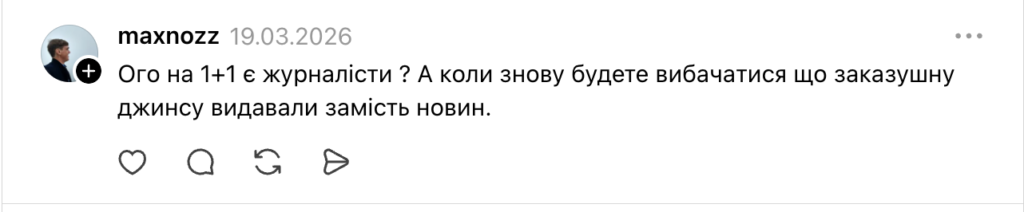
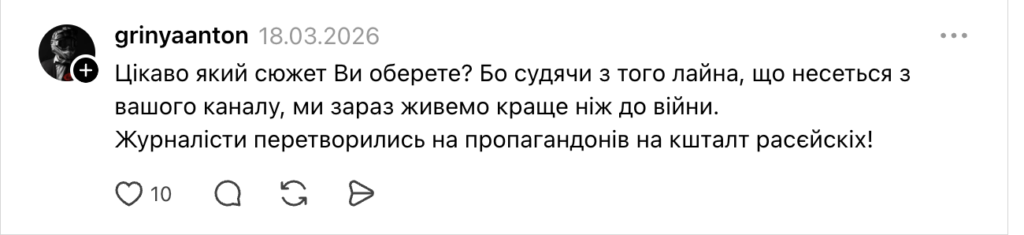
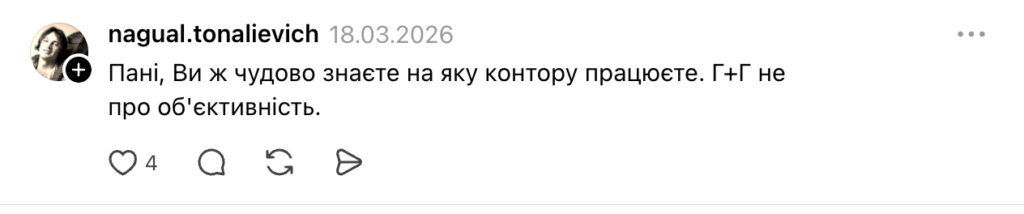
The comments also included accusations that the media outlet was corrupt or paid for favorable coverage, for example: “Wow, are there actually journalists at 1+1? When will you apologize again for passing off paid-for propaganda as news?”; “Ma’am, you know perfectly well what kind of organization you work for. 1+1 has nothing to do with objectivity.”; “Are there any independent journalists at 1+1? All you have are ‘journalist whores.’ Working at 1+1 means having no self-respect. Your propagandist Moseichuk has outdone both Skabeyeva and Solovyov combined.”; “I suppose that out of everything people suggest, you’ll choose only some light topic and avoid covering anything important or controversial because you’ll get into trouble. So this is no longer journalism.”


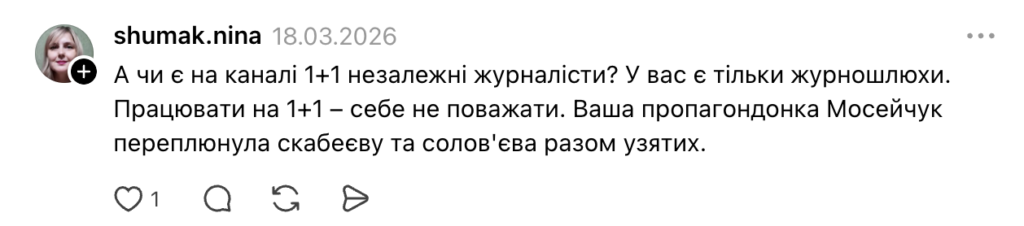
This case demonstrates signs of technology-facilitated gender-based violence (TFGBV), primarily in the form of online hate speech and sexist abuse. Although Daria Bozhko’s original post was a professional invitation for people to share their stories, a significant portion of the responses shifted the focus away from journalism and toward discrediting the journalist herself, her colleagues, and the broadcaster. The use of gendered slurs such as “journalist whores” and degrading remarks directed at Natalia Moseichuk are examples of misogynistic rhetoric intended to diminish and devalue women working in the media.
In addition, the baseless accusations that the journalists were “paid,” producing sponsored content disguised as news, engaging in propaganda, or lacking professional independence constitute online defamation and reputational attacks, as they seek to undermine public trust in their professional integrity. Taken together, these comments create a hostile online environment for women journalists, increase psychological pressure, and may have a chilling effect on their future professional activities and engagement with the public.
Report an online attack
If you are a woman journalist who encountered an online attack or witnessed such an incident, we would appreciate your contribution. Please report this case to help us identify threats and protect the rights of women in the media. Fill out the form, share key details, and join us in creating a safer information environment.
Fill Out the Form