
Where is the line between a critical comment and a targeted digital attack? How can you recognize gender-based online violence, and where can you turn for help? Media expert and Head of Women in Media NGO Liza Kuzmenko spoke about all this to the Suspilne team during the online training “Is It Just Hate? Where Gender-Based Online Violence Begins.” The session was a first step toward systematic work at Suspilne on responding to online violence and strengthening protections for its staff.
“It’s important to say that men journalists, just like women journalists, suffer from online violence. The intensity of the attacks can be the same. But women, as a rule, receive threats of sexualized violence, rape threats, comments about their appearance, and attacks on their motherhood far more often, and they also fall victim to the spread of deepfakes. It’s precisely these kinds of online attacks that we’ll be talking about today,” Liza Kuzmenko said, framing the topic at the start of the session.
According to the expert, the responsibility for responding to online violence should rest not only with the journalist but also with the newsroom.
“It’s very important for Suspilne and other media to have comprehensive policies for responding to online violence. Because we’re now aligning Ukrainian legislation with EU standards, and the principle here is simple: anything that’s prohibited offline should be prohibited online too,” Liza Kuzmenko noted. “If a journalist encounters online violence because of her professional work, it’s the newsroom that should help with the response. Just as a newsroom provides protective gear, insurance, or training for work in a combat zone, it should also provide protection from online violence, rather than shifting that responsibility onto the person affected.”
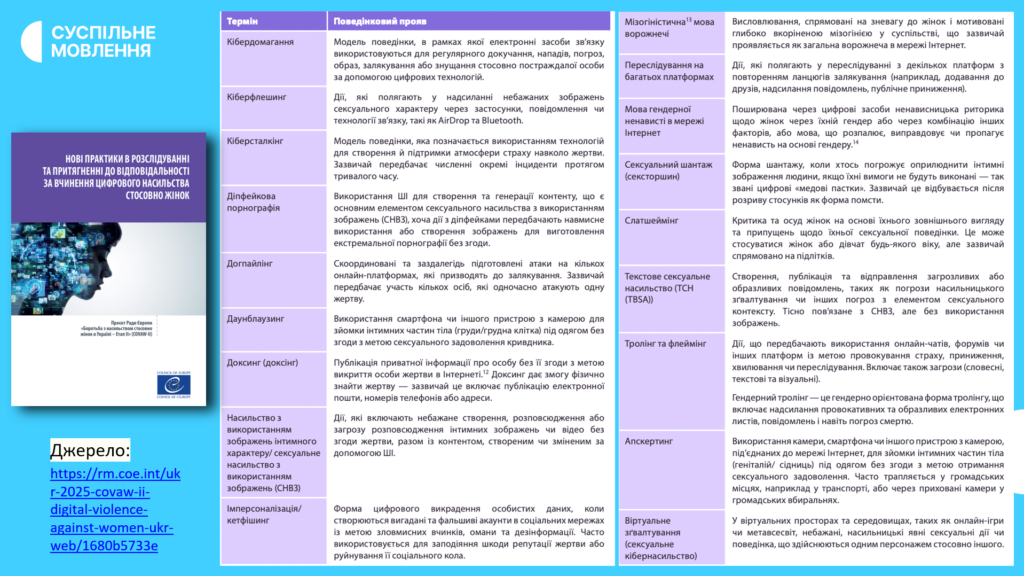
During the training, participants learned about the most common types of digital attacks aimed at intimidating, discrediting, and psychologically pressuring women journalists. Particular attention was given to threats connected with the use of artificial intelligence technologies. The discussion covered the creation of deepfakes, fake audio recordings, photos, or videos that can imitate a journalist’s appearance, voice, or style without her consent and be used to discredit her or apply psychological pressure.
Liza Kuzmenko also spoke about real cases of online violence against Ukrainian women journalists documented on Women in Media NGO’s open map of online attacks on women journalists. Anyone who has experienced an online attack or witnessed a similar incident can report it by filling out the form at the link.
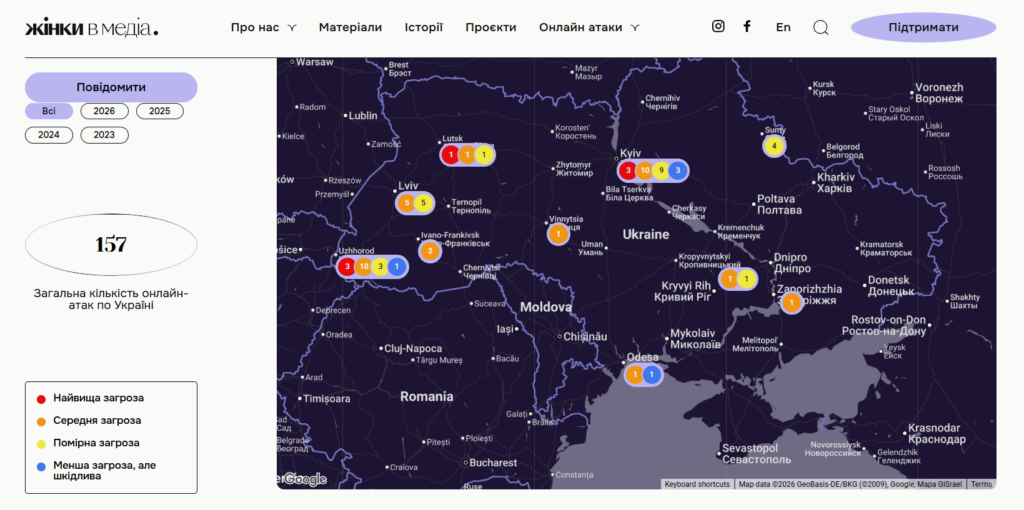
“We document these cases because it’s very important to make the problem visible, so that it isn’t dismissed. It helps create response mechanisms, advocate for legislative change, and show law enforcement real cases. When we publish these stories, we also help the journalists: we provide legal support, we can pay for consultations with a psychologist, we work with the Digital Security Lab, whose specialists help with protecting accounts, and we provide advocacy support,” Liza Kuzmenko says.
At the end of the training, Liza Kuzmenko shared a guide setting out an action plan for media, Steps for Newsrooms to Take in the First 24 Hours Following an Online Attack against a Woman Journalist, created by Women in Media NGO based on the practices of UNESCO (The Chilling), the Coalition Against Online Violence, PEN America, the Dart Center for Journalism and Trauma, and the IWMF.
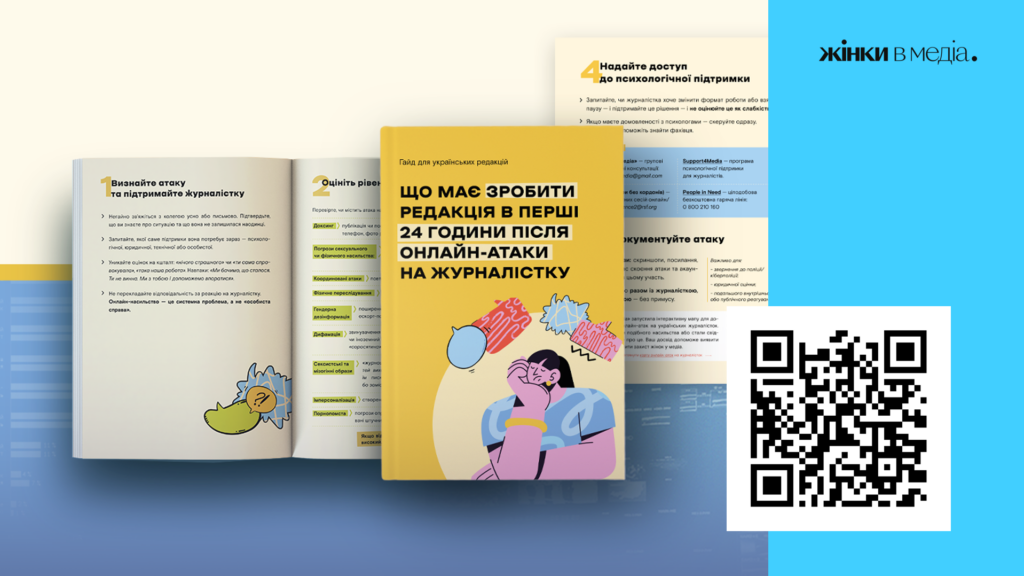
The guide contains eight key response steps:
- acknowledging that an attack has occurred and supporting the journalist;
- assessing the level of threat;
- ensuring cyber protection;
- access to psychological support;
- documenting the incident;
- bringing in a lawyer;
- determining whether a public response is needed;
- informing the newsroom and coordinating further action.
After the session, Suspilne and Women in Media will jointly work on changes to the broadcaster’s internal policies, so that countering online violence is anchored at the institutional level.
“We sincerely thank Liza for such a substantive training. In the near future, we plan to work through changes to Suspilne’s internal policies together, to systematically regulate the question of responding to online violence and provide staff with clear support procedures,” Mariya Frey, a board member in charge of news and regional broadcasting, said during the event.
Text prepared by the Suspilne team