
From September 8 to 10, 2026, Dara Franko, communications manager at Women in Media NGO, took part in a three-day gathering hosted by the Swedish Kvinna till Kvinna Foundation. The foundation works in countries affected by war and conflict, supporting women’s rights organizations and strengthening women’s role in public life and peacebuilding. It has been active in Ukraine since 2014.
This was the second time Women in Media had joined one of these Kvinna till Kvinna gatherings. This year’s program combined expert discussions, peer exchange among civil-society practitioners, a look at international practice, and activities focused on recovery and mutual support.
Representatives of other Ukrainian women’s and human rights organizations also attended, including D.O.M.48.24, the Association of Roma Women Voice of Romni, the Sphere Women’s Association, Fight For Right, the Slavic Heart Charitable Foundation, the Ukrainian Women Lawyers Association JurFem, and the Women’s Perspectives Center, among others.
Day One: A Gender Lens on Ukraine’s Recovery
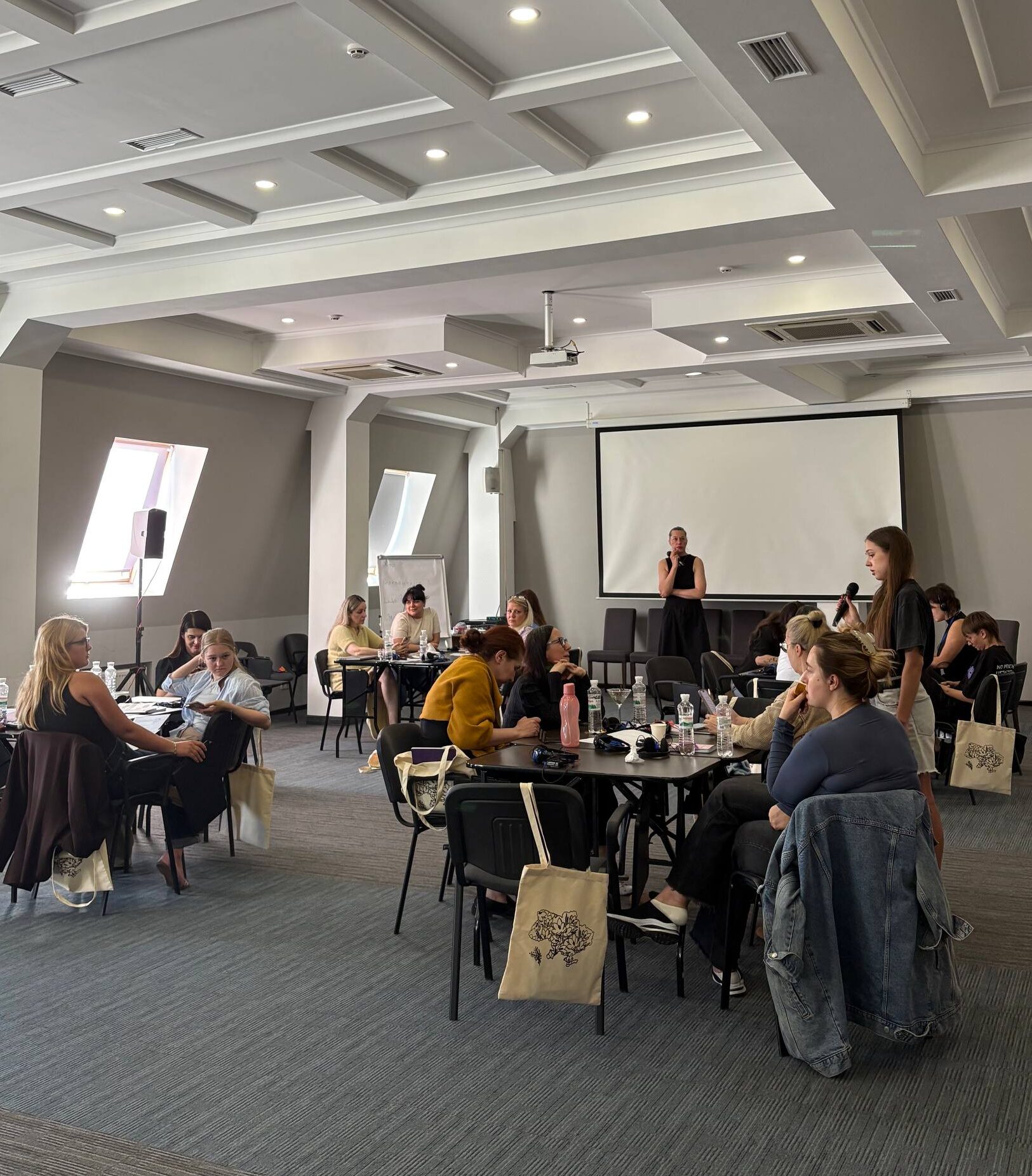
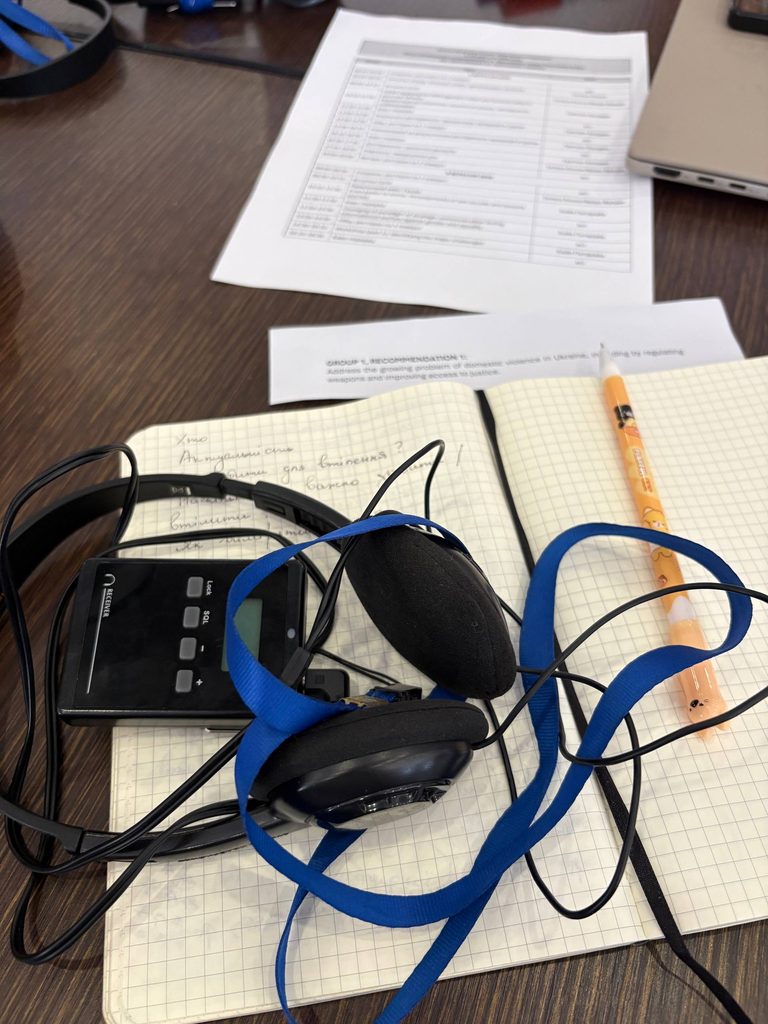
The first day opened with a presentation of research by the Stockholm International Peace Research Institute (SIPRI) on applying the Women, Peace and Security (WPS) agenda to Ukraine’s recovery. Participants discussed the study’s analytical approach and methodology, how to build a gender perspective into recovery, and who should have a seat at the table when that recovery is planned.
The research was presented by Gretchen Baldwin, Senior Researcher in SIPRI’s Peace Operations and Conflict Management Programme. Her work focuses on gender and peace operations, and she has previously worked in the United States, Cameroon, Rwanda, and the Democratic Republic of the Congo.
A central message was that it isn’t enough simply to include women in recovery. What’s needed is a gender-transformative approach, along with WPS tools adapted to Ukraine’s realities. The discussion also turned to what makes Ukraine’s situation distinctive: the debate over what recovery should look like, and on what principles, is happening while the war is still going on.
“A gender-transformative approach to recovery is needed now, and making it happen will take advocacy. Ukraine’s situation is unique: the war is still going on, and yet you are already talking about recovery,” Gretchen Baldwin said.
Participants also looked at how far a gender perspective has already made its way into Ukraine’s recovery documents and plans, and at the role civil society can play in pushing for it to be addressed systematically.
The discussion reflects a broader principle of the WPS agenda. As SIPRI’s research stresses, implementing it is about more than the number of women in the room: it calls for deeper gender analysis and for a gender perspective to be built into practical decisions.
Day Two: Lessons from Georgia and Strategic Communications
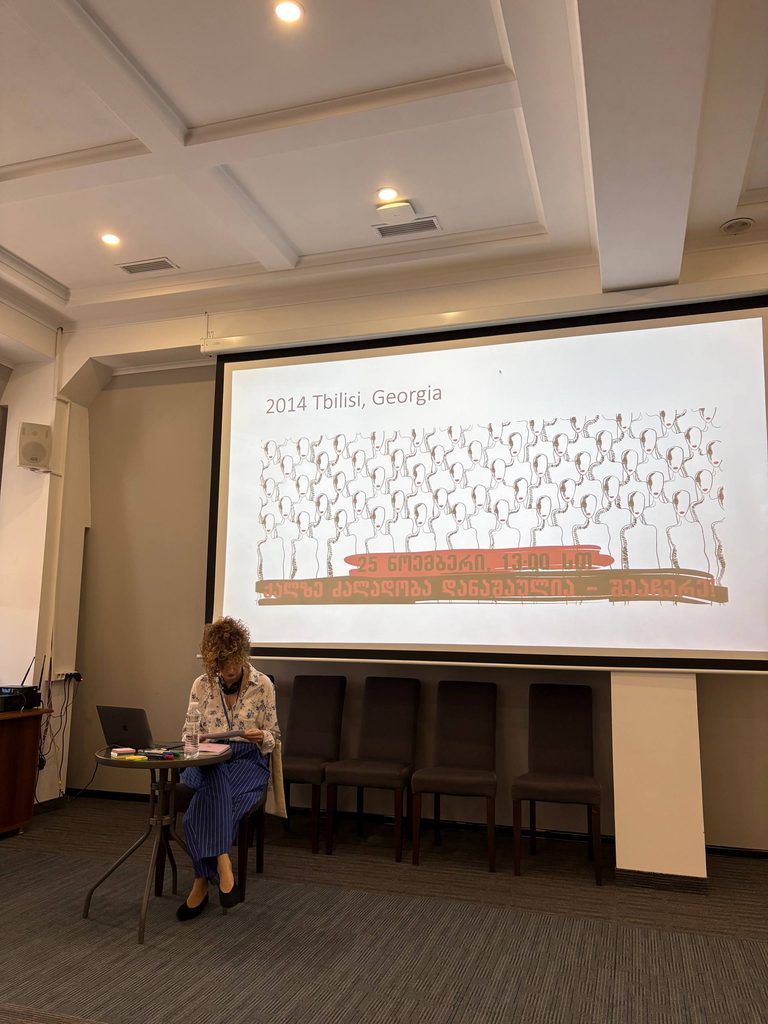
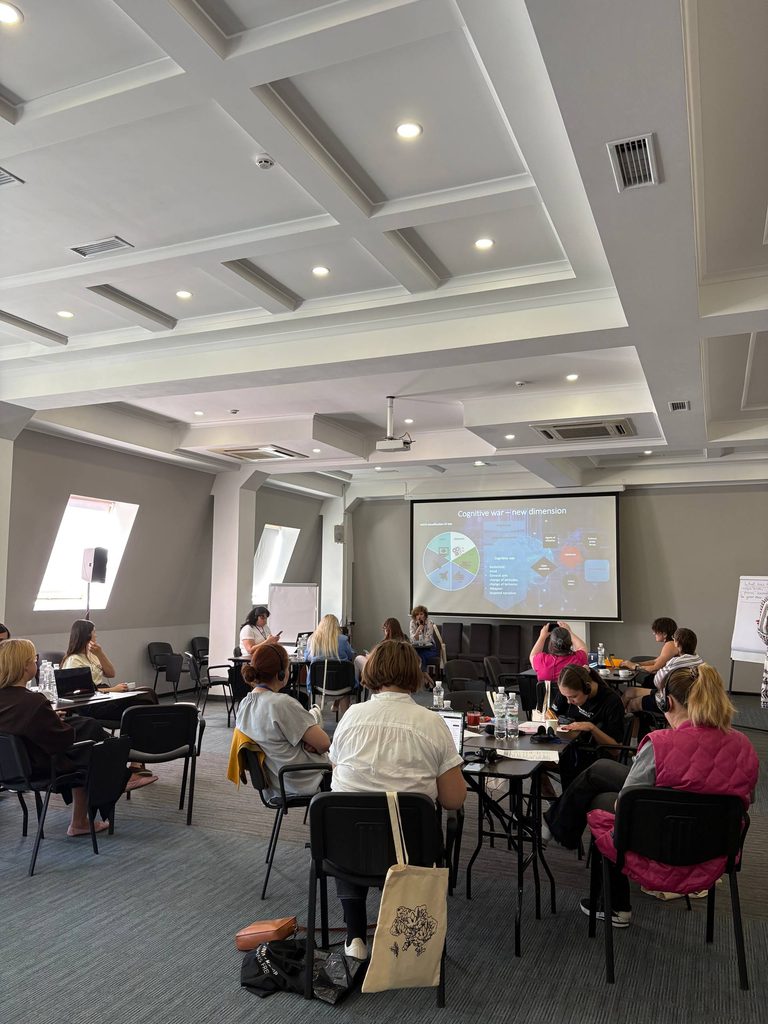
The second day was devoted to Georgia’s experience in defending women’s rights and advancing gender equality. Baia Pataraia, a Georgian human rights defender and executive director of Union Sapari, spoke about how the country has changed over the past decade, the mounting pressure on civil society, and how strategic communications have had to evolve amid an information war against gender equality.
One clear takeaway was that gains in women’s rights should never be taken for granted. According to Pataraia, support for gender programs in Georgia has shrunk dramatically in recent years, and rights and principles that until recently seemed settled now have to be fought for all over again.
“It’s not only laws that need to change — mindsets do too,” she said.
Much of the conversation focused on strategic communications in the civil society sector. Pataraia shared lessons from Georgia’s women’s movement and described how creative formats help draw attention to human rights actions. Even when an action doesn’t draw large crowds, she explained, what matters is creating a newsworthy moment that carries its message to a wider audience through the media.
Pressure on Georgian civil society was another major topic. The discussion covered legal restrictions on organizations that receive foreign funding, the difficulty of securing support from the business community, and growing pressure on protesters. Among the tools used to apply that pressure, Pataraia pointed to steep fines for taking part in protests and financial restrictions.
Day Three: Recovery and Mutual Support
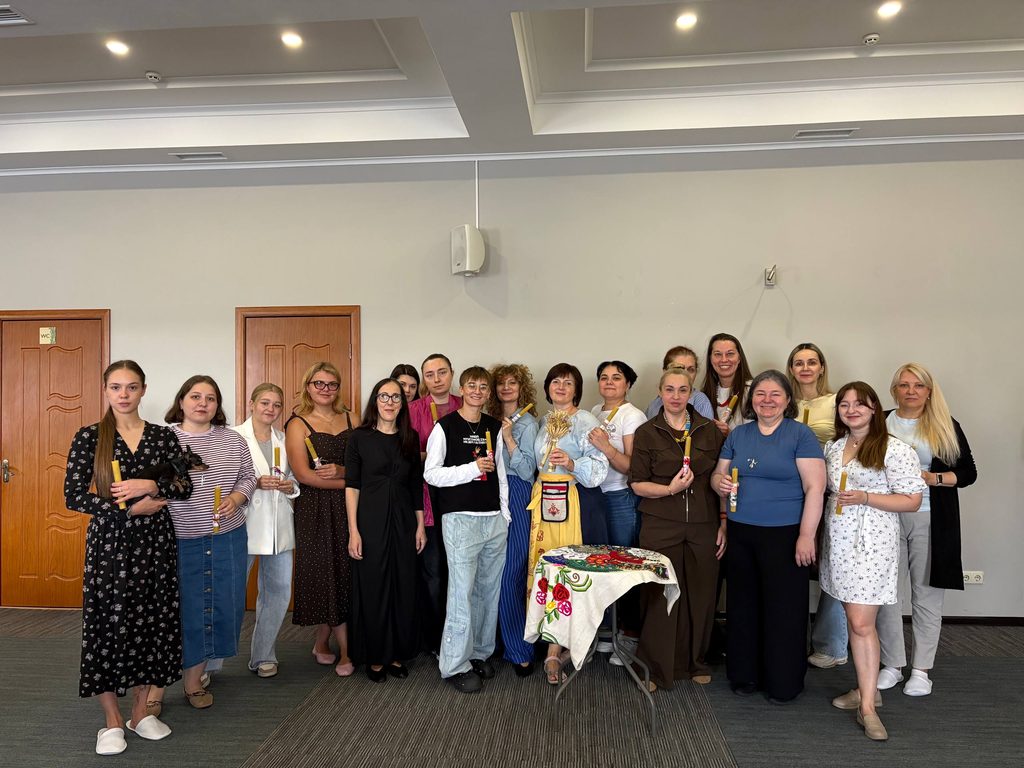
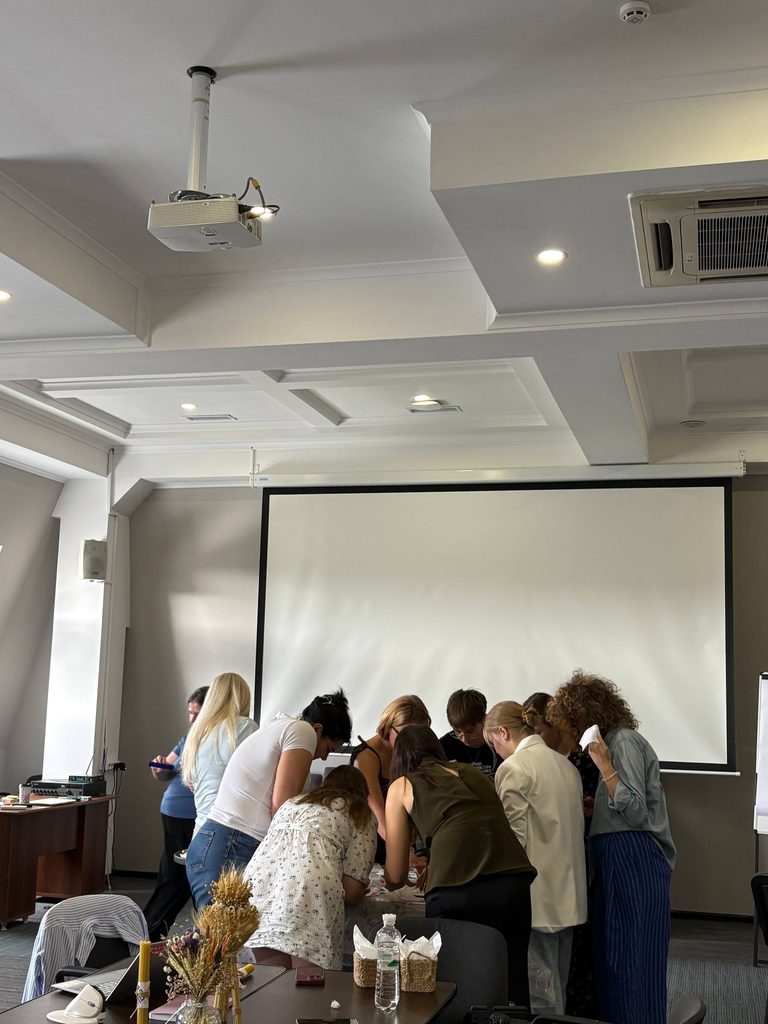
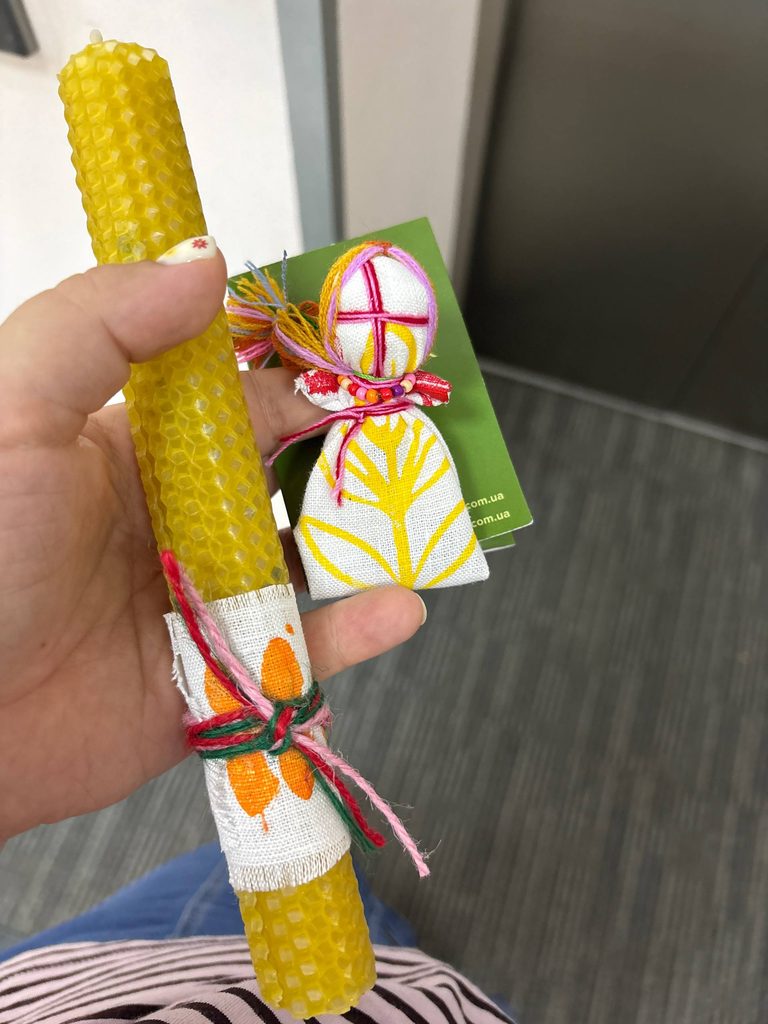
The final day centered on self-care, mutual support, and informal connection. Participants joined two hands-on workshops with a local artisan, learning to make candles and motanka dolls (the traditional Ukrainian wrapped-fabric dolls).
Participants also swapped their own self-care practices, sharing what helps them look after themselves and recharge after long stretches of wartime work.
The group talked, too, about the challenges facing Ukraine’s civil society today and how the full-scale war is affecting both organizations and the people who work in them. The conversation became a space to share experience and practical approaches that help teams keep going under sustained pressure and uncertainty.
“Everyone talked a lot about the challenges the full-scale war has brought, and about the solutions that help us keep working. Some organizations are putting more energy into team practices and supporting each other. Some give their staff extra days off on unexpected occasions, like the first day of spring or Family Day. And some let the team start work at lunchtime if there’s been heavy shelling overnight. These are very different ways of taking care of people, but every one of them matters.
For all the exhaustion, the uncertainty, and everything the war throws at us, my colleagues and I agreed on one thing: each of us still sees a higher purpose in our human rights work. We see women who need attention, support, and protection of their rights — and that is exactly what gives our teams the strength to keep going.
I’m so grateful to Kvinna till Kvinna for bringing us together, for the chance to get to know one another, learn from each other’s experience, and feel that support. It meant an incredible amount to me,” said Dara Franko, communications manager at Women in Media.
About
The Kvinna till Kvinna Foundation has defended women’s rights since 1993. For every woman and girl’s right to be safe and to be heard. Today, it is one of the world’s leading feminist women’s rights organizations, working directly in areas affected by war and conflict to strengthen the influence and power of all women.
They work closely together with more than 100 partner organizations in 20 countries (the Western Balkans, the South Caucasus, Ukraine, the Middle East, and sub-Saharan Africa) to end violence against women, achieve gender equality and justice, and reach lasting feminist peace.
Text and photos: Dara Franko, communications manager, Women in Media NGO