
Ten Ukrainian women investigative journalists from leading Ukrainian media outlets gathered in Kyiv on September 8–9, 2026, for a strategic session held as part of the Women Leaders in Investigative Journalism — Ukraine-EU Support Program. The Women in Media NGO implements the project in cooperation with the European Centre for Press and Media Freedom (ECPMF), with support from the German Federal Foreign Office.
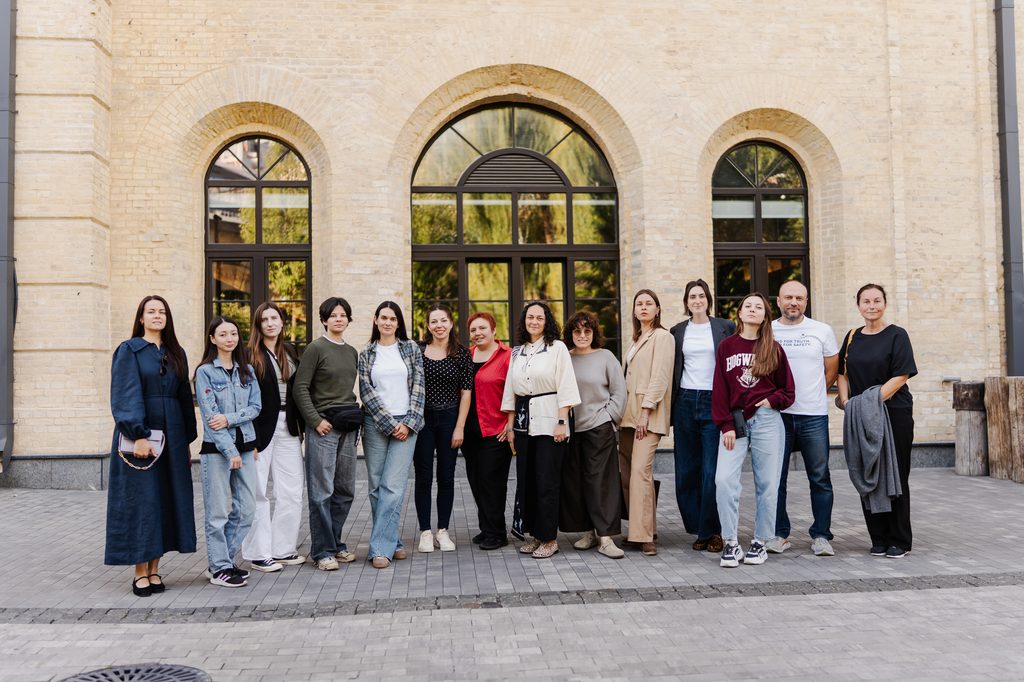
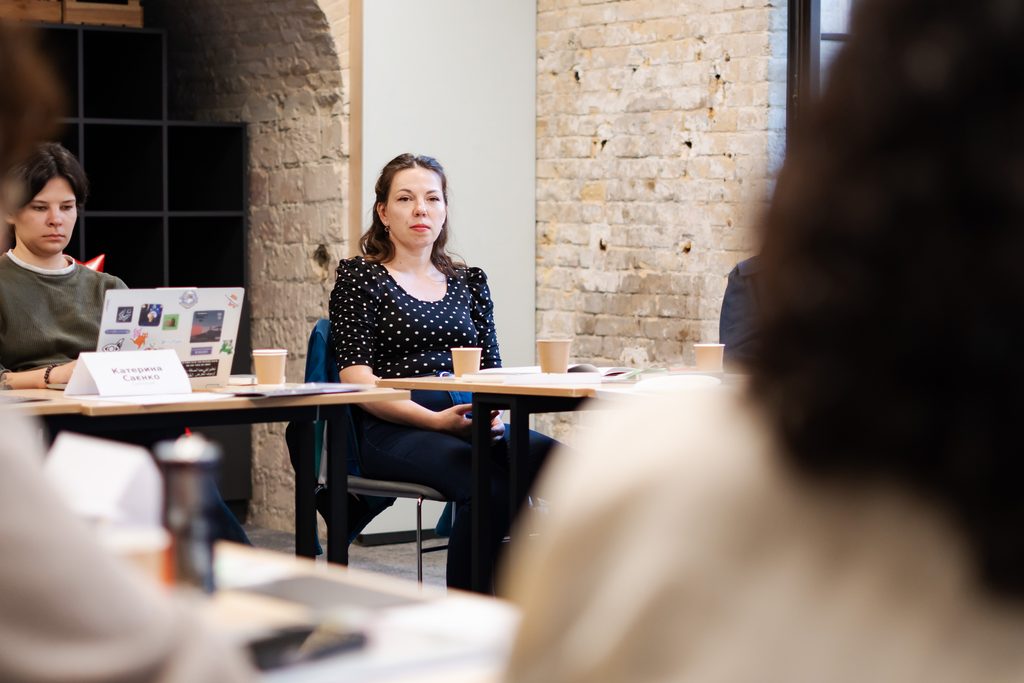
Over the course of the session, the participants — Kateryna Saienko (Suspilne), Yana Korniichuk (Slidstvo.Info), Svitlana Stetsenko (Bihus.Info), Liubov Velychko (freelance), Natalia Onysko (NGL.media), Anna Myroniuk (independent investigative journalist), Olesia Bida (The Kyiv Independent), freelancer Olena Kushchenko (Texty.org.ua), Yuliia Khymeryk (freelance) and Iryna Maliukova (Cherkasy Information Agency 18000 NGO) — discussed the challenges they share in the profession, worked out possible ways of addressing them, and prepared for their joint research trip to Berlin, which will take place this November.
Day one: mapping shared challenges
The first day opened with introductions, a discussion of what the participants expect from the program, and the drawing up of a map of the challenges that women investigative journalists face in Ukraine today.
The participants sorted these challenges into three levels: personal, newsroom, and systemic. Among the personal challenges, most of the journalists named anxiety, a growing load of care work, exhaustion and physical safety tied directly to the full-scale invasion, as well as discriminatory remarks directed at them.
Journalist Yuliia Khymeryk recalled that many young women working in media had in one way or another encountered sexist treatment — being addressed as “girl,” for example, which devalues professional achievement and shifts the focus onto age, gender, appearance and the like.
At the newsroom level, the challenges women investigative journalists run into most often today are heavier workloads for their teams, the absence of health insurance or inadequate coverage, issues around data protection and cybersecurity, and a lack of funding.
“Cybersecurity and regular staff training, especially for new hires, are becoming a critically important part of editorial policy, because attackers try to reach newsroom systems through the least protected members of staff,” said one of the participants, Bihus.Info journalist Svitlana Stetsenko.
The systemic level takes in challenges such as online attacks on women in media because of their professional work, law enforcement’s reluctance to act on investigations, obstruction of journalistic activity, gender-based harassment, wartime censorship, restricted access to information, and mobilization.
The journalists also went into detail on the potential consequences of wartime censorship: information hygiene reduced to a performance, selectivity about which topics are open to public discussion, the spread of disinformation for want of verified data, and the imposition on society of negative associations with the work of the media — the notion that journalists are using their reporting to do harm, to provoke enemy strikes, and so on.
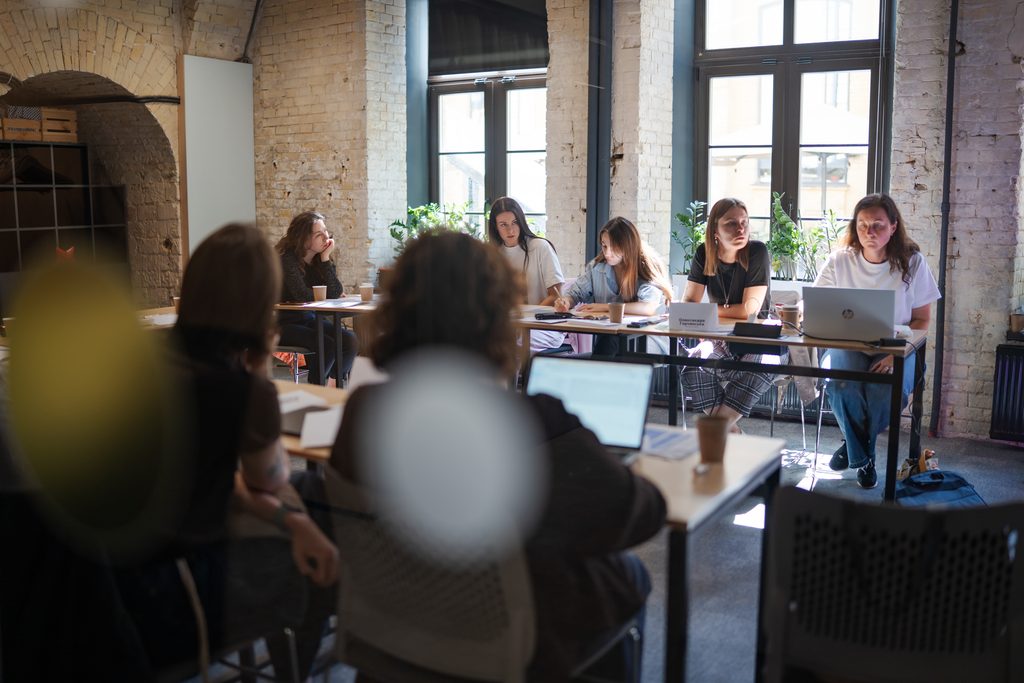
The first day closed with a meeting with Gohar Khodjayan, IMS Programme Manager for Ukraine and Head of the IMS Representative Office in Kyiv, and Roman Kifliuk, IMS National Adviser in Ukraine.
The main subject of the conversation was strategies for supporting Ukrainian media and the journalists who do investigative work. Presenting the organization’s activities, Gohar Khodjayan said that IMS sees itself first and foremost not simply as a donor but as a partner:
“We engage with our partners as equals, and decisions are taken jointly, because it is our local partners who implement projects on the ground. We give newsrooms comprehensive support — not only funding, but also advice; we hold discussions and help them find additional funding. Being on friendly terms with our partner organizations matters to us,” she said.
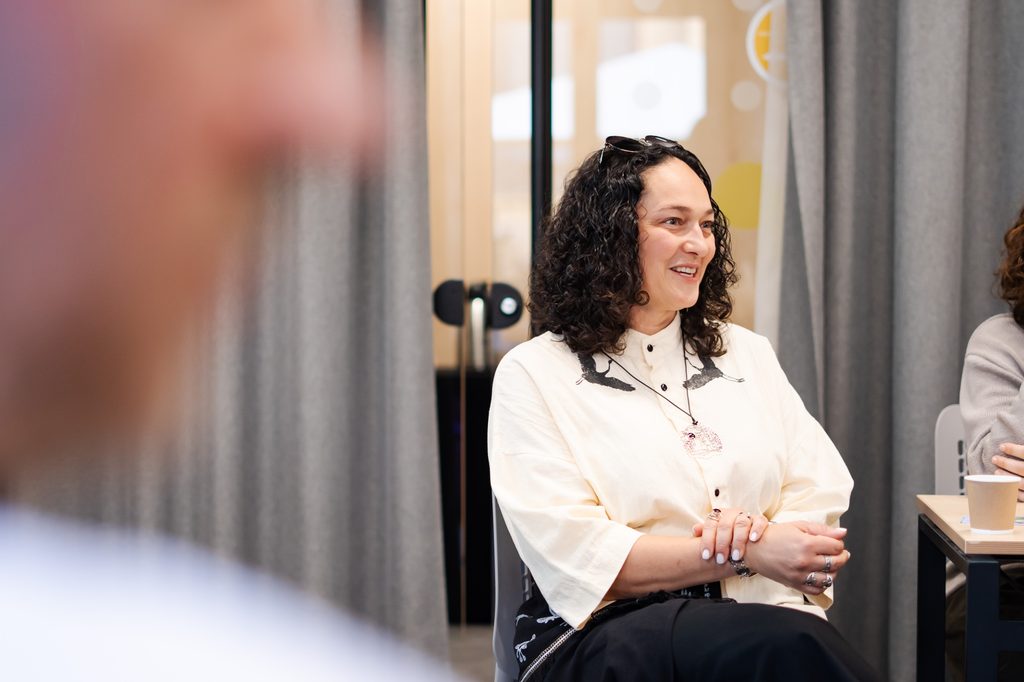
Gohar Khodjayan also spoke about the potential effects on support for Ukraine of domestic political change in the countries that act as donors to Ukrainian media and the civil society sector. Turning to the Nordic countries, and to Denmark in particular, where IMS is based, she stressed that support for Ukraine remains broadly stable despite those shifts:
“Sweden shares a border with Russia and also feels the threat directly, so it has an interest in supporting Ukraine. A victory for the left there could even lead to some increase in funding. The right coming to power could trigger the complete closure of support programs in other regions, such as Africa and Asia. As for Denmark, the change to a more centrist government has broadly kept support at its previous level. That said, any assistance for next year has to be approved and voted through in parliament as part of the budget. Support from Norway and Finland likewise remains unchanged.”
Roman Kifliuk, for his part, offered a few pieces of advice on how to get potential international partners interested in your work. He stressed that self-presentation matters, because the details shared during a meeting can be the decisive piece that allows partner organizations to assemble a full picture of Ukraine’s needs and of the ways those needs might be met.
“Tell people as much about yourself as you can. Modesty is a liability here — drop it. Catch the person you are interested in by the hand and, if you get the chance, tell them about yourself. It lets them learn more about you, about your projects and your plans,” Roman Kifliuk said.
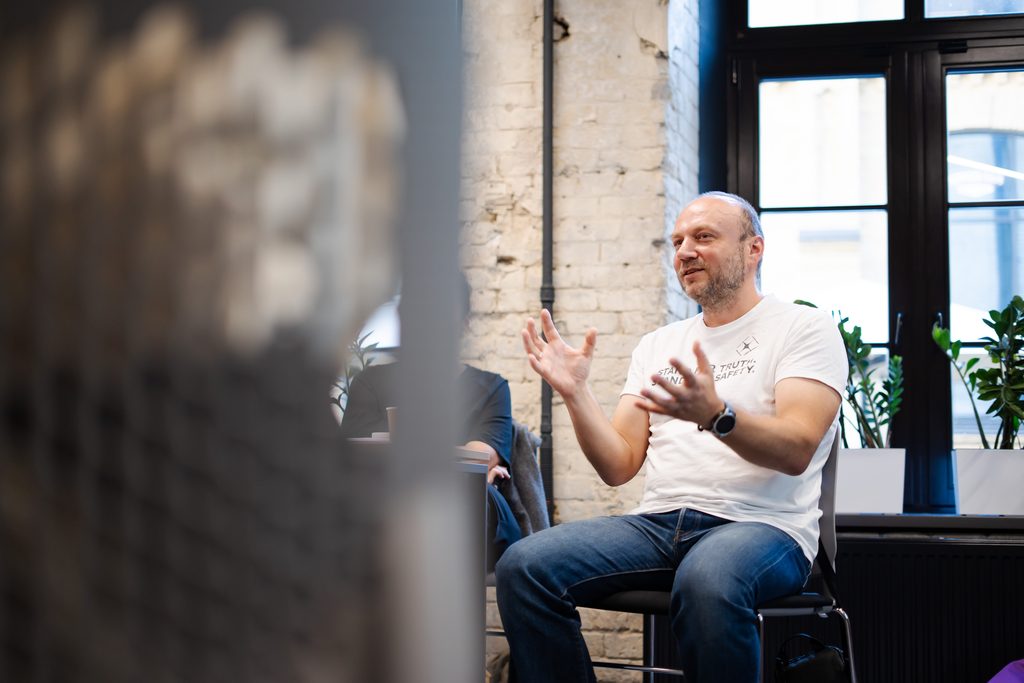
Day two: strategizing and preparing for the joint trip
The participants in the Women Leaders in Investigative Journalism — Ukraine-EU Support Program devoted the second day of the strategic session to drawing up a roadmap ahead of the joint trip to Berlin. They considered not only what they want to take away from the visit, but also what they can bring to their German colleagues and present as experts in their field.
Freelance journalist Liubov Velychko singled out the following areas:
“First and foremost, research into Russian influence: on politics, on the information environment, on everything. That is something we in Ukraine definitely have expertise in. It also means investigating the influence of the big oil and gas industry players and, of course, how international policy is shaped in that context. Because many countries in Europe, and not only in Europe, depend on Russian oil and gas.”
Ukraine’s women investigative journalists are ready to speak to international audiences with authority about investigating corruption offenses and also about war crimes: identifying those involved in committing them and working with the people harmed by them, such as survivors of conflict-related sexual violence and torture.
Among the challenges they already encounter in working with international audiences, the journalists highlighted comparisons drawn between the position of Ukrainian media professionals and that of their Russian counterparts, and the promotion of a “good Russians” image, including the way “liberal journalists” and “Russian media in exile” are promoted in Europe. Another is the perception of Ukrainian journalists as supposedly too emotional and incapable of covering the war objectively.
Through joint discussion at the strategic session, the investigative journalists worked out possible ways of countering these narratives in conversations with colleagues abroad: moving from emotional defense to facts, using counter-questions, and analyzing local narratives so as to draw on references Europeans will understand when explaining Ukrainian realities.
The strategic session concluded with an off-the-record conversation with Yaroslav Yurchyshyn, Chairman of the Verkhovna Rada Committee on Freedom of Speech.
The discussion covered, among other things, how to respond promptly and at various levels to online attacks on women in media. Yaroslav Yurchyshyn urged journalists who face such attacks to seek help from specialized organizations such as Women in Media, the Regional Press Development Institute and the Institute of Mass Information, and to file reports with the National Police and appeals to the Verkhovna Rada Committee on Freedom of Speech.
“If cases like these are tolerated, or go without a proper response, the next attacks can become more serious — both online and offline,” he said.
Yaroslav Yurchyshyn also stressed the need for a systematic approach to countering lawsuits against public participation — so-called SLAPP suits — which are often used as a tactic to intimidate women journalists and force them into silence.
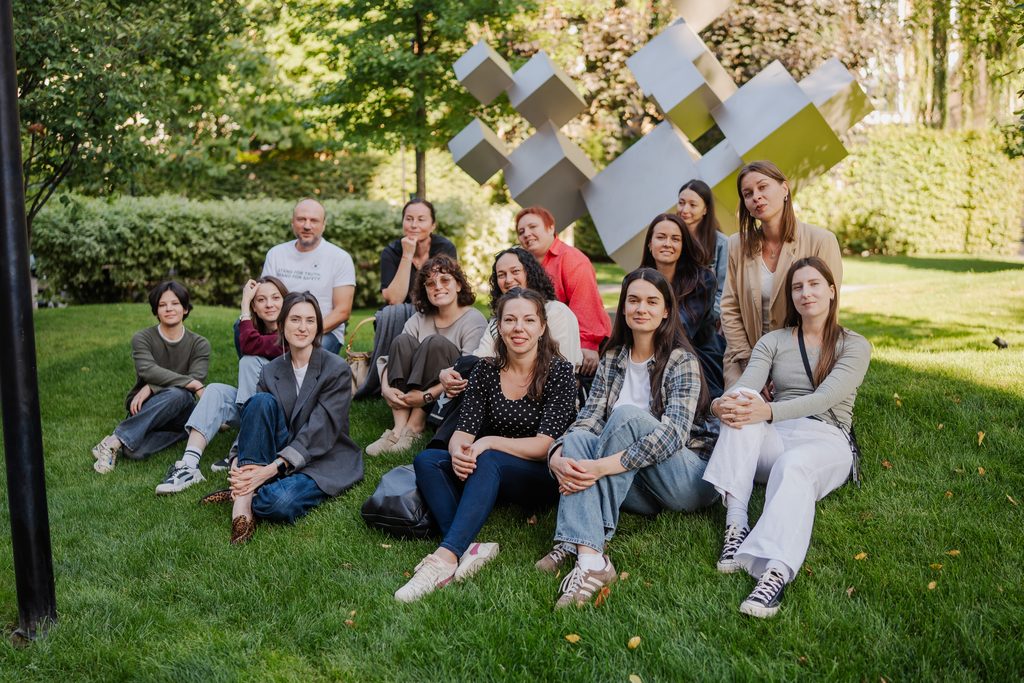
The program builds on the Women Leaders in Media — Ukraine-EU Support Program, which Women in Media successfully implemented in 2025. Under this year’s initiative, the selected participants have the opportunity to attend a series of webinars given by Ukrainian and European experts, to join the UNCOVERED 2026 conference in Budapest, Hungary, on September 17–18, and to take part in a research trip to Germany.