
The Women Leaders in Investigative Journalism — Ukraine-EU Support Program has kicked off with a series of webinars led by Ukrainian experts. The program is implemented by the Women in Media NGO in cooperation with the European Centre for Press and Media Freedom (ECPMF) and with the support of the German Federal Foreign Office.
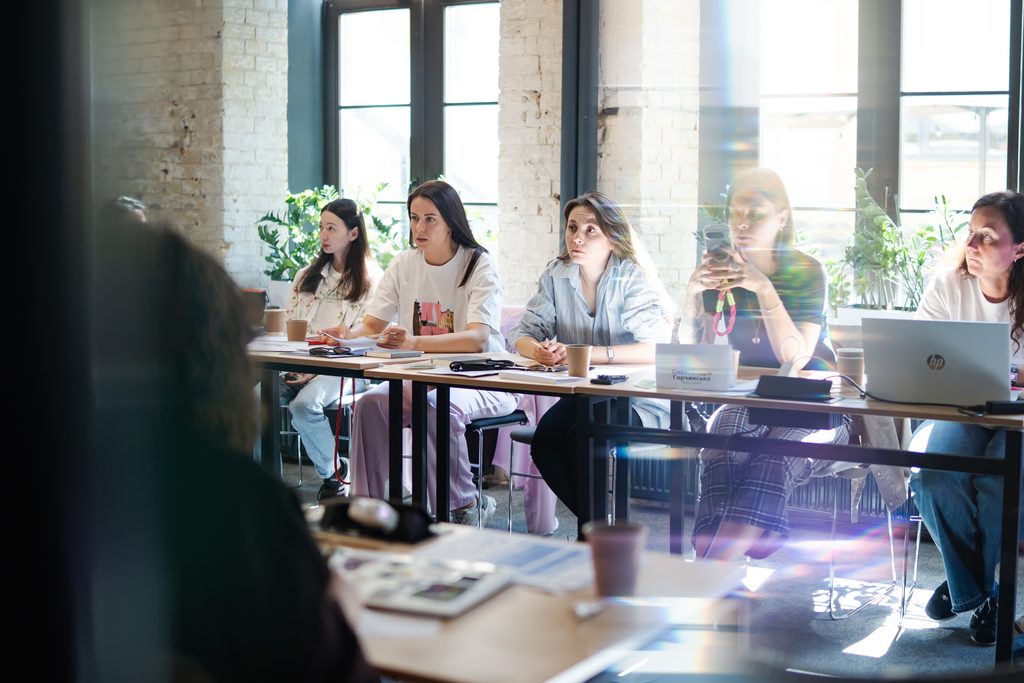
As part of the program, investigative journalists from a range of Ukrainian media outlets attended online lectures by Ola Myrovych, head of Lviv Media Forum; Olena Strelnyk, a Ukrainian sociologist and author of A Strawberry on a Cactus: 45 Questions about Gender (In)equality and Feminism; and Olga Simanovych, regional editor at the Global Investigative Journalism Network (GIJN).
Building media partnerships
This year’s webinar series opened with a session led by Lviv Media Forum head Ola Myrovych, titled “From Introductions and Networking to Collaboration: How to Build Strong Professional Partnerships.”
She spoke about partnership-building strategies for journalists and civil society organizations. As Myrovych put it, a partnership is not a transaction but a long-term investment built on shared values, equality, and mutual respect. That, she said, is what sets partnership apart from ordinary collaboration:
“In a partnership, we stand as equals, not as supplicants.”
Genuine partnership, she explained, always emerges where the strategies of two or more organizations intersect and where they share a vision of the change they want to see in their environment. When organizations work at that intersection, they pursue a common mission, and that gives their cooperation depth and meaning. If one side is pursuing its mission while the other simply supplies resources without engaging its own, that is just another form of collaboration, Myrovych noted.
This point struck a chord with program participant Olena Kushchenko, a freelance journalist for Texty.org.ua. As she told Women in Media:
“What really resonated with me in Ola Myrovych’s webinar were her ideas about equality and partnership. She stressed that when you work with donors or partners who fund your work, it’s important not to put yourself in the position of the one asking, but to talk about what you can offer in return, and not to be afraid to put forward alternative options. That’s essential for an honest partnership.”
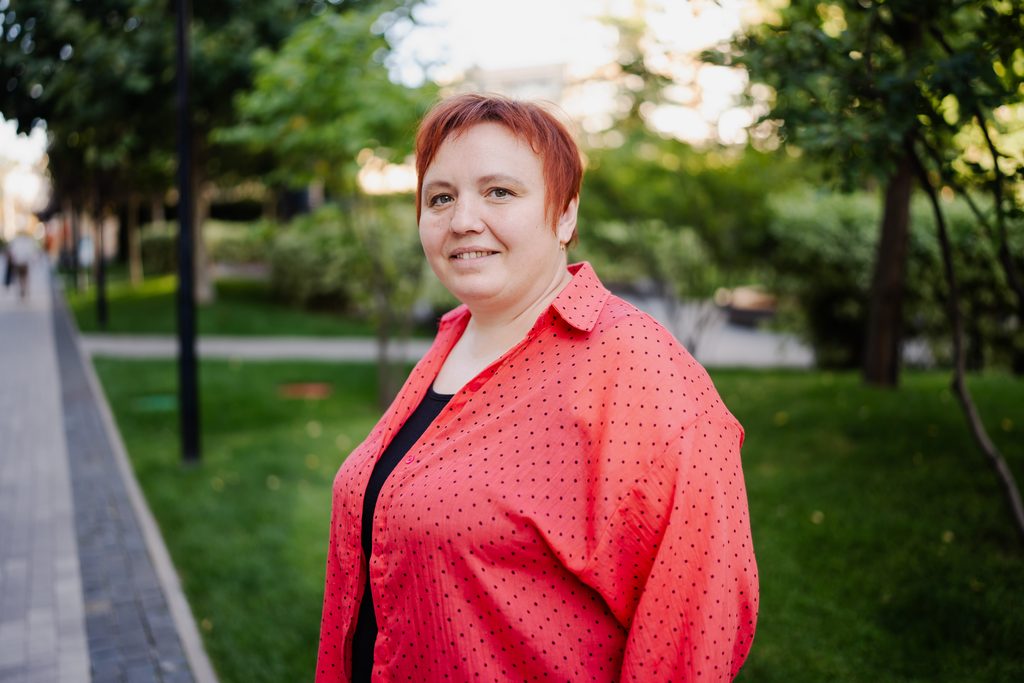
Participants also joined the discussion on what partnership means and what makes it succeed. Bihus.Info journalist Svitlana Stetsenko, for example, said:
“Partnership is first and foremost about support, both financial and in terms of professional growth. We all work inside our own bubbles, and we need to step outside them to see how colleagues in other cities or countries do the same kind of work.”
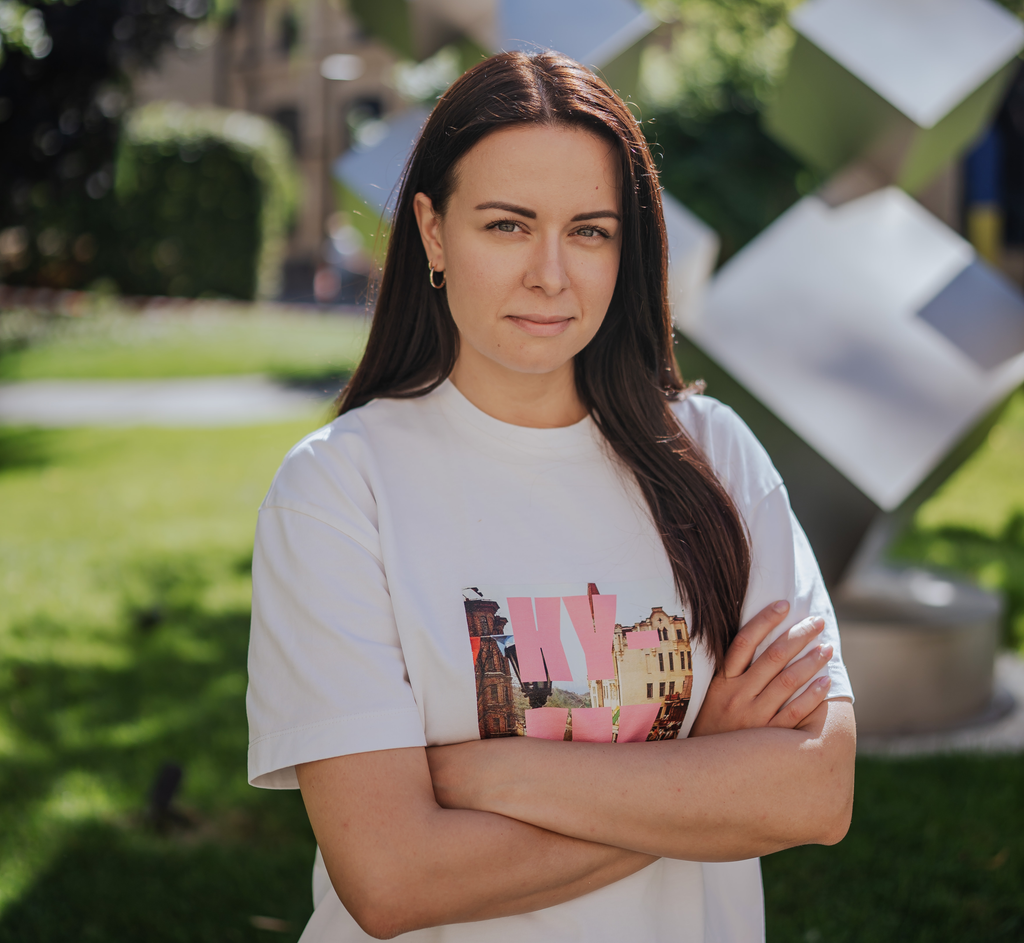
Pursuing strategies where organizations’ interests and missions intersect is the fundamental condition for building genuine, sustainable partnerships, Myrovych believes. At the same time, it is important to defend your own boundaries, be a reliable partner, and avoid toxic behavior.
She also drew an analogy between “planting oaks” and working toward long-term results. Work of this kind, Myrovych emphasized, may only pay off decades from now, and recognizing that can help people stay motivated amid today’s uncertainty:
“If we plant oaks, it means we accept our own transience and understand that we won’t necessarily see the fruits of our labor right away. But we work so that others will carry on growing those oaks.”
Reflections on gender equality and feminism
In her webinar, sociologist Olena Strelnyk, author of A Strawberry on a Cactus: 45 Questions about Gender (In)equality and Feminism, talked about how the idea for the book came about and what went into writing it. Together with the participants, she also discussed today’s key challenges around gender equality and how the full-scale war is affecting the present.
“If we ignore the gender factor, we’re unlikely to understand the complex nature of certain phenomena, such as domestic violence,” Strelnyk stressed. According to her, domestic violence in Ukraine has increased during the full-scale war.
“The data show that women are far more likely to suffer physical violence, the most brutal and life-threatening form. One of the main reasons women who experience abuse can’t break off the relationship with their abuser is their structural and economic dependence, for example, being on maternity leave. A woman’s job is a matter not only of her economic security, but of her physical safety as well,” Strelnyk emphasized.
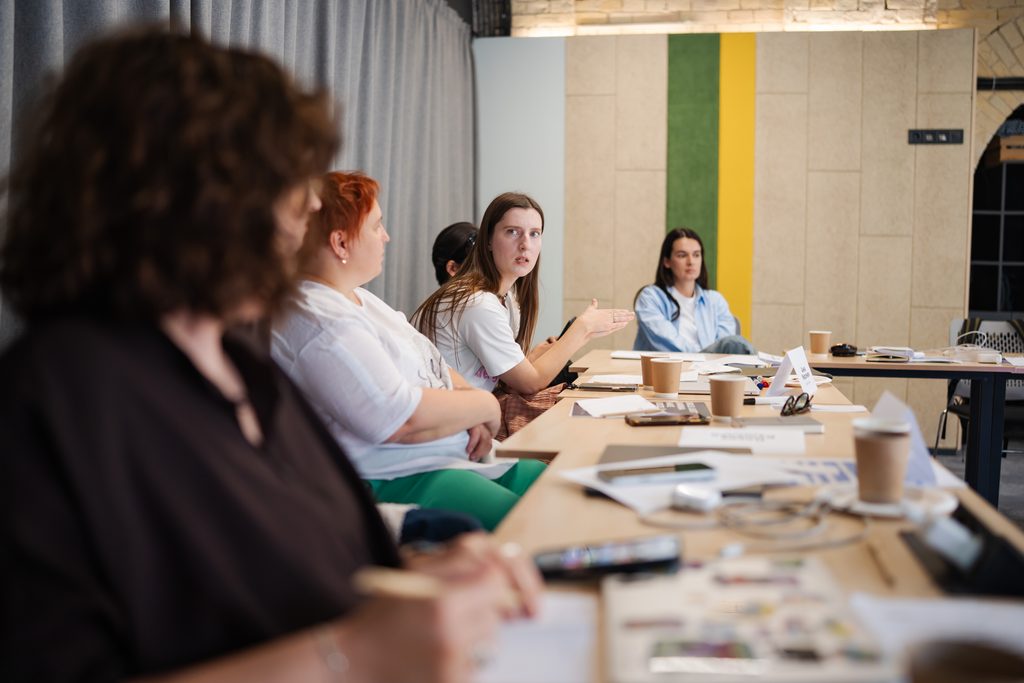
As she noted, the war has also posed a challenge for sociology, driving radical changes in society. Among other things, it has widened the gender pay gap to as much as 40 percent once military pay is factored in:
“The actual gender pay gap has grown during the war and is estimated at around 40%. That’s because the official figures from the State Statistics Service don’t include military pay, and most service members are men receiving high payments for serving on the front line. Meanwhile, a large number of women continue to work in low-paid jobs, such as preschool teachers, social workers, and so on.”
Strelnyk highlighted the importance of critical thinking and reliable data in tackling gender inequality. Also, she added, it is essential to maintain “cautious optimism” about future systemic change, even though, she believes, there is a risk that patriarchal tendencies will intensify after the war ends, bringing a degree of “backsliding.”
“Right now, progress on gender equality at the policy level is being held in place and is even moving forward thanks to pressure from the EU integration process, such as the adoption of a gender equality strategy in education. But what happens next will depend on which politicians, and with what views, come to power after the war. The backsliding we see even in established democracies tells us that we need to stay vigilant. We don’t know what the political landscape will look like or what views people will bring with them when they come to power after the war,” Strelnyk says.
Ukrainian investigative journalists on the international stage
GIJN regional editor Olga Simanovych gave a webinar called “Ukraine in Global Cross-Border Investigations: How Ukrainian Women Journalists Can Join International Projects.”
Simanovych described the role of the Global Investigative Journalism Network (GIJN) as a vetted platform for collaboration, noting that Ukraine is among the leading countries by number of member organizations.
“Membership in the Global Investigative Journalism Network is a kind of exclusive club and a mark of quality, because donors understand that if an organization has been admitted to the network, it takes investigations seriously and has fully transparent sources of funding,” the expert said.
She also shared concrete examples of successful co-productions between Ukrainian outlets and foreign partners, from tracing abducted children to exposing war crimes.
One example Simanovych highlighted was Slidstvo.Info’s investigation “State Children: What Happened to Orphaned Children During the Evacuation to Turkey.” It tells the story of Ukrainian orphans who were taken to Turkey, ostensibly for their safety. Anna Babinets, head of Slidstvo.Info, met Turkish journalist Burcu Karakaş at a networking event in Malaysia and brought her on board to produce the Turkish part of the investigation and publish the findings in local outlets.
Another story she singled out was Texty.org.ua‘s investigation “One of Hundreds of Thousands: The Story of a Ukrainian Orphan Who Disappeared in Russia,” co-authored by Olena Kushchenko.
The core of Simanovych’s talk was a step-by-step approach to breaking into the international arena: effective networking, building a personal brand, and using secure digital databases.
Speaking about building partnerships, she noted: “It’s very important that everyone feels on an equal footing with the others, regardless of how big their outlet is, or whether they’re just a freelancer who has joined the team.”
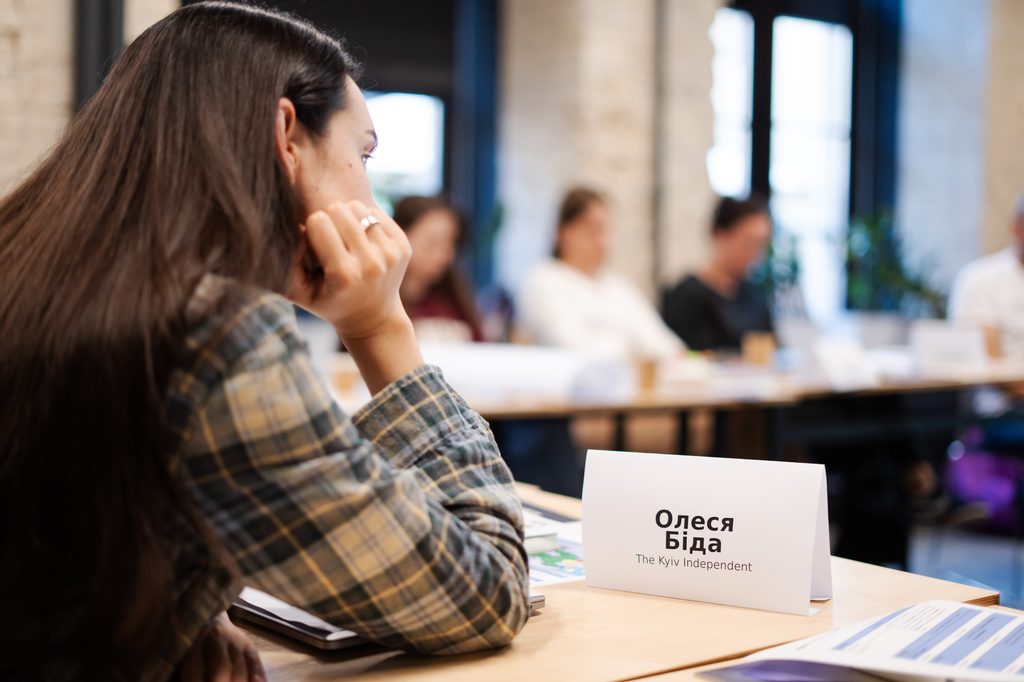
Olesia Bida, a journalist with the Kyiv Independent and a participant in the Women Leaders in Investigative Journalism — Ukraine-EU Support Program, shared an example of how partnerships are built in war crimes investigations. She explained that the outlet’s War Crimes Investigations Unit draws on OCCRP resources to gain access to closed or leaked databases, particularly on Russia, and to cross-publish English-language stories, which go through fact-checking.
Simanovych stressed the importance of equality, safety, and ethical balance in teamwork, and walked participants through the organizational steps in detail, from signing a memorandum of understanding (MoU) to securing grant funding and submitting work for international awards.
She also pointed participants to practical tools for investigative work. These include Datashare from ICIJ, a platform for data sharing and security, and GIJN’s updated data platform, which allows confidential document uploads, automatic text recognition (OCR), and cross-searching for connections. Another tool, SafeBox from Forbidden Stories, works as “insurance,” preserving material from sensitive investigations in case a journalist’s life is threatened or they are arrested.
A community of women
Sharing her impressions of the webinars, Bihus.Info investigative journalist Svitlana Stetsenko said she values a format in which women don’t just learn on their own, but learn together and support one another.
“It’s this sense of community, where everyone shares their own experience and at the same time learns from other people’s, which is often successful, though not always. And there’s also that other model of leadership I feel close to: mutual growth. This kind of leadership, based on support rather than hierarchy, is something I want to keep developing in my professional environment. For me personally, that is the core idea of feminism: a community of women. So, my heartfelt thanks to everyone who is taking part in this program and is ready to build that kind of community,” Stetsenko said.
Freelance journalist Olena Kushchenko, for her part, said she also found it interesting to learn about her colleagues’ professional experience:
“It was useful for me to hear about the experience of other newsrooms and about how journalists from different countries can join forces for a shared result. It’s about making investigations more effective, reaching wider audiences, and taking newsrooms to a new level.”
Freelance journalist Liubov Velychko was most impressed by Olena Strelnyk’s talk. In her observation, there are many questions that interest her and her colleagues alike, yet all too often they go unspoken, and experts like Strelnyk help fill those gaps in knowledge:
“I realized that I actually know very little about gender issues. Even though I’ve attended some seminars and take part in discussions, I still lack depth of knowledge and clear, understandable arguments to grasp, more consciously and as deeply as possible, what is normal and what isn’t in today’s world. It’s very positive that we’re discussing these issues and bringing them to the fore within our circle of women journalists, especially now, during the war. So I think there should be more discussions like this.”
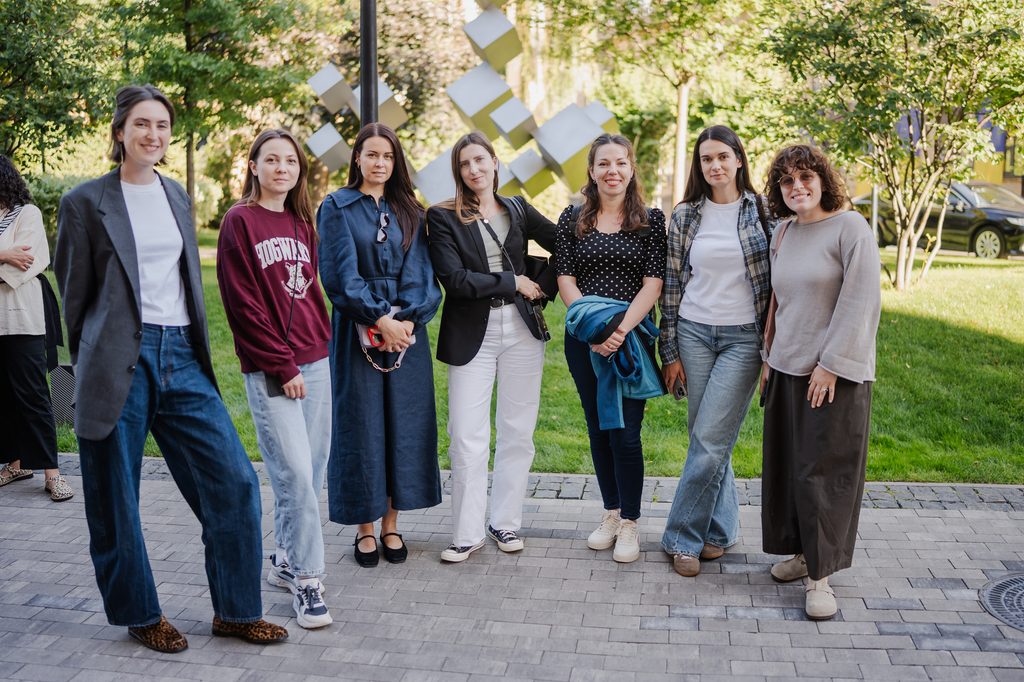
The 2026 participants of the Women Leaders in Investigative Journalism program are Kateryna Saienko, a journalist with Suspilne’s investigations desk; Yana Korniichuk, an investigative journalist at Slidstvo.Info; Svitlana Stetsenko, a journalist at Bihus.Info; investigative journalist Liubov Velychko; Nataliia Onysko, CEO of NGL.media; Anna Myroniuk, an independent investigative journalist and editor; Olesia Bida, a journalist at the Kyiv Independent; Olena Kushchenko, a freelance journalist for Texty.org.ua; freelancer Yuliia Khymeryk; and Iryna Maliukova, head of the video department at the Cherkasy Information Agency 18000 NGO.
The program builds on the Women Leaders in Media — Ukraine-EU Support Program, which Women in Media successfully implemented in 2025.