Supporting Parents of Children with Disabilities: The Podcast Series

Context

For many families, the moment when a child is diagnosed with a disability or special educational needs becomes a profound crisis due to a lack of clear information, complex bureaucratic procedures, and emotional exhaustion. In the Ukrainian media landscape, these issues are often covered only fragmentarily and rarely provide practical answers to parents’ everyday questions.

In this context, the podcast format creates a safe space for explaining complex issues and supporting families who are only beginning the process of acceptance and adaptation.
What has been done

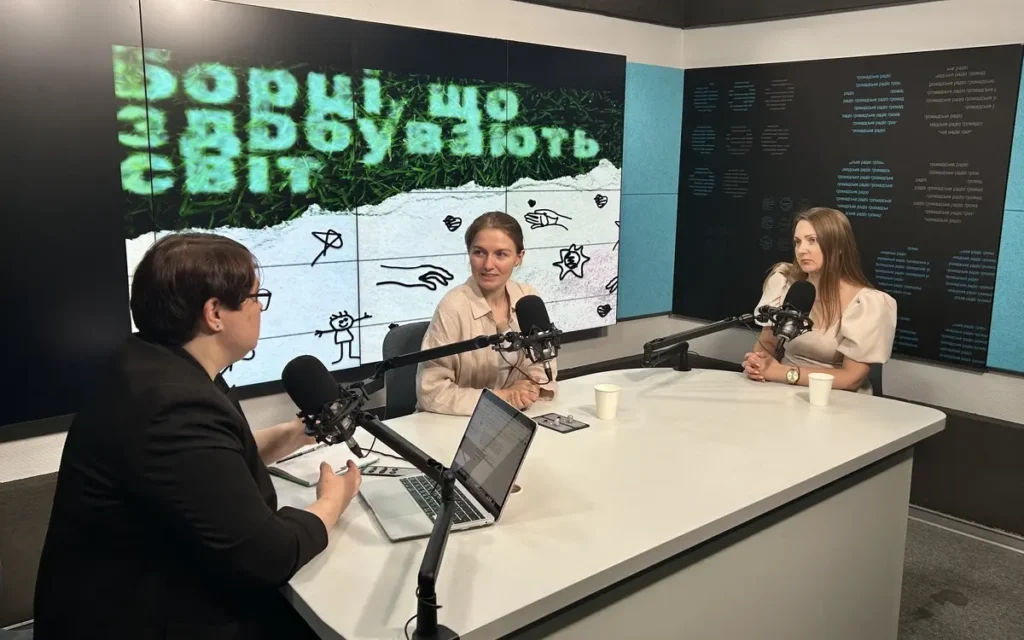
Hromadske Radio launched the podcast series “Fighters Who Conquer the World”, aimed at parents of children with disabilities or special educational needs who are encountering a diagnosis for the first time.

The project’s author, journalist Tetiana Kurmanova, discusses:

  • practical aspects of caring for a child;
  • rehabilitation and early intervention;
  • psychological support for parents and maintaining personal resilience;
  • overcoming bureaucratic barriers and social stigma.

The series also addresses the broader issue of promoting tolerant and non-discriminatory attitudes toward children with disabilities and their families.

How it was implemented

  • The editorial team chose the podcast format, combining expert commentary, parents’ lived experience, and practical guidance.
  • Episodes cover topics such as accepting a diagnosis, obtaining disability status, accessing benefits, finding doctors and specialists, rehabilitation pathways, and early intervention services.
  • The project is designed to provide immediate practical value for families while also increasing public awareness of inclusion and disability-related issues.

Impact

The podcast achieved more than one million social media impressions and received strong audience support. The project was shortlisted among the best podcasts of 2025 by MEGOGO.

Hundreds of positive responses from parents, as well as support from disability and family organizations, demonstrated both the demand for such content and its practical value for society.

What other media can learn

  • Use audio formats to provide both practical information and emotional support to target audiences.
  • Combine expert knowledge with the experiences of real people to build trust and a sense of community.
  • Discuss inclusion and non-discrimination in clear, accessible language so that complex topics become understandable to a broad audience.

Stories of Heroism and Discrimination of LGBTIQ+ in the Military Context

Context

During the full-scale war, Ukrainian media have increasingly highlighted the heroism and sacrifice of military personnel. At the same time, the experiences of certain groups — including LGBTIQ+ people serving in the Armed Forces of Ukraine — remain underrepresented or are often framed through stereotypes.

For LGBTIQ+ service members, military service frequently means a double struggle: against an external enemy and against discrimination, prejudice, and misunderstanding within society and, at times, within the military environment itself. This gap between contribution and recognition became the starting point of the article.

What has been done

The editorial team of Nashe Misto became interested in the topic of LGBT+ military personnel while participating in a gender-sensitive journalism mentoring program organized by the Volyn Press Club. During the training, the team analyzed audience reactions to various topics and noticed a troubling pattern: whenever LGBT+ military personnel were mentioned, social media comments were predominantly negative.

“This was a signal for us — the topic is painful, which means there are stereotypes and prejudices that need to be addressed. We realized that our audience did not see real people behind the abbreviation ‘LGBT+.’ We wanted to convey a simple idea: heroism has no orientation. A person who defends your city, your home, your family deserves respect regardless of whom they love. The longread was meant to become a bridge between ‘them’ and ‘us,’ showing that these are not an abstract minority somewhere far away, but people who fight, suffer, and die for Ukraine just like everyone else,” the editorial team explained.

The regional media outlet then published the longread “LGBT+ Military Personnel: A Double Struggle” as a featured topic of the day.

The article:

  • shows that despite their heroism, professionalism, and commitment to Ukraine, LGBT+ service members continue to face stereotypes, hate speech, and discrimination;
  • focuses on their real-life and service-related challenges;
  • emphasizes the importance of equal rights, safety, and state support for all military personnel, regardless of gender, background, or sexual orientation.

How it was implemented

Journalists used the longread format to combine:

  • personal stories and testimonies of military personnel;
  • social and psychological context;
  • legal aspects related to equality and human rights protection.

This comprehensive approach made it possible to present not an abstract “group,” but specific individuals with military experience, responsibilities, and a tangible contribution to the country’s defense.

The publication increased local audience awareness of the challenges faced by LGBTIQ+ military personnel and of their right to equal treatment. It also sparked public discussion about inclusion and equality within the Armed Forces of Ukraine and in society more broadly.

“National media often cover LGBT+ issues in a more general context or through high-profile events. Local media have a unique opportunity to make the topic personal and understandable for a specific community. Local journalism has the power to change attitudes from within — through stories that affect people directly,” the newsroom added.

The longread contributes to building a culture of solidarity and support in which heroism is not conditional and does not depend on identity.

What other media can learn

  • Cover LGBTIQ+ military personnel at the local level without stigmatization, recognizing their service and contribution.
  • Portray people first through their actions, responsibilities, and experience rather than primarily through their membership in a “vulnerable group.”
  • Use long-form journalism to address the social, legal, and cultural dimensions of inclusion in a comprehensive way.

Public Education and Visibility of the LGBTIQ+ Community Through a Multimedia Format

Context

Despite gradual changes in public attitudes, LGBTIQ+ people in Ukraine continue to face discrimination, hate speech, and a lack of reliable information in the media. Issues related to sexual orientation and gender identity are often covered either fragmentarily or through the lens of scandal, without sufficient context or authentic human stories.

In this context, educational media projects become a key tool for challenging stereotypes, fostering empathy, and normalizing diversity as an integral part of Ukrainian society.

What has been done

Hromadske Radio launched the multimedia educational project “Someone Loves Someone” (Khtos Kogos Lyubyt) in 2024–2025, dedicated to LGBTIQ+ people in Ukraine. Journalist Ana More, the project’s author, created two seasons of video podcasts, audio podcasts, and written materials that:

  • debunk common myths about the LGBTIQ+ community;
  • discuss discrimination, social challenges, and security risks faced by LGBTIQ+ people;
  • introduce audiences to the personal experiences of the project’s participants, giving them space for self-expression.

The project’s goal was not only public education but also contributing to real social change that improves the situation of LGBTIQ+ people in Ukraine.

“Hromadske Radio considers it our responsibility to give voice to those whose voices are often unheard, especially during wartime. We deliberately chose a multimedia and serial approach so that LGBTIQ+ people would be represented not occasionally, but as a full-fledged part of Ukrainian society. Visibility and knowledge are the first steps toward reducing discrimination,” says Viktoriia Yermolaieva, editor-in-chief of Hromadske Radio.

How it was implemented

  • Season one: a series of videos and podcasts published on YouTube and Hromadske Radio platforms.
  • Season two: continuation of the format with new episodes and an expanded thematic focus.
  • Integrated approach: combining personal stories with factual explanations of myths, discriminatory practices, and legal issues.

The multimedia format made it possible to reach different audience segments — radio listeners, podcast audiences, YouTube viewers, and readers of written articles.

Impact

The first season became the most popular project on Hromadske Radio’s YouTube channel in 2024, while the second season became one of the channel’s most popular projects in 2025.

The project accumulated hundreds of thousands of YouTube views and millions of social media impressions. Audiences left hundreds of comments emphasizing the courage of the format, the importance of open conversation, and the accessibility of information about LGBTIQ+ people.

What other media can learn

  • Combine personal stories with factual explanation in order to work simultaneously with emotion and knowledge.
  • Provide platforms for socially marginalized groups and allow them to speak in the first person.
  • Use multimedia formats — video, podcasts, and written articles — to broaden reach and maintain long-term audience engagement.

Reframing Older Age Through Local Stories of Active Living

Context

In Ukrainian media, older people are often portrayed primarily through the lens of vulnerability, need, or social problems. This narrows public perceptions of ageing and leaves little room for stories of activity, self-realization, and engagement with the community.

For local media, the topic of older age is particularly important because the quality of older people’s daily lives is shaped largely at the city level through access to cultural, educational, and social initiatives.

What has been done

The regional media outlet Nashe Misto produced the longread “The Art of Living with Interest: How Dnipro Creates a Comfortable Environment for Older People,” featuring stories of older residents of Dnipro who continue to live actively, develop new skills, and contribute to their community.

The article:

  • presents examples of self-realization in later life, including discovering new talents, participating in community groups, and helping others;
  • demonstrates how the city and local initiatives are creating a more comfortable and inclusive environment for older residents;
  • shifts the focus from the “problem” of age to the potential of later life and the value of experience.

How it was implemented

Journalists used a longread format built around a series of interviews with active older residents of Dnipro. This approach made it possible to portray ageing through vivid, motivating stories rooted in a local context while avoiding generalizations and stereotypes. The publication increased audience awareness of both the needs and the opportunities of older people and drew attention to positive local practices that support their inclusion in community life.

The article also encouraged readers to become more active in community life and to support intergenerational solidarity, demonstrating how journalism can foster a more inclusive understanding of older age.

What other media can learn

  • Tell stories about older people through the lens of activity, agency, and self-realization rather than only through problems or limitations.
  • Avoid infantilizing older people or framing them primarily through pity or loneliness.
  • Treat age with the same care as gender or disability; age is part of identity, not a synonym for vulnerability.
  • Ask not only “What is difficult for you?” but also “What interests you?” and “What would you like to do next?”
  • Avoid generalizations such as “all pensioners”; older age is diverse and people have very different experiences, health conditions, resources, and opportunities.
  • Highlight the role of local initiatives and communities that directly influence older people’s quality of life.
  • Involve older people as experts on their own lives and communities, not only as subjects of social stories.
  • Use long-form journalism to challenge age stereotypes and promote intergenerational solidarity.

Visibility of Women’s Heroism During Wartime Through Local Stories

Context

Russia’s full-scale invasion hit Ukraine’s border regions particularly hard, including Chernihiv Oblast, which endured siege, heavy shelling, and a humanitarian crisis. In these conditions, women often assumed critically important roles — saving lives, supporting communities, caring for children and vulnerable people, and making decisions in situations of extreme danger.

At the same time, local women’s wartime stories risk remaining invisible beyond the region or being reduced to generalized images of “victims.” The Strong Woman project was an attempt to document the real female experience of war through concrete, lived stories.

What has been done

In 2024–2025, the regional media outlet Vist implemented the Strong Woman project, which consisted of 50 journalistic stories about Ukrainian women in the context of the full-scale invasion.

The project focused on women’s heroism, motherhood, professional responsibility, and survival during the war and received significant public attention.

Among the most notable stories were:

  • “Childbirth in a Bomb Shelter: Midwife Vira Tselik and Her 42 Days Under Siege in Chernihiv” — a story about babies being born by generator light under shelling.
  • “A Suitcase, Two Bags, and a Basin: Modular Towns Are Filling Up with Residents of Semenivka” — testimonies of women forced to leave their homes to save their children.

How it was implemented

Journalists worked with firsthand testimonies and personal stories to convey the complexity, tension, and resilience of women’s wartime experiences.

The storytelling approach:

  • portrayed women as active participants rather than passive victims;
  • emphasized resilience, responsibility, and decision-making in critical circumstances;
  • combined emotional depth with the documentation of local wartime history.

Impact

The project gained national visibility: the stories were widely republished, shared on social media, and discussed publicly. They drew attention to women’s role in the war and their contribution to the survival and support of communities in a frontline border region.

The project also demonstrated how a local newsroom can influence the broader national narrative about war.

Olha Makukha, editor-in-chief of Vist, notes that local media document women’s wartime experiences — occupation, loss, injury, childbirth in bomb shelters, motherhood under shelling, volunteering, and everyday survival — as a living and concrete part of Chernihiv Oblast’s history. According to her, the recognizability of names, streets, and places helps women realize the value of their own experience and its importance for history. This contributes to the formation of a collective regional memory in which women’s voices are heard alongside men’s.

“In this way, local media contribute to gender equality by recognizing women’s wartime experience as an important part of the shared social experience. At the same time, media help people speak about trauma, feel support and solidarity, and strengthen community cohesion,” she adds.

What other media can learn

  • Work systematically with women’s stories in the context of war, social crises, and emergencies.
  • Use personal experience as a tool for empathy, mutual support, and social solidarity.
  • Document the local history of war and preserve women’s voices as an essential part of collective memory.

Revealing Women’s Histories in the Kyiv Pechersk Lavra

Context

The Kyiv Pechersk Lavra has traditionally been perceived as a masculine space — a center of monastic, spiritual, and ecclesiastical history where women’s experiences were rarely recorded or remained outside the official historical narrative.

In contemporary public discourse, the Lavra is often associated with political scandals, imperial legacies, and anti-Ukrainian narratives, which further simplifies and distorts its historical and cultural complexity. In this context, women’s stories — both spiritual and secular — become doubly marginalized.

What was done

The Ukrainian Week published an analytical article by journalist, literary scholar, and historian Olha Petrenko-Tseunova dedicated to women’s experiences within the space of the Kyiv Pechersk Lavra.

The article:

  • explores women’s histories in both the spiritual and secular dimensions of the Lavra, from the patronage of the Virgin Mary to the activities of saints, benefactresses, and pilgrims;
  • demonstrates that the supposedly “male” space of the Lavra historically included women’s narratives that were later displaced or silenced;
  • analyzes how contemporary anti-Ukrainian symbols and external ideological influences, including narratives associated with Russian propaganda, distort the historical memory of the shrine.

How it was implemented

The article combines historical, cultural, and gender perspectives. The author works with archival sources, literary scholarship, and contemporary observations, focusing on individual women’s stories and their significance for Ukrainian cultural heritage.

This integrated approach reveals the connection between spiritual space, cultural memory, and gender analysis without reducing the subject either to an academic exercise or to a politicized debate.

“When we speak about history, we often reproduce only dominant narratives. This article is an attempt to return women to the space of historical memory, where they were always present but rarely heard. Media have a responsibility not only to react to scandals surrounding symbols, but also to restore complexity and plurality to historical subjects, even when that requires slower, research-based work,” says Margarita Dykaliuk, editor-in-chief of The Ukrainian Week.

Impact

The article drew attention to marginalized women’s narratives in both the historical and contemporary history of the Lavra and contributed to a broader discussion about restoring the Ukrainian historical and cultural context of this important religious site.

It helps shift the focus from dominant political and imperial interpretations toward local, human-centered, and gendered histories, expanding public understanding of women’s role in shaping cultural memory.

What other media can learn

  • Highlight marginalized histories by giving voice to women and other “invisible” groups in traditionally masculine or hierarchical spaces.
  • Present individuals as subjects of history rather than merely as symbols within political or ideological narratives.
  • Combine journalism with a research-based approach, working with archives and historical sources to provide deeper and more responsible context.

Reframing Women’s Roles in the Military Through Opinion Journalism

Context

Despite the significant presence of women in the Armed Forces of Ukraine, questions about their role, visibility, and public perception remain contested. According to data from the Ministry of Defense of Ukraine published in March 2025, more than 70,000 women were serving in the Ukrainian military, including about 5,500 in combat zones.

At the same time, women service members are often expected to constantly prove their motivation and effectiveness, whereas men are frequently perceived as “full-fledged warriors by default.” This imbalance is rarely visible in daily news coverage but becomes the subject of sharper debate in opinion journalism.

What was done

The Ukrainian Week published two opinion columns by writer, veteran, and contributing author Iryna Bobyk: “Women in the Army” and “The Image of the Warrior.” The texts function as complementary essays that explore women’s military experience from two perspectives:

  • personal — through the author’s own experience as a veteran;
  • societal — through an analysis of collective perceptions, expectations, and stereotypes.

The columns address gender bias toward women service members in the context of the full-scale war and highlight the diversity of women’s roles in the Armed Forces of Ukraine, from logistics and medicine to combat missions and reconnaissance drone operations.

How it was implemented

  • The editorial team chose the format of an authorial column, combining lived experience with analytical reflection.
  • The texts use the author’s direct voice to document common stereotypes, suspicions, and accusations directed at women in the military.
  • The columns were published as part of The Ukrainian Week’s broader conversation about war, identity, and the transformation of social roles.

Impact

The publications generated significant reader engagement and active debate. Some audience members, including women readers, criticized the texts as “ideologically biased,” demonstrating both the sensitivity of the topic and the uneven readiness of society to confront it.

At the same time, the columns brought renewed attention to the need to reconsider entrenched perceptions of women soldiers and opened a public discussion about women’s mobilization, wartime experience, and women’s right to agency within the military sphere.

What other media can learn

  • Give space to authorial voices with lived wartime experience, even when they challenge comfortable narratives.
  • Do not avoid difficult or divisive topics simply because they may provoke criticism.
  • Use opinion journalism as a tool for rethinking social roles, norms, and gender stereotypes, complementing news coverage with deeper reflection.

Women’s visibility in urban space

Context

Municipal awards and symbolic recognition shape public perceptions of who is considered important to a city’s history and identity. Yet the gender dimension of such decisions often remains outside public attention. In Dnipro, the title Honorary Citizen of the City has historically been awarded predominantly to men, reflecting not only past practices but also contemporary mechanisms of visibility and recognition.

What was done

The newsroom Misto i Richka prepared an analytical article that:

  • showed that only four women are among Dnipro’s honorary citizens;
  • raised the issue of gender inequality in public recognition and women’s visibility;
  • publicly asked the city and its residents: Why does women’s contribution so rarely receive official recognition?

How it was implemented

  • The editorial team analyzed the lists of honorary citizens and conducted a statistical comparison of the number of men and women.
  • The material was presented as a public inquiry and investigative-style analytical text intended to encourage discussion.
  • The article was adapted for social media in order to reach audiences beyond the website’s regular readership.

Impact

The publication drew attention to a topic that had previously been largely absent from the regional media agenda: gender inequality in symbolic municipal recognition. It stimulated public discussion about women’s role in the life of Dnipro and about the mechanisms through which urban memory is constructed.

Natalia Kulidi, editor-in-chief of Misto i Richka, emphasizes that the role of a local media outlet is to identify stories of gender injustice and bring them into the public sphere, initiating discussion as a first step toward restoring women’s voices. According to her, the newsroom deliberately sought to present women’s stories through a contemporary lens, which is why it chose a comic-style illustration format — “as if we were inscribing our heroines into the contemporary context of the city.”

“We are a newsroom that is 90% women, so naturally we want to support ‘our own’ wherever we can,” she adds.

What other media can learn

  • Raise gender and social issues even when they are not considered an obvious part of the local news agenda.
  • Use data and concrete examples to support public-interest criticism.
  • Treat urban symbolism as a subject of journalistic analysis, not only as a source of news.

The Power of Women: Women’s Visibility and Leadership During Wartime

Context

Russia’s full-scale invasion has radically transformed women’s roles in Ukrainian society — in sports, the military, volunteering, civic life, and professional spheres. At the same time, women are often portrayed in the media as part of the “background of war” rather than as active participants. The Vikna STB team chose a systematic format to consistently highlight women’s leadership and agency during wartime.

What has been done

Within the framework of the news and current affairs program, the team created the thematic video playlist “The Power of Women,” which brings together television stories about Ukrainian women from different fields — athletes, professionals, activists, and servicewomen.

Each episode centers on a woman’s personal story, her decisions, inner transformations, fears, and the responsibilities she has taken on during the war. One of the protagonists is Alina Shukh, a multiple world champion in athletics with an American education, who left her sports career and became a service member of the Khartiia Brigade in the Kharkiv region.

How it was implemented

The stories were produced as television reports for the national telethon “United News.” After broadcast, the reports were compiled into a dedicated playlist and adapted for digital audiences on YouTube, extending the lifespan of the content and expanding its reach.

“It was crucial for us to speak about women’s leadership not as a one-time topic but systematically, so that it becomes part of the everyday news agenda rather than an exception,” says Tymur Levchuk, Head of Diversity and Inclusion at Starlight Media.

Impact

The playlist increased the visibility of women in traditionally “male” fields such as sports, the military, and public leadership. Audiences were offered concrete examples of women’s agency and active participation in defending the country.

The project contributes to an alternative narrative about women in wartime — not as passive witnesses to events, but as full-fledged agents of change and decision-making.

What other newsrooms can learn

  • Work in series rather than through isolated stories; regularity helps establish a new narrative instead of presenting exceptional cases.
  • Portray women through their decisions and responsibilities, not only through emotions or suffering.
  • Repurpose broadcast content for digital platforms and new audiences.
  • Integrate women’s leadership into mainstream news coverage rather than confining it to special projects.

Visibility of Women in Spiritual Ministry During Wartime

Context

Russia’s full-scale invasion has made chaplaincy an essential part of support for military personnel. At the same time, women’s role in spiritual ministry remains largely invisible and is often devalued both within the military environment and in religious communities. Gender bias, distrust toward women as spiritual leaders, and the lack of official recognition create additional barriers for those who work directly with trauma, loss, and crises of faith on the front line.

Suspilne chose a documentary format to raise a difficult question without simplification or moralizing: Can and should a woman be a military chaplain, and what does the reality of war reveal about that question?

What has been done

Suspilne produced the documentary anthology “Chaplain Women: Prayer in Hell”, dedicated to the experiences of women chaplains during the full-scale war. The film follows three women who provide spiritual support to soldiers, work with profound trauma, loss, and doubt, and simultaneously face distrust and prejudice regarding their role.

The documentary portrays chaplaincy without heroization or romanticization — through fatigue, fear, faith, and crises of faith. The protagonists’ stories become the basis for a broader conversation about women’s place in military and religious institutions and about how war reshapes ideas of spiritual leadership.

How it was implemented

  • The film was produced as an anthology, allowing different experiences and contexts of chaplaincy to be presented.
  • The narrative is built around the protagonists’ lived experiences, without imposed judgments, preaching, or simplistic conclusions.
  • After the premiere, the project was accompanied by public discussions that expanded the conversation from the screen into the public sphere.

Impact

“Chaplain Women: Prayer in Hell” became one of Suspilne’s most resonant documentary projects. After the premiere, the team received hundreds of responses from viewers who said that the film “helped them feel the meaning of faith again” and revealed a previously invisible part of women’s work that is often ignored or undervalued.

The project sparked public debate about women’s role in the military system and the need for official recognition of women chaplains within the Armed Forces of Ukraine. In this way, the film moved beyond being a cultural product and became a tool for social dialogue.

The documentary received the International Women and the World Film Festival (IFFWW) Award for Best Feature-Length Television Film and won the Ivan Franko Prize in the category Best Work in Television.

What other newsrooms can learn

  • Make women visible in traditionally “male” roles by focusing on their professional function and lived experience rather than presenting them as exceptional or unusual.
  • Cover sensitive topics without heroization or moralizing, allowing audiences to draw their own conclusions from real stories and context.
  • Use documentary storytelling as a tool for public dialogue, especially on issues that require institutional change.
  • Extend on-screen stories through public discussions involving experts, institutions, and audiences.
  • Plan for impact during production by creating opportunities for screenings, discussions, educational use, and advocacy after release.