
On July 1, the Ministry of Foreign Affairs of Ukraine hosted a meeting of the Human Rights, Gender Equality and Diversity Council on the theme: “Freedom of Expression and the Safety of Journalists: International Cooperation and National Protection Mechanisms.”
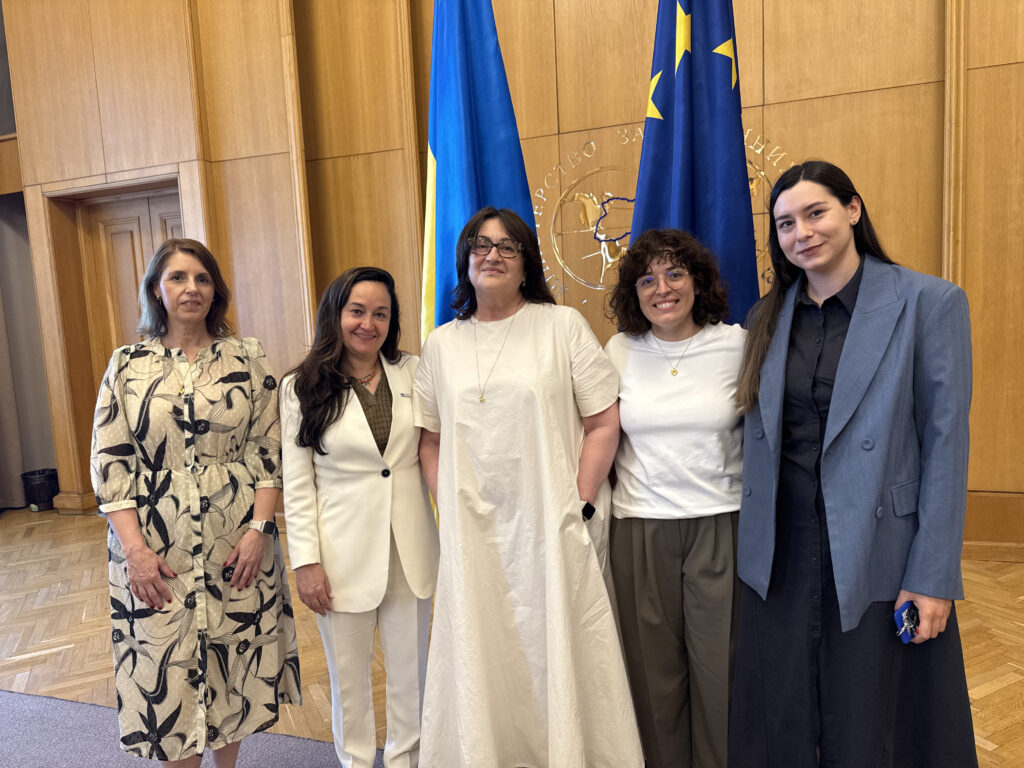
The event was attended by representatives of Ukrainian government bodies, the Verkhovna Rada of Ukraine, international organizations, the diplomatic corps, media, and civil society.
Opening the meeting, Deputy Minister of Foreign Affairs of Ukraine Mariana Betsa stressed that protecting free speech, the safety of journalists, and countering disinformation are components of defending democratic values and international support for Ukraine. She drew attention to Russia’s crimes against Ukrainian journalists and emphasized the need to strengthen international cooperation to document these crimes and hold those responsible to account.
“We must counter disinformation without restricting freedom of expression,” Mariana Betsa noted.
The Head of the National Council of Television and Radio Broadcasting of Ukraine, Olha Herasymiuk, stressed that Russia’s war is directed not only against Ukraine, but also against independent journalism and society’s right to truthful information.
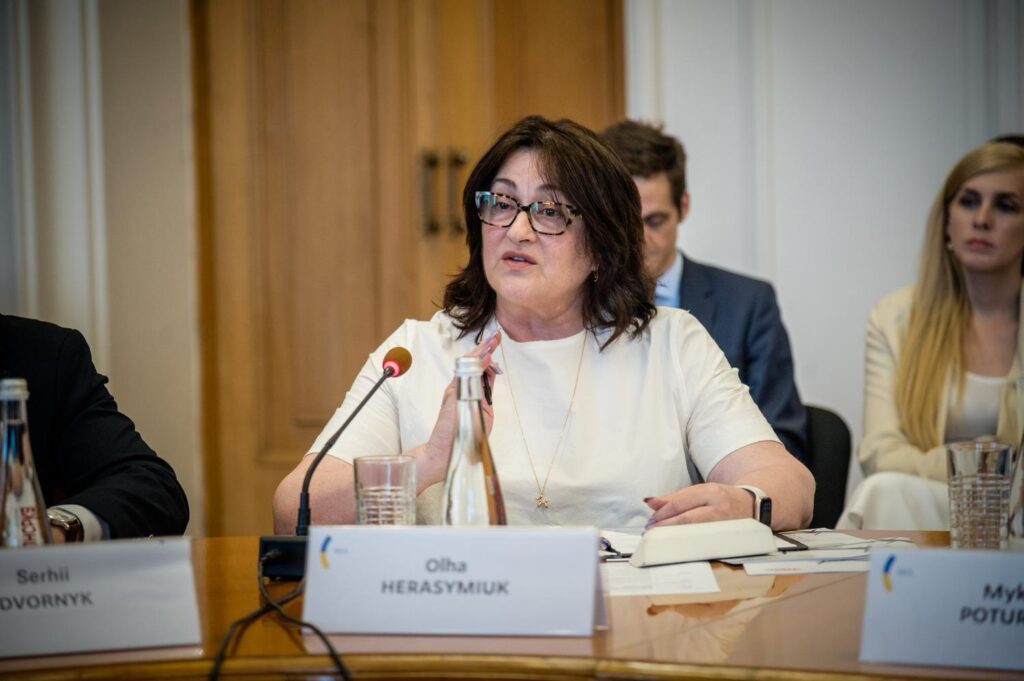
Head of the National Council Olha Herasymiuk / Photo by MFA of Ukraine
“Behind every figure stand human fates and human lives”, she said, speaking of the Ukrainian journalists who have been killed or who remain in Russian captivity.
The Chairman of the Verkhovna Rada Committee on Humanitarian and Information Policy, Mykyta Poturaiev, drew attention to the challenges of implementing the Digital Services Act and the European Media Freedom Act, as well as the need for Ukraine’s own mechanisms to counter Russia’s information war.
The Chairman of the Verkhovna Rada Committee on Freedom of Speech, Yaroslav Yurchyshyn, stressed that it is journalists who document Russia’s crimes and serve as key witnesses to the war. “It is journalists who bring out the truth and can describe very clearly all the war crimes that Russia is committing,” he said.
The Deputy Minister of Culture and Strategic Communications of Ukraine for European Integration, Nataliia Movshovych, stressed that one of the main challenges for Ukrainian media remains financial sustainability.
“There is a clear demand from the media for long-term funding,” she noted.
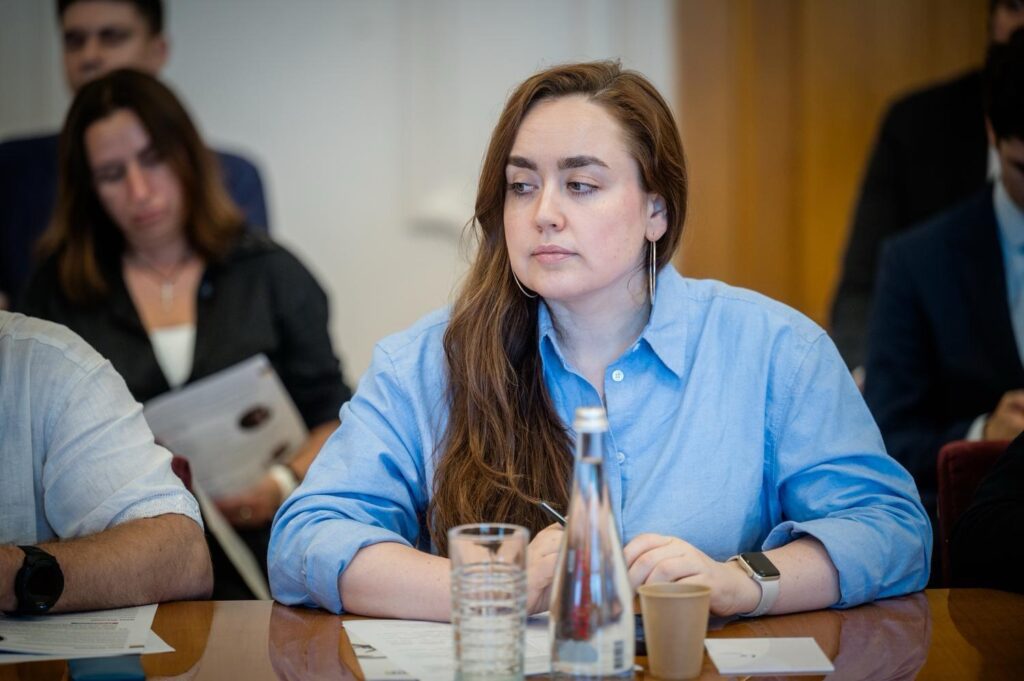
Deputy Minister of Culture Nataliia Movshovych / Photo by MFA of Ukraine
“Women journalists, who face additional risks and challenges, including gender-based attacks, require particular attention,” Nataliia Movshovych added.
According to her, important areas of state support also include providing journalists with personal protective equipment, modern technical equipment, and psychological support, as well as developing special programs for women journalists.
UN Resident and Humanitarian Coordinator in Ukraine Matthias Schmale, Deputy Head of the Council of Europe Office in Ukraine Hilde Haug, and Special Representative of the OSCE Chairpersonship – Project Co-ordinator in Ukraine Petr Mareš confirmed continued support for Ukraine in strengthening mechanisms to protect journalists, developing media freedom, and improving legislation in line with European standards.
Gender-based online attacks: a new dimension of threats
Particular attention during the meeting was given to gender-based online attacks against women journalists.
The head of Women in Media, Liza Kuzmenko, stressed that such attacks are not only a form of online violence but also a tool of Russian information operations aimed at intimidating women journalists, pushing them out of the profession, and undermining trust in independent media.
Liza Kuzmenko presented the findings of research by Women in Media and UNESCO on technology-facilitated gender-based violence (TFGBV) against women journalists. She gave examples of artificial intelligence being used to create sexualized deepfakes, smear campaigns, and other forms of digital violence that are increasingly becoming part of Russia’s information operations.
In her remarks, Liza Kuzmenko also called for the relevant Council of Europe standards to be taken into account — in particular Recommendation CM/Rec(2026)2 of the Committee of Ministers of the Council of Europe to Member States on accountability for technology-facilitated violence against women and girls — during the further improvement of Ukrainian legislation.
Technology-facilitated gender-based violence should be treated as a separate category of crimes against journalists in the international documentation of war crimes, Liza Kuzmenko noted.
The Chairman of the Verkhovna Rada Committee on Freedom of Speech, Yaroslav Yurchyshyn, also drew attention in his speech to new challenges for the journalistic community, in particular gender-based online attacks. “We now have an enormous amount of, in particular, gender-targeted bullying on social media,” he noted.
The Head of the UNESCO Office in Ukraine, Chiara Dezzi Bardeschi, stressed that the safety of journalists remains one of the organization’s key priorities. She spoke about the organization’s work to protect journalists, document crimes against the media, advance freedom of expression, and support research on gender-based online violence against women journalists and the impact of new technologies, including artificial intelligence, on the safety of media workers.
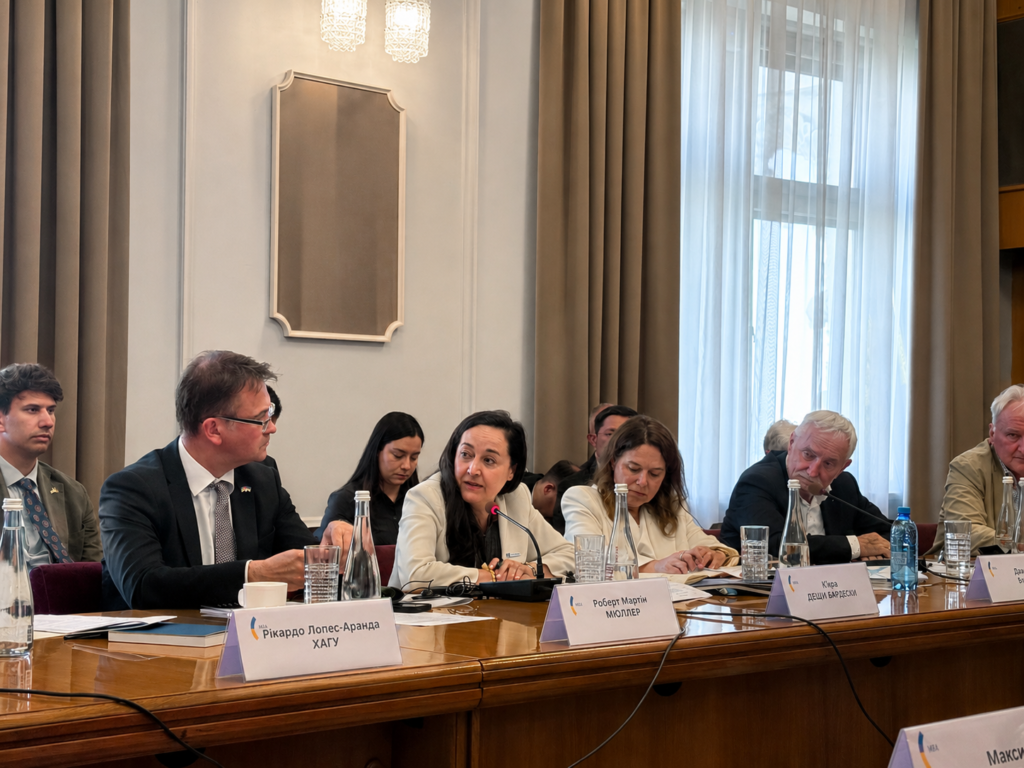
Head of the UNESCO Office in Ukraine Chiara Dezzi Bardeschi / Photo by Women in Media
“Throughout the full-scale invasion, journalists and media have continued to inform the public despite enormous difficulties. They have also become key to documenting war crimes and ensuring accountability,” Chiara Dezzi Bardeschi noted.
Ukrainian journalists in Russian captivity: challenges and international advocacy
The co-coordinator of the Principle of Hope Charitable Foundation, Maksym Butkevych, shared his own experience of being in Russian captivity and stressed the importance of independent journalism as one of the fundamental democratic institutions:
“For the Russian system, journalism and propaganda are one and the same,” Maksym Butkevych said.
An adviser to the head of the Managing Board of Suspilne, Anhelina Kariakina, called on the international community not to halt the fight for the release of Ukrainian civilian journalists from Russian captivity and stressed the need for justice for journalist Viktoriia Roshchyna.
The Head of the Board of ZMINA Human Rights Centre, Tetiana Pechonchyk, presented information about Ukrainian journalists whom Russia is unlawfully holding in places of detention and called on international partners to raise the question of their release systematically.
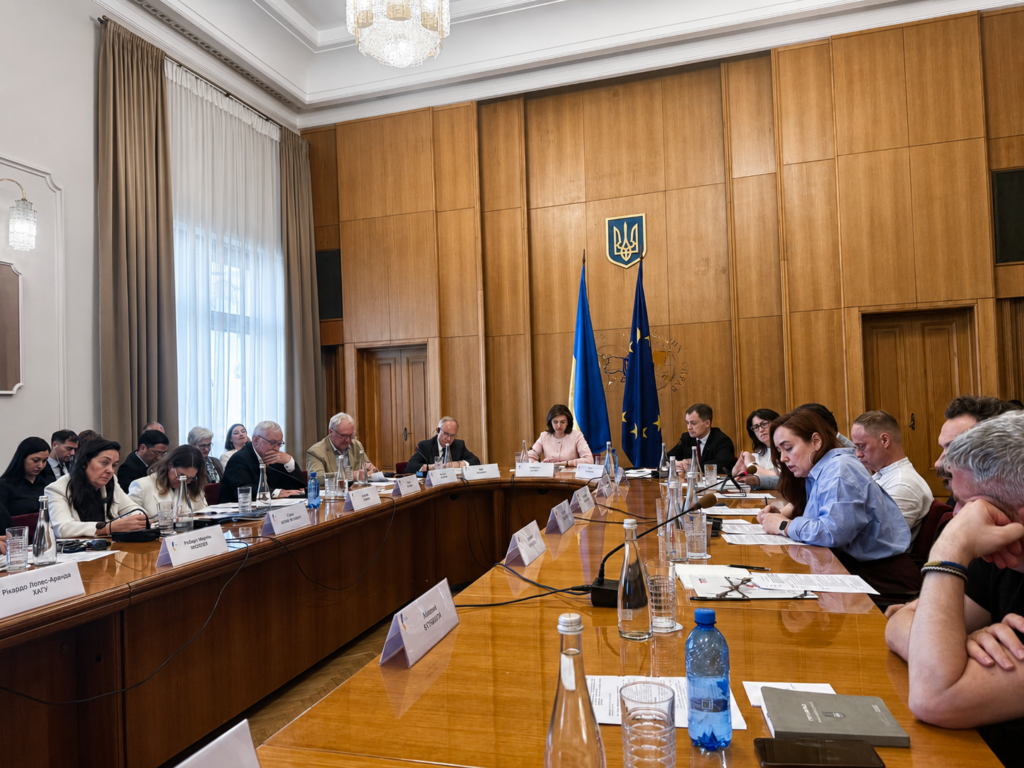
The meeting at the Ministry of Foreign Affairs of Ukraine / Photo by Women in Media
The Head of the Board of the Crimean Human Rights Group, Olha Skrypnyk, stressed the need to strengthen international advocacy for the release of Ukrainian civilian journalists, while the Deputy Head of the Center for Strategic Communications and Information Security, Maksym Balaban, emphasized that Russian information operations are an integral part of the military aggression and directly affect the observance of human rights and international humanitarian law.
The Head of the UN Human Rights Monitoring Mission in Ukraine, Danielle Bell, also presented information about the persecution of journalists in the temporarily occupied territories.
Summing up the meeting, Deputy Minister of Foreign Affairs of Ukraine Mariana Betsa stressed that protecting freedom of expression, the safety of journalists, and countering disinformation require constant interaction among the state, international partners, media, and civil society. She thanked the participants for a substantive discussion and emphasized that the proposals developed during the meeting will form the basis for the further work of the Council on Human Rights, Gender Equality and Diversity at the MFA of Ukraine.